REVIEW · TIRANA
Best of Berat and Durres Full Day Tour
Book on Viator →Operated by Travel Albania · Bookable on Viator
Roman ruins meet Ottoman streets in one long day.
What makes this tour so interesting is the way it jumps between Durrës and Berat—two cities with totally different vibes, yet both packed with layers you can actually see. I love having a tight, guided route that turns big monuments into clear stories, not just photo stops.
I also like the focus on places where details matter. From the Roman Amphitheatre’s scale to Berat’s window-studded Mangalem quarter and the icon-filled Onufri Museum, you’ll spend the day looking closely instead of rushing blindly.
One drawback to plan around: it’s an 8 to 9 hour day with many short stops and limited free time. If you’re picky about bathroom breaks or you need extra water beyond what is included, go in ready with your own habits and supplies.
In This Review
- Key highlights to watch for
- One Long Day Across Two Historic Cities
- Price and what you actually get for $142.02
- Pickup in Tirana: what to expect from the logistics
- Durrës Old Town: where the Adriatic meets Via Egnatia
- The Durrës Roman Amphitheatre: scale, earthquakes, and UNESCO vibes
- Venetian Tower and the Byzantine Forum: reading defenses and public life
- Venetian Tower Heritage Interpretation Center
- Byzantine Forum in the city heart
- A real break at Durres Beach Promenade
- Berat Castle and Kala Quarter: the hilltop feeling is the point
- Onufri Museum in the Church of the Dormition of St Mary
- Byzantine church and the Ottoman mosque story you’ll recognize
- Mangalem: the City of 1000 Windows on a hillside walk
- Halveti Tekke and Gorica Bridge: small details, big payoff
- Halveti Tekke
- Gorica Bridge
- Value, group size, and how to avoid the common day-trip pain
- Should you book the Best of Berat and Durrës Full Day Tour?
- FAQ
- What time does the tour start?
- Where is pickup available?
- How long is the tour?
- Is the tour offered in English?
- What’s included in the price?
- What admissions are included or available?
Key highlights to watch for
- Durrës Roman Amphitheatre: Trajan-era origins, earthquake damage history, and a capacity once noted at 20,000
- Venetian Tower Heritage Interpretation Center: A renovated spot with digital and multimedia history tools
- Berat’s Kala quarter and Castle hill walks: Whitewashed lanes above the Osum River, plus a museum in the big church
- Onufri Museum inside the Church of the Dormition of St Mary: 16th-century religious paintings and a major icon collection
- Ottoman-era Berat landmarks: The King Mosque area, Halveti Tekke details (including columns from Apolonia), and Gorica Bridge’s seven arches
One Long Day Across Two Historic Cities
This is one of those tours that works because it’s structured. You’re not just visiting two places—you’re connecting the dots between Roman, Byzantine, Venetian-era fortifications, and Ottoman-era life. The day moves, sure, but it doesn’t feel random.
Durrës kicks things off with a classic “coastal city of empires” setup: ancient Greek roots, then Roman and Byzantine importance, and later strategic defenses along the Adriatic. Then the tour flips to Berat, which feels slower and more residential as you walk through Kala and Mangalem—Berat’s famous steep hills and white houses.
If you’re the kind of person who likes architecture and human-scale details (windows, arches, church interiors, inscriptions), this day fits your style.
A few more Tirana tours and experiences worth a look
Price and what you actually get for $142.02
At $142.02 per person for an 8 to 9 hour guided outing, this sits in the “value if you care about sights” range. You’re paying for more than transport. You’re paying for:
- air-conditioned vehicle
- licensed guide
- bottled water
- pickup within Tirana city
- included admissions at several key stops
Admissions are part of the deal for high-impact sites like the Roman Amphitheatre in Durrës, Berat Castle, and the Onufri Museum in Berat, plus entry at places like the King Mosque and Halveti Tekke. That matters because these are exactly the kind of stops where paying admission on your own adds up fast.
Still, you’ll want to budget the basics not covered: meals and drinks, plus tips/gratuities and any optional add-ons.
Pickup in Tirana: what to expect from the logistics
Pickup starts at 9:00 am, and you can be collected anywhere inside Tirana. You just need to communicate the pickup point after booking, and share any details needed for pickup timing.
This tour caps at 12 people, which is a big deal on a long day. Smaller groups mean the guide can keep the pace moving without losing everyone each time the route turns. It also helps if you want quick clarifications while you’re looking at ruins or reading historical details.
If you’re staying outside Tirana, there may be an extra charge handled directly with the guide (cash, PayPal, or bank transfer). So when you book, confirm how your location is classified.
Durrës Old Town: where the Adriatic meets Via Egnatia
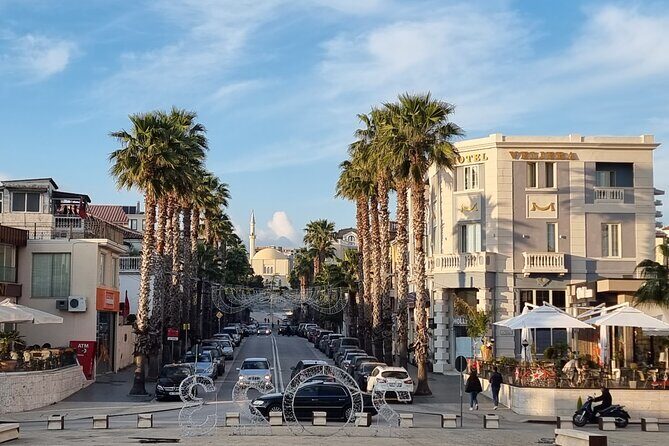
Durrës starts with an ancient identity that’s easy to understand once someone frames it: the city is tied to Dyrrachium, founded by ancient Greek colonists around the 7th century BC, then becoming important across Roman and Byzantine eras. The Via Egnatia, the major road route through the Balkans, is linked to this city as a starting point stretching toward Constantinople.
In the Old Town exploration, you’ll get a mix of ruined structures and city atmosphere:
- the Old Town area
- the ruins of the Byzantine forum and surrounding walls
- Roman baths
- the modern city centre as a contrast
- time focused on major monuments, including the amphitheatre and Venetian Tower areas
- an archaeological museum stop tied to how this city was planned and built
A practical note: because the stop length is short, you’ll get more “guided orientation” than “hang out for hours.” If you love museums, wear your comfortable shoes and pay attention early. The guide’s pacing is what turns this into a meaningful city read instead of a sprint.
The Durrës Roman Amphitheatre: scale, earthquakes, and UNESCO vibes
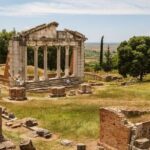
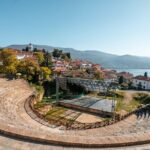
Next comes the Roman Amphitheatre in the city centre, and this is one of the most impressive stops for pure wow-per-minute. Construction began under Emperor Trajan in the 2nd century AD. Then it took a beating—earthquakes in the 6th and 10th centuries destroyed it twice.
What you’ll appreciate here is how the story is layered:
- the scale of the site (the amphitheatre once held around 20,000 people)
- the fact it was only discovered in late 1966
- the way it remains one of Albania’s most visited heritage points
- its place on the tentative list of UNESCO World Heritage Sites in Albania
Even if you’ve seen amphitheatres elsewhere, this one adds extra texture because the damage-by-time story is part of how you read the site in person.
Admission here is included, so you’re not juggling ticket logistics while you’re standing in front of the stands.

Venetian Tower and the Byzantine Forum: reading defenses and public life
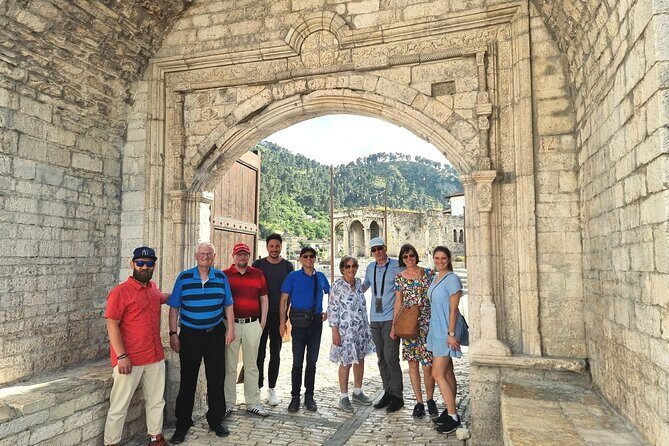
After the amphitheatre, the tour shifts to the protective and civic side of Durrës: the Venetian Tower and the Byzantine Forum.
Venetian Tower Heritage Interpretation Center
The Venetian Tower is a defensive structure with roots in the Byzantine era. The story begins with Byzantine Emperor Anastasius I (491–518), then later building efforts reuse the earlier tower foundations. Around the 15th century, the present structure was built atop Byzantine remnants, fortified with cannons to protect the city from the sea and acting as an observation point.
The real modern twist: the tower was renovated in 2023 and turned into the first Albanian Heritage Interpretation Center. That means you’re not just walking stone and walls—you get digital and multimedia tools to help you connect historical events and places to what you’re seeing.
If you like “explain it first, then look again” experiences, this format tends to work.
Byzantine Forum in the city heart
Then comes the Byzantine Forum—constructed around the end of the 6th century under Roman Emperor Anastasios. It’s described as one of Albania’s outstanding Late Roman and Early Byzantine period structures and compared to Constantine’s Curved Forum at Constantinople.
What I like about this stop is the way it helps you picture civic life:
- the forum’s circular paved area suggests formal events
- a rotunda once believed to have housed a gigantic statue (now lost)
- market and trade activities centered around it
Even with the modern city around you, the “antiquity atmosphere” is meant to feel close. If you want to understand how older cities functioned day to day, this part delivers.
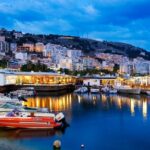
A real break at Durres Beach Promenade
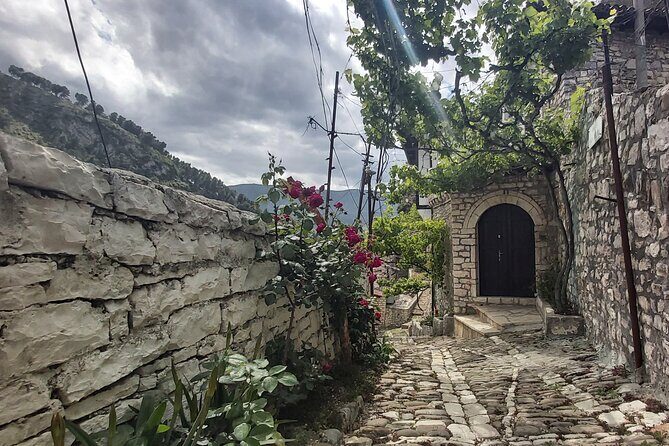
Before you head inland to Berat, the tour gives you a seaside reset: the Beach Promenade in Durrës.
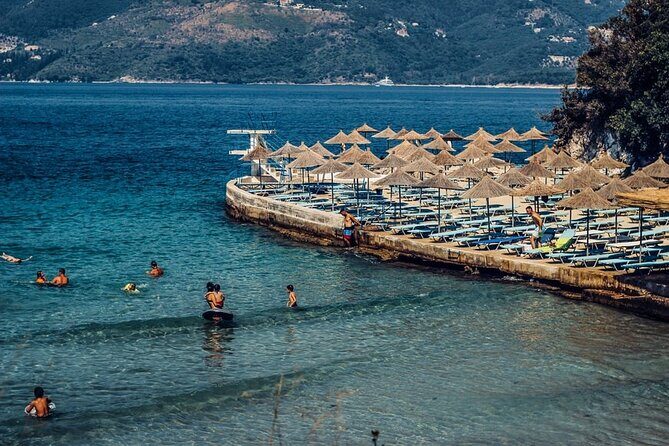
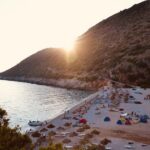
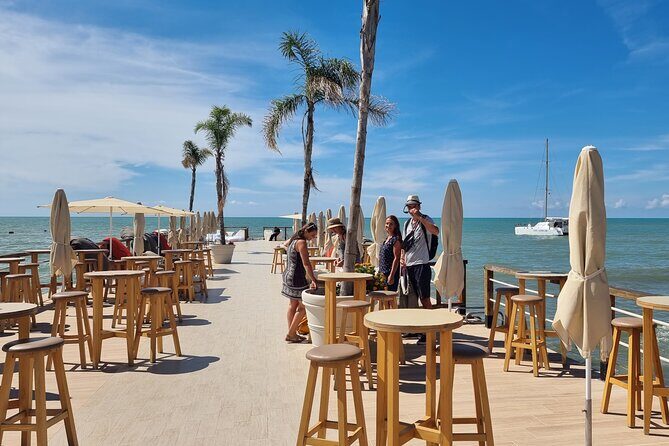
This is not a deep history stop. It’s a breather. You’ll walk along the Adriatic coastline, grab a cafe if you want, and have free time among shops and restaurants along the shore.
It’s a smart timing choice because your next phase involves hills and more walking. Use this break to:
- rehydrate
- grab a snack if you plan to keep meals minimal later
- take a few photos without someone corralling you every 2 minutes
Ticket for the beach promenade part is free, so this is mostly about your own pace for the time window.
Berat Castle and Kala Quarter: the hilltop feeling is the point
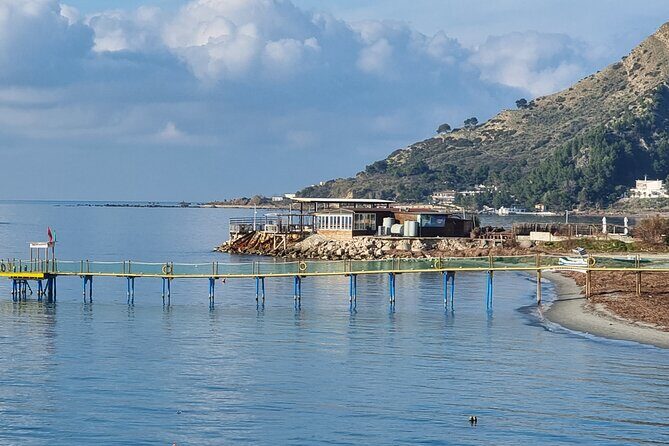
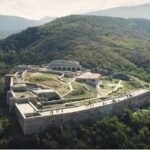
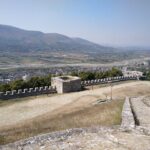
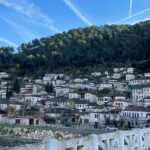
Berat Castle crowns a hill above the city, and access takes you into Kala, the whitewashed, village-like neighborhood behind the fortress walls. The Kala quarter is known for quiet cobbled lanes where you can end up thinking you’ve wandered into a church or ruin—because those doorways and courtyard edges look like they belong to places of worship.
The vibe here is different from Durrës. Durrës feels like empires at the shoreline. Kala feels like everyday life shaped by geography—steep slopes, stone houses, and architecture that hugs the hill.
Berat Castle admission is included, and the time window is short. So focus on orientation: see the hill layout, look for viewpoints, and let the guide point out the historic logic behind the walls and neighborhood position.
If you’re sensitive to uneven ground, plan for some step-heavy walking here.
Onufri Museum in the Church of the Dormition of St Mary
This is one of the most rewarding stops in the whole day because it’s specific. The Onufri Museum sits inside the Church of the Dormition of St Mary (Kisha Fjetja e Shën Mërisë), which dates to 1797 but was built on the foundations of an earlier 10th-century chapel.
Inside, you’re not just seeing a few icons—you’re seeing a curated spread of religious art, including:
- Onufri’s spectacular 16th-century religious paintings
- a gilded 19th-century iconostasis
- a collection spanning the 14th through the 20th century
- around 200 artwork objects, icons, and liturgical items pulled from churches and monasteries across the region
- icons attributed to Albanian icon painters such as Onufri, Onufri’s son Nikolla, and Onufër the Cypriot
What makes this museum worth your time is the match between art and place. The building is part of the story, and the paintings are placed in a religious setting you can actually feel—not just displayed behind glass in a neutral room.
Museum admission is included, which helps you justify the time allocation during a packed day.
Byzantine church and the Ottoman mosque story you’ll recognize
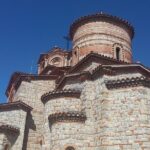
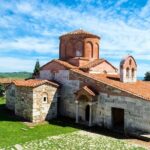
You’ll also stop at a Byzantine church in Berat that’s described as one of the most well-constructed and best-preserved Byzantine churches of the city. Construction is dated to the end of the 13th century, supported by an inscription on a church gate naming Andronicus Paleologus, Governor of Berat.
This is the kind of stop where your guide’s narration matters. In a short timeframe, the best approach is to look at inscriptions and layout cues first, then let the guide tie them together.
Then you move into the Ottoman story tied to Bayazid II. The mosque material you’ll hear about connects to the Ottoman conquest of Berat in 1417 and places the earliest written record around 1431/32. Evliya Çelebi is part of that historical trail, and the mosque is described as one of the oldest in Albania.
The tour also includes the King Mosque (also called Sultan Bayezid Mosque). It’s active today and was rebuilt in the 19th century to prevent collapse. Inside, the women’s gallery has intricate painted designs on its wooden ceiling. That gallery detail is worth slowing down for because it’s easy to miss if you’re only focusing on the main hall.
Mangalem: the City of 1000 Windows on a hillside walk
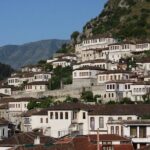
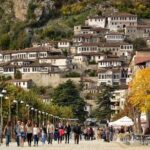
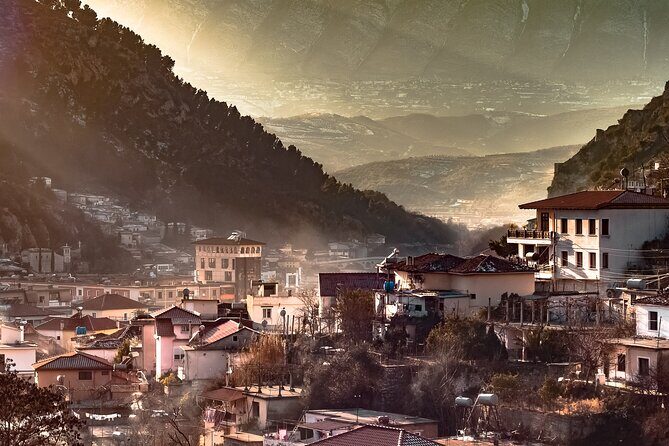
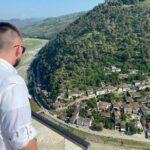
Next comes Mangalem, one of Berat’s oldest and most iconic districts. It lies just north of the Osum River and south of Kalaja. Historically, it had an Islamic character due to Ottoman roots, which still shows in the architecture.
As you walk, the quarter’s defining feature hits quickly: white stone houses with terracotta tiles, wooden doors, and flowers hanging from windows. The neighborhood nickname—City of 1000 Windows—comes from the number of large symmetrical windows along the rocky hillsides.
This is a good stop if you want photos that feel like real life, not just monuments. It’s also where you’ll likely understand why Berat looks the way it does from far away—when you’re standing in the lane, the hill geometry makes sense.
Time here is short and meant for walking and observation. If you want extra lingering, bring a bit of patience and don’t expect the group to turn every corner at your pace.
Halveti Tekke and Gorica Bridge: small details, big payoff
Halveti Tekke
Halveti Tekke is a place of worship for Helveti Muslim dervishes or mystics. The small square building was constructed in the 15th century and later rebuilt by Ahmet Kurt Pasha in 1782. There’s an inscription above the doorway tied to him.
Inside, you’ll find a small prayer hall with an external portico and columns that originate from Apolonia ancient city. Another notable detail is a balcony designed to improve sound quality for religious rituals held within.
This stop feels different from the amphitheatre and museum stops. It’s quiet. It’s architecture-as-function. If your attention tends to drift after lunch, this kind of venue can pull you back in because it’s small enough to notice everything.
Gorica Bridge
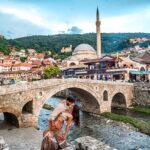
Then you’ll reach Gorica Bridge, one of the most charming Ottoman bridges in Berat. It connects the city to the Gorica neighborhood across the Osum Riverbed.
This bridge is described as:
- 10 meters tall with a gradual arch
- about 130 meters across
- made of seven arches
- featuring wooden railings and small window-like details that create whimsical face impressions
It’s the sort of structure where you stop and stare because it feels friendly, not just functional.
Ticket for this stop is free, and the time window is short, so make your photos count.
Value, group size, and how to avoid the common day-trip pain
Let’s be honest: an 8 to 9 hour city-hopping day can feel long if you’re hungry, thirsty, or stuck thinking about bathroom timing.
The good news is that this tour includes bottled water and runs with an air-conditioned vehicle. That helps on travel stretches and in warmer months.
But you should also know there’s a potential friction point: at least one past participant reported not getting water when they asked and mentioned limited bathroom breaks beyond an unplanned moment while the guide stepped away. The listing says water is included, but your safest move is simple:
- drink what you’re given early
- if you know you need more, bring your own small extra bottle
- plan bathroom breaks as part of your schedule, not a surprise emergency
About the guiding: in the past, guides such as Llir and Iliri were praised for lively conversations and for making history feel personal rather than like a recitation. If your guide has that style, you’ll get more out of the stops, especially in places where the stones look similar until someone gives you the right angle.
With a maximum of 12 people, you can usually ask quick questions without derailing the route. If you want a bit more flexibility, check the private tour option. It’s listed as available, and for a day like this, that can be the difference between “seen it” and “I understand it.”
Should you book the Best of Berat and Durrës Full Day Tour?
Book it if you want a high-density day that still includes real guided storytelling. This is a great match for people who like mixing Roman and Byzantine sites with Ottoman-era buildings, and who don’t mind a packed schedule when the stops are the point.
Don’t book it if you want a slow, leisurely day with lots of free time. Here, time is tight. You’ll get short windows at each major site, plus a beach break for recovery, but you won’t have hours to wander on your own in either city.
FAQ
What time does the tour start?
It starts at 9:00 am.
Where is pickup available?
You can be picked up from anywhere inside the city of Tirana. You’ll need to communicate your pickup point after booking.
How long is the tour?
The duration is about 8 to 9 hours, and travel time is included in that estimate.
Is the tour offered in English?
Yes, it’s offered in English.
What’s included in the price?
Included items are an air-conditioned vehicle, professional drivers with deep historical knowledge, a licensed tour guide, a private tour option, and bottled water.
What admissions are included or available?
Some sites are included with admission ticket costs (for example, the Roman Amphitheatre in Durrës, Berat Castle, Onufri Museum, the King Mosque, and Halveti Tekke). Other stops are free-entry according to the tour details (such as the Durrës Old Town portion and the Beach Promenade).