Crossing into Montenegro in a single day feels like a mini adventure with a plan. This Stari Bar and Ulcinj day tour runs from Tirana (starting around 8:00) and strings together hilltop ruins, Adriatic viewpoints, and old-town architecture without you having to worry about routes, timing, or borders.
I like the way the day mixes “walking with payoff” and “views with context.” Stari Bar is a dramatic set of ruins on a hillside, and Ulcinj adds the coastal side—old streets plus lower-town scenery by the water. A guide named Engjell is specifically praised for being organized and for explaining details clearly, including showing good spots along the way.
One drawback to weigh: it’s a long day on the road. With an approx. 10 hours schedule plus border time and several stops, you’ll want to be okay with a steady pace rather than slow wandering.
In This Review
- Key highlights
- Leaving Tirana for Montenegro: the Buna and Rozafa pause
- Stari Bar: ruins on a hill with restaurants at the base
- Ulcinj: old town after an earthquake, plus coast views and statues
- The day’s timing and pacing: how to enjoy all three stops
- Price and value: what $213.03 buys you
- What to ask your guide (and why Engjell stands out)
- Who this tour suits best
- Tips to make the most of Stari Bar and Ulcinj
- Should you book this Stari Bar and Ulcinj day tour?
- FAQ
- What is the duration of the Stari Bar and Ulcinj tour from Tirana?
- Is pickup available from Tirana?
- What language is the tour offered in?
- Is this tour private or group-based?
- Do I need a mobile ticket?
- Is there free cancellation?
Key highlights
- Pickup anywhere near Tirana and an English-speaking guide to keep the day stress-free
- Buna Lake stop with Rozafa Castle views and a story-driven break in the middle of the drive
- Stari Bar ruins on the slopes of Mt. Rumija, with plenty of photo angles and easy browsing nearby
- Old town in Ulcinj plus coastal viewpoints, so you get both history and sea views
- Cervantes and Dulcinea statues, two cultural nods that make the walk feel more meaningful
- Private tour format: only your group participates, which usually makes questions and timing easier
Leaving Tirana for Montenegro: the Buna and Rozafa pause
The day starts in Tirana at 8:00, then heads north toward the Montenegrin border, passing through the area near Shkoder. This kind of route matters because it prevents the common “day trip regret” of arriving late, tired, and underprepared. Here, you get momentum early, so the main sites aren’t squeezed into the last hour.
Before you reach Montenegro’s coast, you stop at the Buna River with a view of Rozafa Castle. Even if you only get a short break, this stop does two useful things. First, it resets you from bus-and-road time. Second, it gives you a historical framing: the region is tied up with wars, revolts, and local legends, and the Rozafa story is presented in a dramatic, almost brutal way—perfect for people who like their history more vivid than textbook.
Practical tip: build in a quick snack and water before you head out. The tour includes short breaks, but they aren’t built for a long sit-down meal.
You can also read our reviews of more drinking tours in Tirana


Stari Bar: ruins on a hill with restaurants at the base
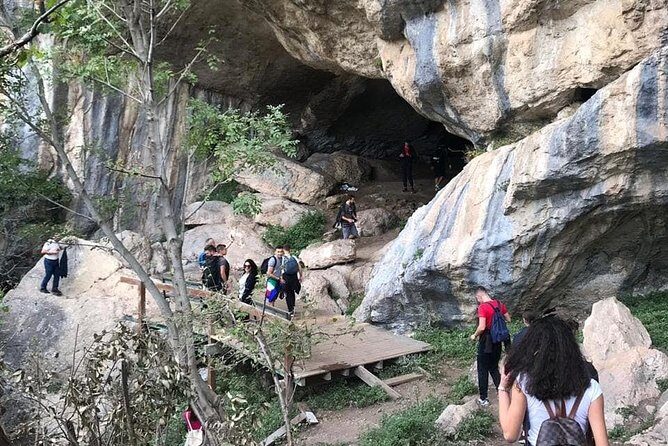
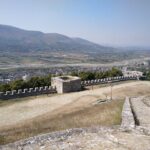
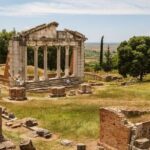
Stari Bar is the headline stop—and it’s the kind of place that rewards even a short visit if you pace yourself. The old town sits on a hill near the base of Mt. Rumija, so the approach gives you that gradual “things are coming into view” feeling rather than a flat drive-in.
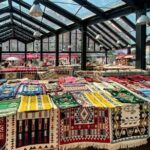
One reason Stari Bar works so well on a day tour: it’s not only ruins. The base of the fortress area is lined with restaurants and souvenir shops. That means you can take a breather, grab a drink, and browse local goods while you still have enough energy to climb and wander.
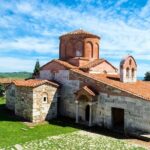
What makes the ruins special is the sheer range of what’s referenced in the site’s layout. The fortress and city inside are described as having 240 buildings, including clock towers, mosques, churches, cathedrals, and residences. That mix helps you understand Stari Bar as a layered place, not just a “pretty ruin.” Walking through stones and foundations, you can read the site as a crossroads of cultures and eras—especially because the mountain backdrop keeps the setting feeling old and steep.
You’ll likely spend most of your time doing three things here:
- getting your bearings on the hillside ruins
- checking out the different stone areas that hint at past structures
- stopping back down when you want food or shade
Possible drawback: Stari Bar is a ruins experience, which often means uneven ground. If you’re someone who hates rough footing, plan to go slow and wear stable shoes.
Ulcinj: old town after an earthquake, plus coast views and statues
After Stari Bar, the tour heads to Ulcinj, a coastal city near the Albanian border. Ulcinj is framed as important both in tourism and in the local economy, and the visit reflects that: you’re not only looking at “history,” you’re seeing how the city still lives.
Ulcinj has two parts on this tour:
- The Old Town
- The lower, coastal area next to the sea
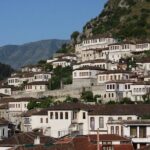
The Old Town was damaged by an earthquake in 1979, but it’s still described as having remarkable architecture and culture. That’s a big deal on a day tour because it changes the vibe. You’re not visiting a preserved fantasy site. You’re walking through a real historic area that has survived and adapted—often more interesting than places that feel frozen in time.
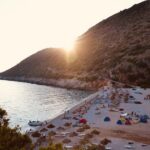
What you’ll notice as you move through the Old Town is how quickly viewpoints and street life show up. Cafes and restaurants sit along the route, and there are scenic vantage points where you can look out over the Adriatic.
Then come two statues that make the walk more fun because they connect local legends to world-famous literature:
- A statue of Miguel de Cervantes, tied to a legend that he was once a slave in Ulcinj
- A statue linked to Dulcinea from Don Quixote, believed by some to be based on a local woman
Even if you know those stories already, seeing them placed in Ulcinj gives you a “why here?” moment. And if you don’t know them, it’s an easy prompt to learn a little while you’re walking.
The day’s timing and pacing: how to enjoy all three stops
This tour is approx. 10 hours from start to finish, with driving time between sites and enough time at each location to actually enjoy it. It’s not designed for marathon sightseeing, but it also isn’t the kind of “drive-by photo stop” loop that leaves you hungry for more.
Here’s how the pacing generally feels based on the order of stops:
- Morning drive with border approach, plus a structured break at Buna River
- Midday focus on Stari Bar ruins, with options to snack or browse nearby
- Later arrival into Ulcinj, where you get both old streets and lower coastal viewpoints
- Return drive to Tirana, with drop-off elsewhere on request
To make it work for you, the trick is planning your expectations. If you want one deep, slow exploration of a single site, you’ll feel rushed. If you’re hoping for variety—ruins plus coast plus stories—this format is strong.
Also, because it’s a private tour, you can usually ask for small adjustments on the ground. If your group is faster, you don’t have to wait; if your group needs more pauses, a guide can help you choose where to slow down.
Price and value: what $213.03 buys you
At $213.03 per person, this is not a budget “grab and go” trip. But it’s also not a luxury-only concept. The value comes from four practical things you’re paying for:
- Pickup from anywhere near Tirana
- A structured route that includes a border crossing and multiple stops
- English guidance throughout
- A private group format (only your group participates)
Add in group discounts, and the math starts looking better if you’re traveling with friends or family. A big cost saver on a day trip like this is not having to hire transportation separately or coordinate timing across two countries of travel.
Is it worth it? If you want two distinct Montenegro vibes—fortress ruins in Stari Bar and old-town plus coastline in Ulcinj—without the stress of planning, you’re paying for convenience and curated order. If you only care about one city, you may feel the price more sharply.
My practical advice: check your group size first. For two or more people, it usually feels more reasonable than solo.

What to ask your guide (and why Engjell stands out)
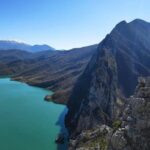
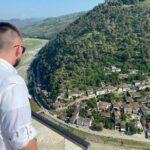
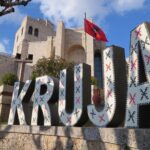
One of the most praised parts of this experience is the guide. Engjell is highlighted for detailed explanations and for showing visitors to good spots—not just reading facts while you stand still.
When you’re on a day tour, this is exactly what you want from a guide: someone who can connect what you’re seeing to why it matters, and who can keep the walk moving without making you feel rushed.
Here are smart questions you can ask as you go:
- In Stari Bar, what are the best areas for understanding how the city was organized?
- In Ulcinj, how do the Old Town and the coastal lower area tell different stories?
- What’s the most credible version of the Cervantes or Dulcinea legend as it’s told locally?
You don’t need to turn it into a lecture. A couple of targeted questions can make ruins and statues feel like more than background scenery.
Who this tour suits best
This day trip tends to be a great match if you:
- want to see Montenegro but you’re starting from Tirana
- like history that comes with a story (Rozafa legend, earthquake context in Ulcinj)
- prefer an organized plan that still leaves room to walk and look around
- travel in a group that benefits from a private format
It also works well if you’re comparing coastal choices. One note from the experience: it’s described as a solid alternative to Kotor, which tells you this tour aims at a different kind of coastal experience—more approachable and less about a single famous fortress setting.
If your idea of travel is slow, sit-long, and unstructured, this might feel too scheduled. If your idea of travel is smart structure plus real wandering at key points, you’ll probably enjoy it.
Tips to make the most of Stari Bar and Ulcinj
A few practical moves can upgrade this day fast:
- Wear stable shoes. Ruins and old streets can mean uneven ground.
- Bring light layers. Coastal areas can shift with wind, and long road days feel warmer or cooler depending on the hour.
- Expect a packed feel. You’ll move from stories and viewpoints into walking and back to driving again.
- Plan for small purchases. Stari Bar’s base area is full of restaurants and souvenirs, including items like olive oil and pomegranate syrup, which can be easy to pick up while you’re already there.
- Use the viewpoint breaks. Ulcinj’s “look-out” moments matter. If you skip them, the city’s coastal character won’t land.
If you’re the type who takes photos constantly, give yourself permission to take fewer—but more intentional—shots. The best photos here come from knowing where to stop, not just from speed.
Should you book this Stari Bar and Ulcinj day tour?
Book it if you want a high-effort, high-variance day: ruins at Stari Bar, legends and architecture in Ulcinj, and coastline viewpoints by the end—without the hassle of planning between Tirana and Montenegro on your own.
Skip or rethink it if you’re sensitive to long travel days, or if you want a very relaxed pace with minimal driving. At approx. 10 hours, the schedule is built to show you a lot, not to linger forever.
If your goal is a memorable Montenegro snapshot—old cities, real textures, and a guide who knows how to explain what you’re seeing—this one is a strong pick.
FAQ
What is the duration of the Stari Bar and Ulcinj tour from Tirana?
The tour runs for approximately 10 hours.
Is pickup available from Tirana?
Yes. Pickup is offered anywhere near Tirana, and the start point is Tiranë, Albania.
What language is the tour offered in?
The tour is offered in English.
Is this tour private or group-based?
This is a private tour/activity, meaning only your group participates.
Do I need a mobile ticket?
Yes. The tour includes a mobile ticket.
Is there free cancellation?
Yes. Free cancellation is available up to 24 hours in advance for a full refund. If you cancel less than 24 hours before the start time, the amount paid is not refunded.