REVIEW · TIRANA
Tirana and Kruja in a Day Trip
Book on Viator →Operated by Sondor Travel · Bookable on Viator
History can feel close when it’s walkable. This day trip strings together Kruja Castle with the Old Bazaar in Kruja, then finishes with Tirana’s standout sights around Skanderbeg Square and beyond. I like how the day is built around people and places, not just checkboxes, and you’ll get real context for why Skanderbeg matters and why Tirana looks the way it does today. The main consideration: it’s a long day with lots of walking, including uneven surfaces, so good shoes are not optional.
From the practical side, I also like that you start with an 8:30am pick-up at Skanderbeg Square and return there at the end, with transportation handled for you. Admission tickets are included for the morning stop, so you spend less time figuring out logistics. It’s a private setup with a guide, but because it’s still group-timed, you’ll want to keep your pace steady.
In This Review
- Key Things You’ll Appreciate
- A Quick Snapshot of Tirana and Kruja’s One-Day Plan
- Kruja Castle and the Scanderbeg Museum: Medieval Heights in Four Hours
- Old Bazaar in Kruja: Shopping Without Losing the Plot
- Skanderbeg Square and Tirana’s Key Landmarks: The City’s Layers in Motion
- Et’hem Bey Mosque and the Clock Tower: What to Notice on a Walk
- The Blloku District: Where Tirana’s Communist-to-Modern Story Shows Up
- Private Guide Value: Why This Day Works as a Real Orientation
- Price and Logistics: Is $289.40 Good Value for Eight Hours?
- What to Pack and How to Keep the Day Comfortable
- Who This Tour Suits Best (and Who Might Want Something Else)
- Should You Book Tirana and Kruja in One Day?
- FAQ
- FAQ
- What is the meeting point for this tour?
- What time does the tour start?
- How long is the tour?
- What stops will I visit?
- Are admission tickets included?
- Are meals and drinks included?
- Is this tour private?
- What should I wear or bring?
- Do I need a mobile ticket or facemask?
- Is free cancellation available?
Key Things You’ll Appreciate
- Kruja + Tirana in one day: two totally different vibes, packed into about eight hours.
- A guided timeline of Albanian history: the drive isn’t filler; it’s context you can carry into the sights.
- Castle-and-museum time that isn’t rushed: around four hours in Kruja.
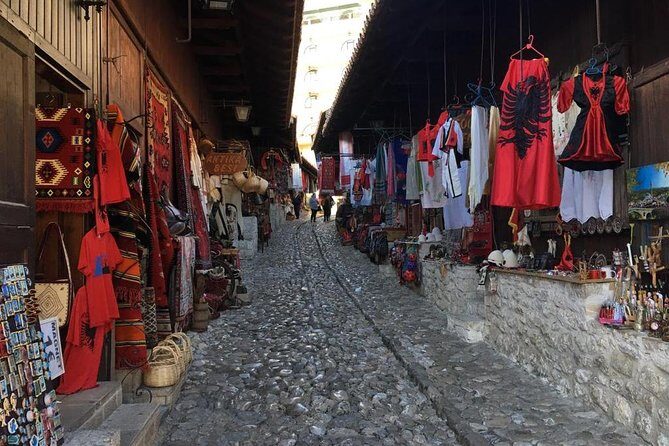
- Old Bazaar browsing: a chance to shop for souvenirs without feeling like you’re sprinting.
- Tirana’s Ottoman-era landmarks: Clock Tower and Et’hem Bey Mosque show the older layers of the city.
- Private guide for your group: you’re not competing for attention.
A Quick Snapshot of Tirana and Kruja’s One-Day Plan
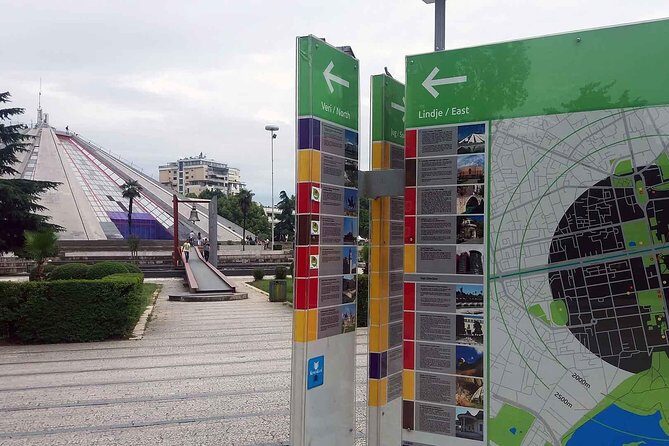
This tour is designed as a straightforward day trip: you leave Tirana, spend the morning in Kruja, then come back to Tirana for the afternoon landmarks. The schedule is built around a comfortable rhythm—one main block in Kruja, then one main block in Tirana—so you get more than a couple of quick photos.
You’ll be met at Skanderbeg Square in Tirana (meeting point at Sheshi Skënderbej, Tiranë) starting at 8:30am, and the day ends back at the same meeting point. The total duration is about eight hours, which is a good fit if you want a meaningful taste of Albania’s past and present without dedicating a full day to just one city.
You should go in ready to walk. The tour explicitly notes uneven surfaces, and Kruja’s old streets and castle approach are exactly the kind of place where a slip would be annoying. Bring comfortable shoes and take your time on steps and cobbles.
A few more Tirana tours and experiences worth a look

Kruja Castle and the Scanderbeg Museum: Medieval Heights in Four Hours
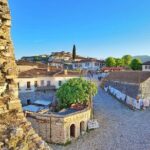
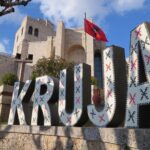
Kruja is roughly an hour north of Tirana, and the shift is noticeable as soon as you’re climbing into town. The tour takes you up to the area where Kruja Castle sits, and you’ll spend about four hours there. This is the moment when the day feels most like you’ve left modern life behind.
The castle experience works because it ties together views and meaning. You’re not just looking at stone walls; you’re learning how the castle connects to Albania’s founding story through the Scanderbeg Museum. The museum admission is included, which matters because it makes your morning plan clear from the start.
One practical note: sometimes museums have closures for renovations. On an instance tied to this type of experience, the Scanderbeg Museum was closed and the guide adapted. That’s not something you can count on, but it does tell you the guide’s job is to keep the visit moving with useful alternatives rather than leaving you stranded.
What to do with your time in this stop:
- Take a slow circuit first, then circle back for photos once you know where you’re standing.
- Ask your guide how what you’re seeing fits the larger timeline, especially if you care about why Skanderbeg is a national figure.
- If you’re into architecture and fortifications, keep an eye on how the terrain shapes the layout.
Old Bazaar in Kruja: Shopping Without Losing the Plot
After castle time, the day still keeps you grounded in Kruja’s everyday historic character. The tour includes browsing the stalls at the Old Bazaar, which is where souvenirs stop feeling like generic buys and start feeling like part of the place.
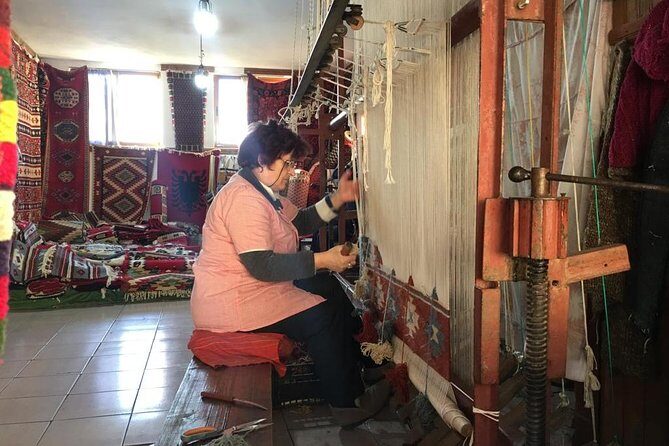
I like this timing because shopping often gets squeezed into the last ten minutes on tours. Here, you get enough room to actually look—materials, patterns, small crafts, and the kind of items that reflect local tastes. It’s also a good chance to slow down after the castle climb. Your feet will thank you.
You don’t have to be a bargain hunter to enjoy the Bazaar. Even if you only buy a small item (or none), it gives you a reality check: Kruja isn’t just a monument town. It has a working market feel.
If you plan to shop, keep your bag light earlier in the day. You’ll still be walking in Tirana after this, and carrying heavy purchases from stop to stop gets old fast.
Skanderbeg Square and Tirana’s Key Landmarks: The City’s Layers in Motion
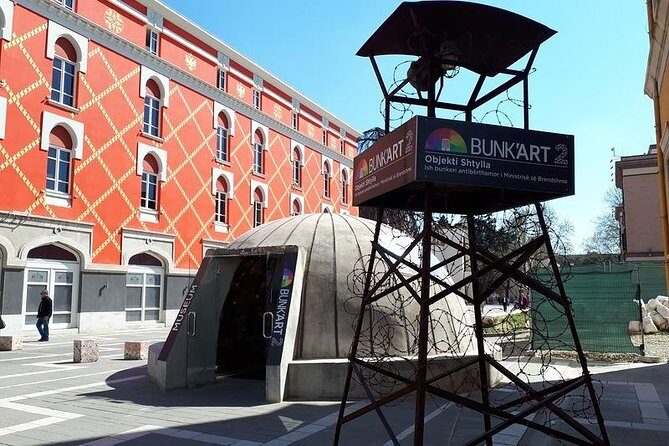
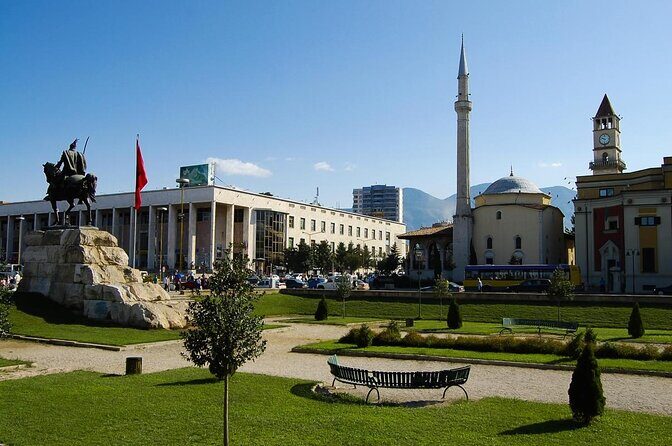
The afternoon starts in Tirana again, and the first big anchor is Skanderbeg Square. This is the kind of place where architecture tells a story. The tour points out that you’ll see a complex of buildings shaped by multiple periods, which is useful if you don’t want to memorize dates—you just want to understand why the city looks the way it does.
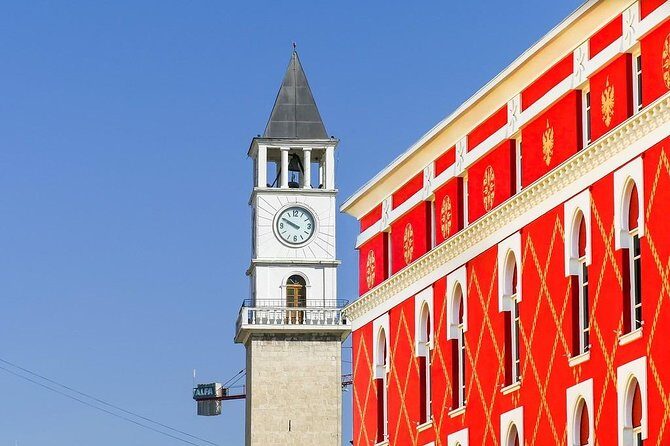
From this square, the tour highlights older reminders tied to the Ottoman past, especially the Clock Tower and Et’hem Bey Mosque. Even if you’re not a deep architectural nerd, these landmarks are easy to read visually. They help you place Tirana on a map of change, from older influences to later developments.
A good way to use your time here is to let the guide connect the dots:
- Where the Ottoman-era traces show up.
- How modern Tirana reworked parts of the city.
- Why Skanderbeg Square is such a symbolic center.
You’ll get around and see the sights on foot, so don’t plan to treat this as a quick stop. The whole point is to walk the area and pick up details you’d miss from a vehicle.
Et’hem Bey Mosque and the Clock Tower: What to Notice on a Walk
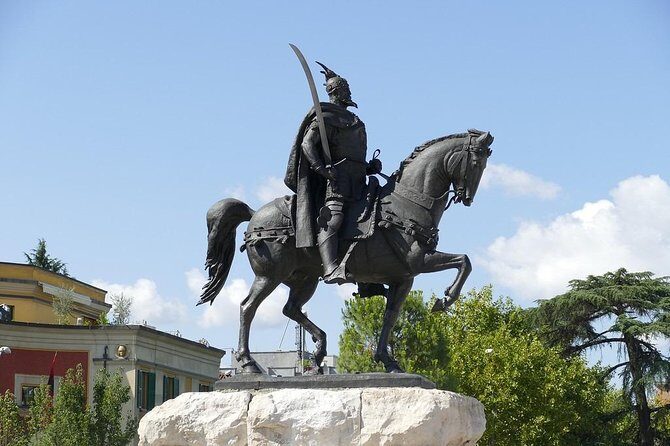
These two landmarks are short on time, but big on payoff if you pay attention. The Clock Tower is a clear visual marker, and the mosque is a reminder that Tirana’s history includes long stretches you don’t always guess from the modern streets.
In practice, you’ll want to pace yourself while you’re near them. It’s easy to over-focus on photos and miss how the buildings relate to surrounding streets. Look for the way these landmarks frame sightlines—where they pull your eye and how they help you understand the square as a meeting point, not just a backdrop.
If you’re traveling with kids or anyone who hates long stops, this part is flexible. You can take shorter breaks without losing the thread because the area itself is compact and walkable.

The Blloku District: Where Tirana’s Communist-to-Modern Story Shows Up
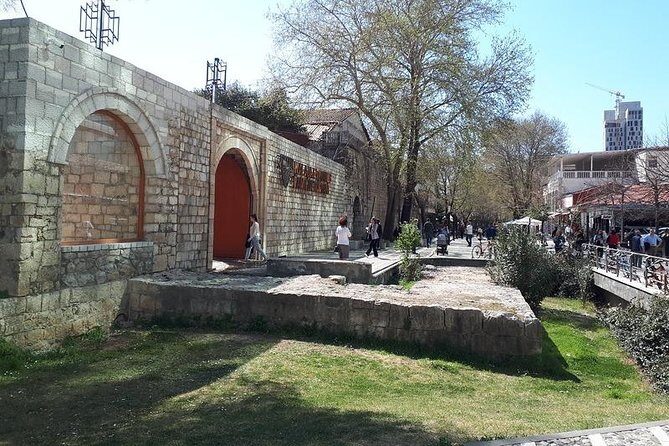
After the central square area, the tour includes the Blloku district. This is where Tirana’s transformation becomes more than a lecture topic. The tour’s description frames Tirana as a city shaped by communist history and modern regeneration, and Blloku is one of those places that helps you feel the shift.
Even if you’re just casually curious, Blloku works because it’s a contrast zone. You’re moving from landmark monuments into an area that tells you how the city redefined itself after earlier decades. Your guide’s job here is key: the meaning of a district isn’t obvious just from street views, so listen for how Blloku fits into Tirana’s broader narrative.
If you like wandering, this is a part of the tour where you can slow down a bit. Look at building styles, street energy, and how the area feels compared to older central landmarks. It’s the kind of walk that turns history into something you can sense.
Private Guide Value: Why This Day Works as a Real Orientation
I really like the “private guide” approach for this kind of day trip, especially in a country where the layers of history can be hard to connect on your own. You’re not just getting directions. You’re getting a timeline while you move between places.
One guide name that stood out in this experience is Eliot. In the story tied to his guidance, he didn’t treat the drive as downtime—he gave a complete timeline of Albanian history on the way to the castle, then followed up with context about the small town. That’s exactly what makes the day feel like more than sightseeing.
With a guide, you can also ask practical questions in the moment:
- Why the square matters.
- What to focus on in the castle area.
- How to interpret older Ottoman traces versus later changes.
Even if you’re not trying to memorize everything, you’ll leave with a cleaner mental map.
Price and Logistics: Is $289.40 Good Value for Eight Hours?
At $289.40 per person for about eight hours, you’re paying for a focused, guided day with transport and included admissions. For me, the value hinges on what you get without hassle: pick-up and drop-off at Skanderbeg Square, private guide attention, transportation, and included tickets for the main morning attraction.
The “included” list is important:
- Pick-up and drop-off at Scanderbeg Square, Tirana
- Private guide
- Transportation
- Admission ticket included for the Kruja castle stop
What’s not included is also clear: meals and drinks. That’s normal for a tour day, but it changes how you should plan. You’ll likely want to either grab something on your own during breaks or budget for lunch and water once you’re back in Tirana.
If you’re traveling with a group, you might also benefit from the tour’s group discount setup. Private tours can get pricey fast, so the fact that this one bundles transport and admissions is what keeps it from feeling like you’re paying for empty time.
What to Pack and How to Keep the Day Comfortable
This tour calls out comfortable shoes because there’s a lot of walking on uneven surfaces. That’s the one packing item you can’t skip. Beyond that, keep the day simple: a light layer, water, and a small day bag so you’re not juggling. You’ll be moving through two towns, with walking in both.
Because it’s a day trip, you should also think about energy management. The morning in Kruja is the most physically demanding—climbs and old stone textures. The afternoon is more about walking the central Tirana sights, but you’ll still be on your feet.
If you’re sensitive to crowds or prefer quieter pacing, tell your guide you want a slightly slower rhythm. A private group dynamic helps here.
And yes, the tour data notes COVID-19 facemasks are required, so plan to bring one.
Who This Tour Suits Best (and Who Might Want Something Else)
I’d book this tour if you want a fast, high-impact introduction to Albania’s two biggest personalities for a first-time visit: Tirana’s evolving city life and Kruja’s founding-story setting. It’s also great for people who like structure—clear stops, included admissions, and transport handled.
You’ll especially enjoy it if:
- You want an overview of Tirana’s communist history and modern regeneration without doing heavy research first.
- You care about Skanderbeg as a historical figure and want the story connected to real places.
- You prefer a guide who explains as you walk, not only at the start.
If you hate walking, or you only want minimalist, low-movement sightseeing, this may feel like too much. The itinerary is timed and active, even though it’s not described as extreme.
Should You Book Tirana and Kruja in One Day?
If you want the most “starter pack” Albania day you can do from Tirana, this is an easy yes. The mix of castle + museum, Old Bazaar shopping, and Tirana’s key landmarks around Skanderbeg Square makes the day feel coherent. You also get private guide attention and round-trip transport, which matters when you’re trying to make the most of limited time.
I’d only hesitate if you know you struggle with uneven walking or you’d rather spend more time in one place than see two cities back-to-back. If that’s you, consider a slower option instead.
FAQ
FAQ
What is the meeting point for this tour?
The tour starts at Skanderbeg Square (Sheshi Skënderbej, Tiranë, Albania).
What time does the tour start?
The start time is 8:30 am.
How long is the tour?
The duration is about 8 hours.
What stops will I visit?
You’ll visit Kruja Castle and the Scanderbeg Museum in Kruja, then spend time in Tirana around Skanderbeg Square, the Clock Tower, Et’hem Bey Mosque, and the Blloku district.
Are admission tickets included?
Yes. Admission tickets are included for the Kruja Castle stop.
Are meals and drinks included?
No. Meals and drinks are not included.
Is this tour private?
Yes. It’s a private tour/activity, so only your group will participate.
What should I wear or bring?
Wear comfortable shoes. There will be a lot of walking on uneven surfaces.
Do I need a mobile ticket or facemask?
A mobile ticket is used, and facemasks are required due to COVID-19.
Is free cancellation available?
Yes. You can cancel for a full refund up to 24 hours in advance of the experience start time.