Tirana makes sense when a local narrates. On this walk, I like how today’s Tirana is explained through its communist-era leftovers, and I also like the way the route hits real center-stage landmarks like Skanderbeg Square. You get history, culture, and street-level life in a format that stays easy to follow.
The only real drawback: it’s a mostly outdoor walking tour, and it requires good weather to run.
In This Review
- Key highlights worth your attention
- Why This Two-Hour Tirana Walk Works
- Meeting at Skanderbeg Square: Power, Religion, and the Khrushchev Detail
- Enver Hoxha Pyramid: A Communist Symbol Left in Place
- House of Leaves Museum Stop: Seeing the Spy-House Reality
- Blloku After Communism: From Locked Villas to Cocktail Bars
- Polytechnic University of Tirana: The Capital Through Students
- Price, Group Size, and What $17.36 Buys You
- Guide quality: where the tour really clicks
- What to wear, bring, and ask
- Should You Book Tirana by Locals?
- FAQ
- How long is the Tirana by Locals walking tour?
- What time does the tour start?
- Where do I meet for the tour?
- Is the tour all walking, or does it include indoor stops?
- Are tickets included for the main sights?
- What is included in the price?
- What is not included?
- How big is the group?
- Does it run in bad weather?
Key highlights worth your attention
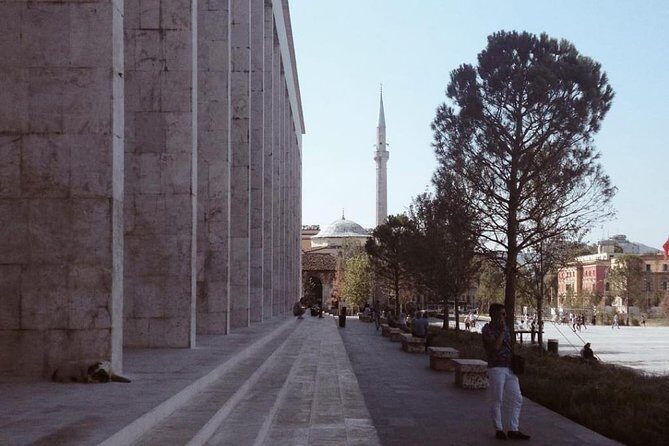
- Skanderbeg Square in context: mosques, a clock tower, and major state buildings tied into Albania’s shifting power story
- Enver Hoxha Pyramid still standing: you’ll see how a communist symbol has survived political change
- House of Leaves Museum: a former espionage site that helps explain what life felt like under surveillance
- Blloku’s comeback: the former restricted zone around Enver Hoxha’s villa now runs on coffee, boutiques, and nightlife
- Polytechnic University street view: Tirana’s education scene through one of the country’s oldest technical schools
- Small group pace: max 15 people, which makes it easier to ask questions and get photo stops right
Why This Two-Hour Tirana Walk Works
This tour is built for people who want Tirana to click fast. Instead of wandering with no thread, you walk with a local guide who links buildings to the stories behind them. It’s a short window, but it doesn’t feel rushed in a frantic way.
The biggest win is that the tour treats Tirana as a living place. You’ll see Italian-style architectural influence, you’ll spot communist-era traces, and then you’ll move into neighborhoods where people actually hang out. It’s history with shoes on.
It also helps that the group stays small, with a maximum of 15 travelers. That matters because good guides can actually talk to the whole group, not just the loudest person in the back.
You can also read our reviews of more tours and experiences in Tirana.

Meeting at Skanderbeg Square: Power, Religion, and the Khrushchev Detail
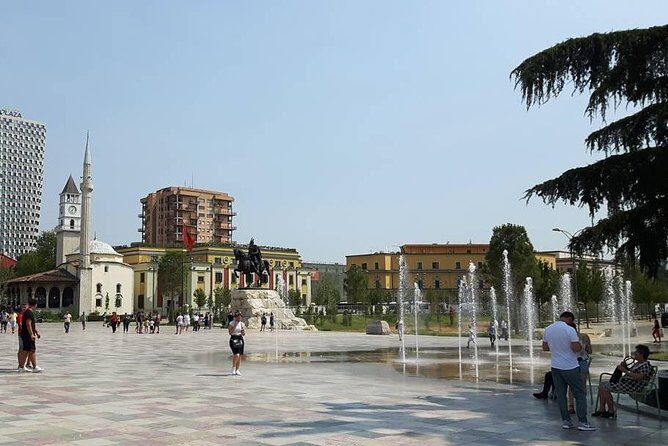
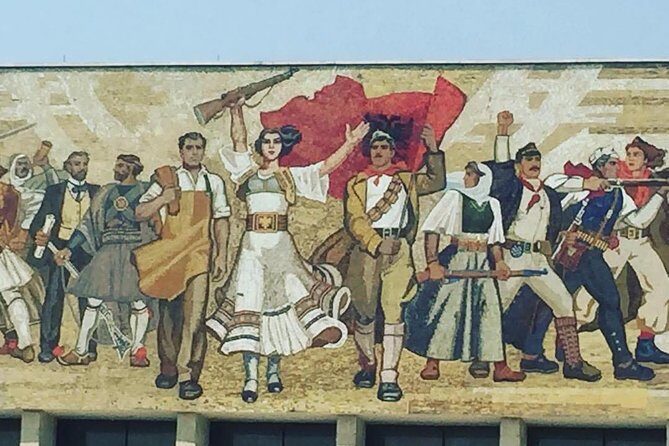
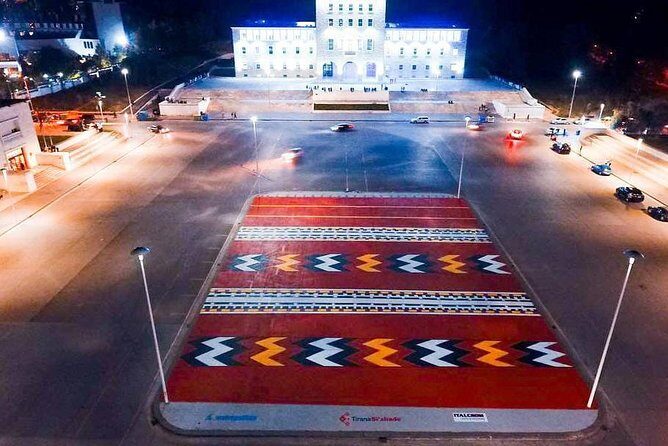
You start in Skanderbeg Square, at Sheshi Skënderbej in central Tirana. This is the kind of meeting point that feels like the city’s living room: big buildings, public space, and enough landmarks packed together that even a short time here tells you what the capital cares about.
From the square, you’ll check out a mix of major sights: the Et’hem Bey Mosque, the Clock Tower, and the National Theater of Opera and Ballet. One detail that stands out is that the first brick of the theater was put in place by former Soviet leader Nikita Khrushchev. That one fact alone gives you a quick lesson in how politics shapes culture and construction, even when the streets look calm today.
You’ll also see the National Bank of Albania nearby. It’s not a museum stop, but it’s useful context: Tirana’s center isn’t just about monuments, it’s about institutions still doing real work. And after this, your guide resets the day’s focus so you know what you’re looking at next.
What to watch for: the square is busy and sun/shade can change quickly. If you’re sensitive to heat, bring water and plan for a little walking before you get the first deep story.
Enver Hoxha Pyramid: A Communist Symbol Left in Place
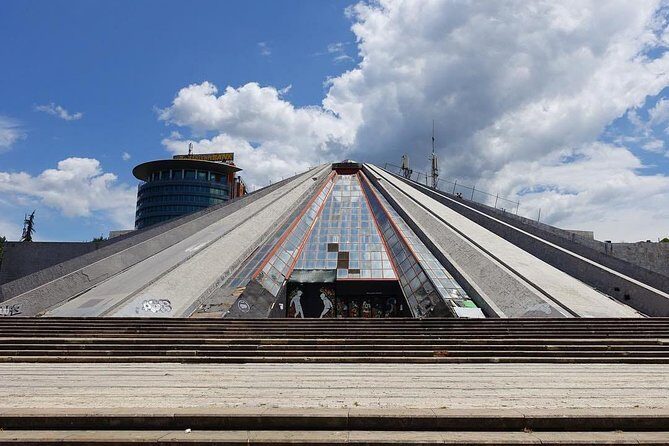
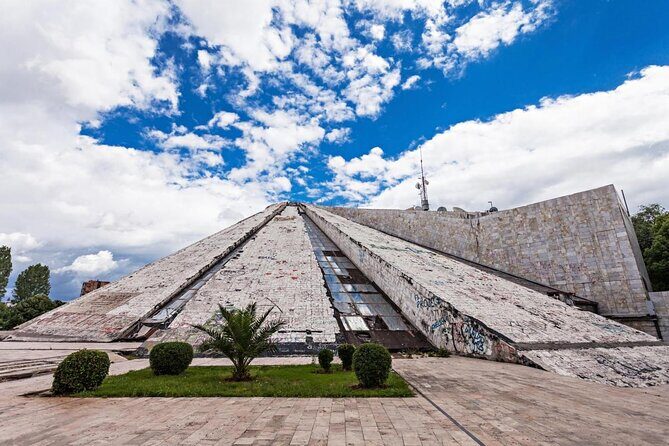
Next comes the Enver Hoxha Pyramid, one of the most striking objects in the cityscape. The point here isn’t to treat it like a simple photo spot. You learn why it’s hard to get rid of symbols like this—how it survived earlier attempts to destroy it, and how it still sits there un-restored.
The tour frames the pyramid as a physical reminder of mixed and contradictory history. That’s a smart way to think about it. Tirana didn’t delete the past; it rearranged it. You’ll see the result in one stubborn structure that refuses to fade into the background.
This stop is short on purpose (you spend about 20 minutes here), so it works best if you’re ready to take a few minutes to look closely and then ask questions. A good guide will point out what you’d miss on your own: what kind of message a building sends when it’s left standing while everything around it changes function and meaning.
Consideration: because the pyramid is part monument, part reminder, the vibe can feel heavier than the coffee-and-bars you’ll get later in the day. It’s still worth it, just don’t expect a light, fluffy history lesson.
House of Leaves Museum Stop: Seeing the Spy-House Reality
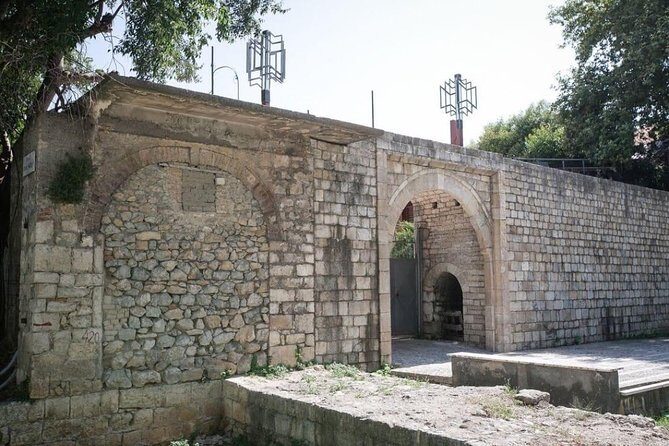
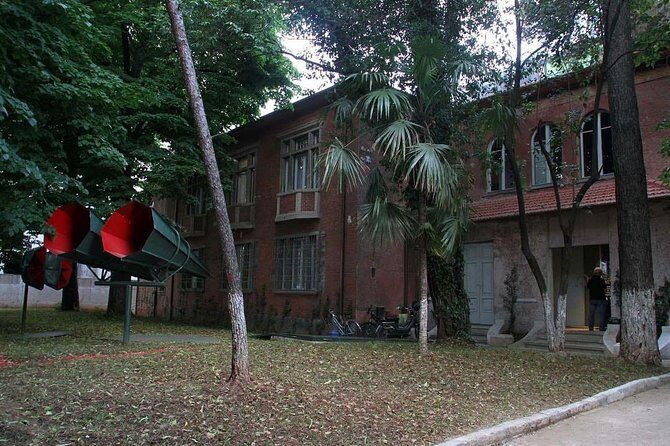
Then you move into the House of Leaves Museum, and the tone shifts in a real way. This place used to be the National Intelligence Agency—essentially an espionage house. That history turns what you see into more than architecture. It becomes a window into how control worked and how fear can become part of daily life.
The museum stop is described as one of the most intriguing places in Tirana, especially for young people and first-time visitors. That’s the value: you’re not just hearing that communism was tough. You’re seeing a story built around concrete reality, tied to a site with a past.
A local guide helps you connect the dots between what you saw outside—things like monuments and built symbols—and what happened behind closed doors. Even if you only spend a short window here, it’s enough to give you a stronger sense of why the rest of Tirana looks the way it does.
Possible drawback: museum time can affect pacing. If you hate slower interiors, tell your guide you prefer quick, focused explanations. The best guides adjust their talk so you still get the meaning without feeling trapped in one room.
Blloku After Communism: From Locked Villas to Cocktail Bars
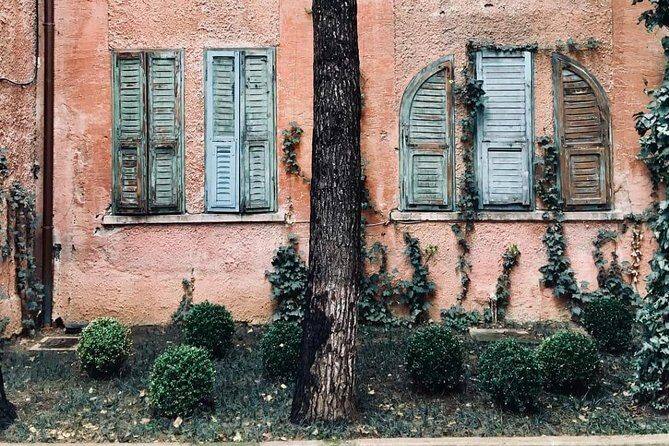
After the museum weight, the tour shifts to Blloku, Tirana’s best-known hangout area. This stop is fun, but it’s also purposeful. You learn that Blloku used to be reserved for government officials and that the general public couldn’t enter during Enver Hoxha’s rule. Now it’s full of coffee shops, boutiques, cocktail bars, and pubs.
That transformation is the whole point of this section. You’re not just sightseeing a trendy neighborhood. You’re watching how access changes. When a space opens from restricted to public, the energy of the city changes too.
You’ll take a stroll here (about 25 minutes), and the guide uses walking time to bring the past into the present. It’s the kind of explanation that turns a street into a story: who lived there, what the old rules were, and how people use the area today.
If you want a practical tip: this is also a good place to plan where you might grab a drink later on your own. You’ll get a sense of the vibe without needing to commit to a long detour.
What to keep in mind: if you’re visiting Tirana during busy hours, Blloku can feel lively and crowded. Give yourself a little buffer so you don’t feel rushed during your stroll.
Polytechnic University of Tirana: The Capital Through Students
Your final highlighted stop is Polytechnic University of Tirana, where the focus turns from power and politics to education and everyday life. The tour describes it as the oldest and second largest university in Albania after the University of Tirana.
You’ll also get some useful numbers: it was founded in 1951 and now has around 10,000 students. The tour notes students come from Albania, Kosovo, Macedonia, and Montenegro. That international mix matters in a city tour because it shows Tirana as a regional hub, not just a single-country capital.
This stop feels grounded. Instead of chasing the biggest monuments again, you see the city through people who are studying and building a future. It’s a quick stop (about 15 minutes), but it helps balance everything that came before.
Why this matters: when your day includes communism-era sites and political symbols, ending with students gives you a fuller picture of what Tirana is about now.
Price, Group Size, and What $17.36 Buys You
At $17.36 per person, this tour is priced like a value play—especially for a guided walk in a city center. The big reason is that the day mixes free time with paid-interest stops.
From the provided info, admission tickets are included at Skanderbeg Square (for the landmark stop) and at the Enver Hoxha Pyramid. Blloku and the Polytechnic University stops are listed as free. That combination makes the ticket cost feel less like you’re only paying for talking and more like you’re paying for a guided route that gets you to multiple meaningful places.
You also get a professional guide, and the group stays small (max 15). Small group size is a hidden value. It usually means fewer people per explanation, and it’s easier to ask about the history that feels confusing at first.
Timing is another soft value point. The tour is typically booked about 70 days in advance, which suggests it’s popular with people who plan ahead. If your trip dates are fixed, don’t wait until the last minute.
Guide quality: where the tour really clicks
This is the part you can feel right away: the guide matters. The tour descriptions and guide names shared in feedback point to locals who know how to make the stories land without turning the day into a lecture.
Guides such as Leo and Eri have been described as kind, professional, and very good at learning-driven explanations. Another local guide name you may run into is Mimmi, noted for helping people see Tirana the way locals see it—like you’re walking with a friend, not just a textbook.
Two practical guide habits seem to elevate the experience:
- Photo and video patience: if you want a few extra pictures at the square or around the pyramid, the guide will generally work with your pace.
- Turning questions into answers: this isn’t just history facts. You get connections between eras, and you can ask why things look the way they do.
What to wear, bring, and ask
Because this is a walking tour (1 to 2 hours), wear shoes you can trust for uneven sidewalks and curbs. Tirana weather can be unpredictable, so if the tour requires good weather, dress for sun one hour and shade or cooler air the next.
Bring a bottle of water. Even short city walks add up, especially if you stop for photos. A small day bag also helps if you want to carry a light layer.
And here are smart questions to ask your guide (you’ll get better answers than you’d guess):
- Why is the pyramid still there, and what does un-restored mean in practice?
- How did restricted areas like Blloku change once the public could enter?
- What does student life at Polytechnic reveal about today’s Tirana?
If you’re into photography, ask where to stand for the best angles at Skanderbeg Square and the pyramid. That’s where guides can save you time.
Should You Book Tirana by Locals?
If you want a short, guided way to understand Tirana’s mix of Italian-influenced buildings, communist-era remnants, and modern street life, I think you should book this. It’s compact, structured, and built around places that actually explain the city—not just places you can snap and move on.
Book it especially if you value great guiding and you like your history tied to real locations. If you prefer long museum time or a slow, unstructured wander, you might find 1–2 hours a bit brief.
One last practical note: because the tour needs good weather, check conditions close to the start time. When it runs, it’s a strong way to get oriented fast and feel like Tirana has a story, not just a list of sights.
FAQ
How long is the Tirana by Locals walking tour?
The tour lasts about 1 to 2 hours.
What time does the tour start?
The start time is 9:00 am.
Where do I meet for the tour?
You meet at Skanderbeg Square (Sheshi Skënderbej, Tiranë, Albania).
Is the tour all walking, or does it include indoor stops?
It is a walking tour with stops that include the House of Leaves Museum and other landmark areas.
Are tickets included for the main sights?
Admission tickets are included for the Skanderbeg Square stop and for the Enver Hoxha Pyramid stop. The Polytechnic University and Blloku stops are free.
What is included in the price?
The included item is a professional guide.
What is not included?
Alcoholic beverages and lunch are not included, and personal expenses and optional activity costs are not included.
How big is the group?
The tour has a maximum of 15 travelers.
Does it run in bad weather?
This experience requires good weather, and if it’s canceled due to poor weather, you’ll be offered a different date or a full refund.