REVIEW · TIRANA
1001 Windows of Berat & Golden Sunset in Apollonia
Book on Viator →Operated by Aria Travel Albania · Bookable on Viator
Berat and Apollonia sunset is time travel. This full-day trip strings together two UNESCO sites in one smooth circuit, with a guide to explain what you’re seeing and time to enjoy the views. You’ll love the white houses of Berat, famous for their many windows, and you’ll love the golden light over Apollonia from the hilltop near the ruins.
Two standouts for me are the Onufri Museum inside Berat Castle and the way the tour sets you up to see Apollonia in the best light. You also get air-conditioned transport plus hotel pickup and drop-off, so you’re not juggling schedules on your own. If you’re lucky and Jetmir is your guide, the history clicks fast—his explanations make the sites feel connected instead of random stops.
One thing to keep in mind: this is a long day, and the best moments depend on good weather. The tour runs roughly 7–9 hours, with only about an hour here and there, so plan to move at a brisk-but-manageable pace.
In This Review
- Key highlights you’ll feel right away
- A UNESCO Day Trip That Fits Berat Views and Apollonia Light
- Berat’s Two Neighborhoods, the River Setting, and the “1,001 Windows” Look
- Berat Castle: Icons at Onufri Museum and Churches Inside the Walls
- Apollonia Archaeological Park: Via Egnatia, Cicero, Octavian, and a Hilltop Sunset
- Price and Value: What Your $126.16 Gets You (and What It Doesn’t)
- Timing, Weather, and the Pace You Should Expect
- Who This Tour Suits Best (and Who Might Want Something Else)
- Should You Book 1001 Windows of Berat & Golden Sunset in Apollonia?
- FAQ
- What time does the tour start?
- How long is the tour?
- Is lunch included?
- Is hotel pickup and drop-off included?
- What admissions are included in the tour?
- What languages and group size are included?
- What happens if the weather is poor?
Key highlights you’ll feel right away
- A UNESCO-to-UNESCO day plan: Berat first, then Apollonia, with the possibility of sunset views at the end
- Berat Castle living inside the walls: houses and residents still within the fortifications
- St. Mary’s Church turned Onufri Museum: icons, including red color linked to Onufri
- Apollonia’s big names and big eras: Roman fame on Via Egnatia, plus Cicero and Octavian Augustus
- Admissions handled for key sites: included at the castle and at Apollonia
- Small-group feel (max 50): guided, not crowded chaos
A UNESCO Day Trip That Fits Berat Views and Apollonia Light
From Tirana, this is the kind of outing that saves you effort. You’re picked up, driven to central Albania, guided through two major heritage stops, and dropped back after sunset timing is in play. Start time is 8:30 am, and the total time runs about 7–9 hours, so it’s built for a full day rather than a quick taste.
What makes it especially practical is that the day is organized around pacing and atmosphere. Berat is your morning focus—castles, churches, and the town’s signature white façades. Apollonia is your afternoon-and-evening focus, where the ruins and the hilltop viewpoint give you that classic golden-hour feel.
The guide factor matters too. You’ll see more with explanations for the Ottoman-era influences in Berat, the icon collection inside the museum, and the way Apollonia ties into famous Roman-era names and philosophy.
You can also read our reviews of more evening experiences in Tirana


Berat’s Two Neighborhoods, the River Setting, and the “1,001 Windows” Look
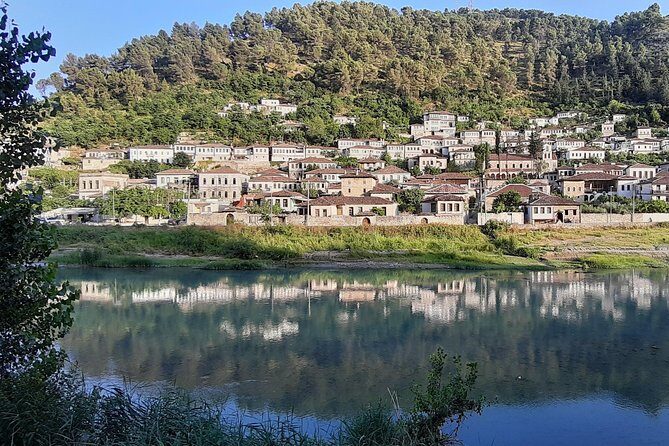
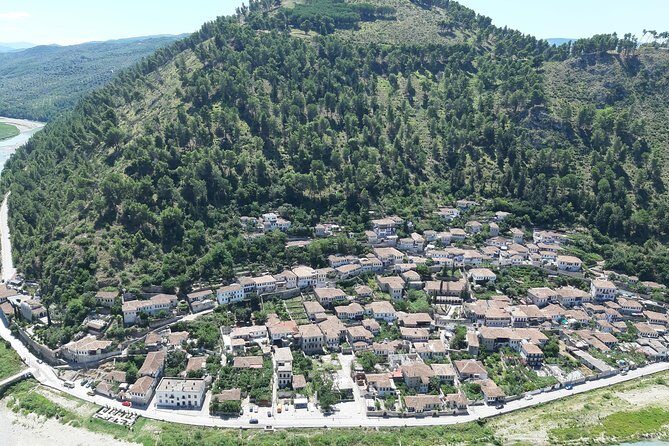
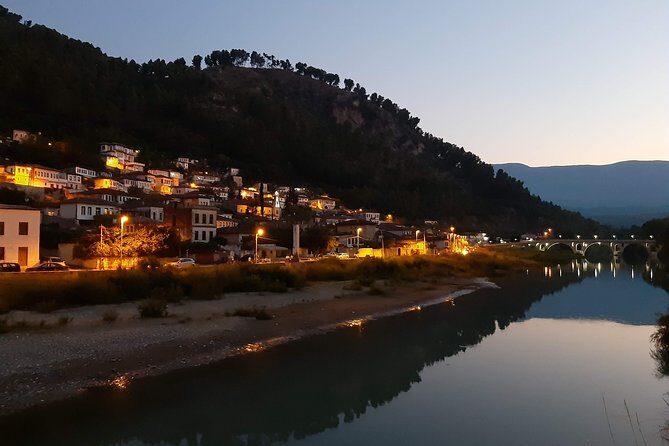
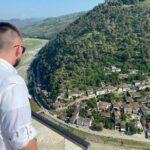
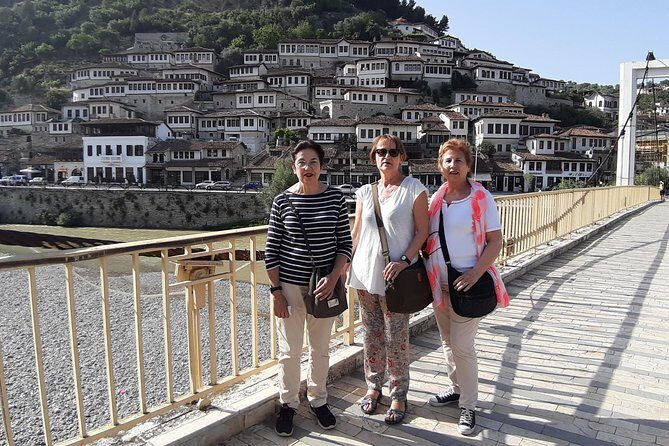
The first stop is Berat, a UNESCO World Heritage Site, and you get about 1 hour to explore. Berat sits at the foot of Tomorri Mountain and near the River Osum, which helps explain why the town looks like it’s spilling down a green slope when you first catch sight of it.
Berat is known for two older neighborhoods: Gorica and Mangalem. Part of the story includes what happened in 1417, when the town was occupied by the Turks and several mosques were built below the old castle area. That mix of influences is part of why the town looks layered, not stuck in one moment.
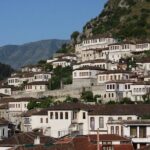
Now for the “thousand and one windows” nickname: Berat’s whitewashed houses are said to be built on top of each other on a slope, with many windows stacked through the buildings. Streets are narrow and stone paved, which adds charm but also means you’ll be moving through real town lanes, not wide sightseeing boulevards.
Admission at this first stop is free, which is a nice bonus. The tradeoff is time: one hour is enough to get your bearings, spot the views, and wander, but not enough to do a deep, slow neighborhood-by-neighborhood exploration if that’s your style.
Berat Castle: Icons at Onufri Museum and Churches Inside the Walls
Next comes Berat Castle, and this is where the tour slows down just enough to feel meaningful. You’ll have about 1 hour 30 minutes, and admission is included.
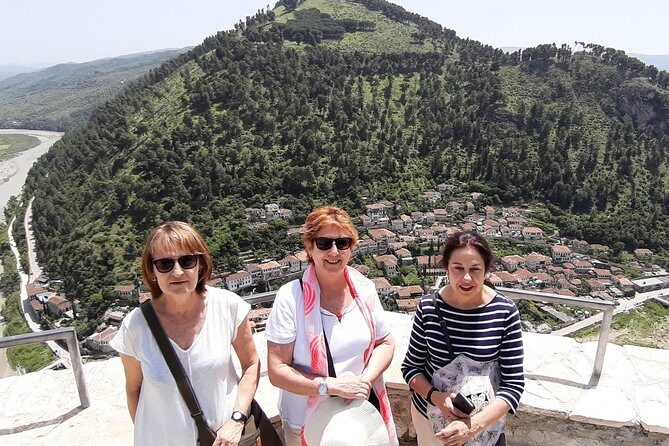
Berat Castle is described as the only castle in Albania that still has houses and inhabitants inside its walls, so it’s not just a viewpoint and ruins. People still live there and go about daily life in the same area their predecessors did—an important detail because it changes the vibe. You’re not only looking at a museum-like fortress; you’re seeing a lived-in historic setting.
Inside, you’ll visit the castle area plus St. Mary’s Church, which has been turned into the Onufri Museum. This museum is built around icons, and the collection is described as surprisingly diverse. The museum’s namesake is Onufri, an Albanian icon painter from the 16th century who painted in Albania and Greece. Onufri is especially known for the red color named after him.
The castle visit also includes two other churches that are described as not open to the public. That’s worth noting—not because it’s a disappointment, but because it helps you understand why you might not see every possible doorway or interior space. The tour still focuses you on the museum and main highlights you can access.
Another detail that stands out: two of the oldest New Testaments—one from the 6th century and one from the 9th century AD—have been found in Berat. Even if you don’t spend time studying manuscripts directly, this piece of the story helps you understand why the castle and its religious sites carry weight here.
Lunch is optional. If you want the castle setting for food, the tour mentions the possibility of a special traditional lunch within the castle, run by a local couple. If you don’t add lunch, that’s also fine—you can keep the day moving without a fixed meal stop.
Apollonia Archaeological Park: Via Egnatia, Cicero, Octavian, and a Hilltop Sunset
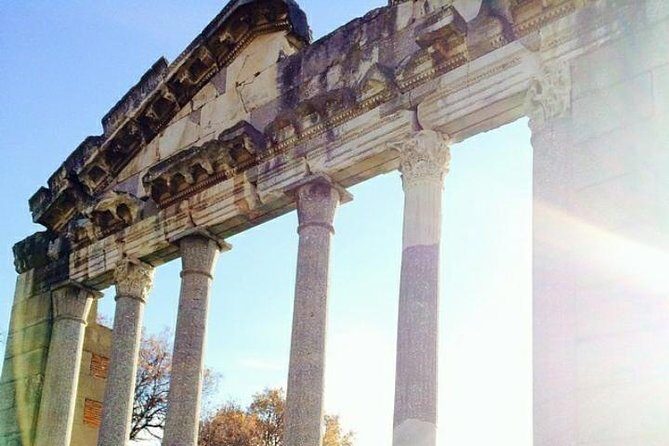
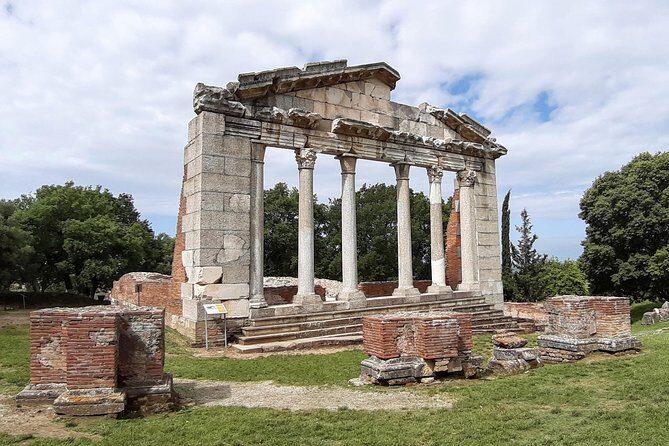
After Berat, you head to Apollonia Archaeological Park, another UNESCO-linked day stop (and a major one). This part runs about 1 hour 30 minutes, and admission is included.
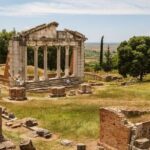
Apollonia was one of the most important ancient centers in Roman times, sitting on the famous route Via Egnatia. It’s also connected to famous writers and thinkers. The Roman orator Cicero is said to have praised Apollonia’s beauty and called it magna urbs et gravis—a great and important city.
Greek settlers established Apollonia in the 7th century BC, coming from Corinth and Corcyra. The tour also frames Apollonia’s peak as the 4th–3rd centuries BC, when excavations show it reached its zenith. Later, during the Roman era, it ties into Octavian Augustus, who studied philosophy there until he heard news of Caesar’s murder in the Senate and went on to become emperor.
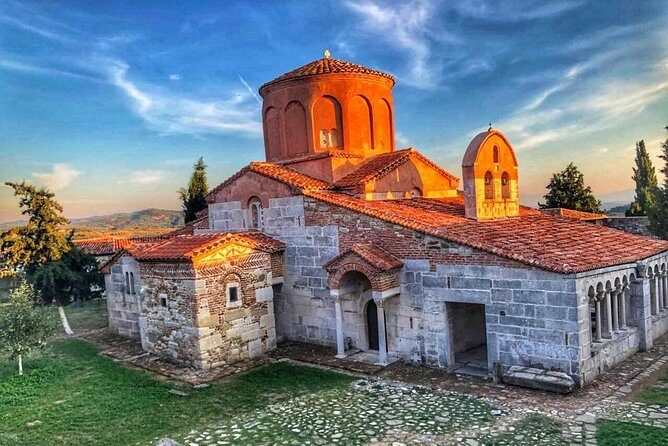
On site, you’ll visit the ancient city remains and an Orthodox monastery turned archaeological museum. That combination matters because it connects two layers of time: the ancient city’s physical footprint and a later religious space that’s now part of the storytelling.
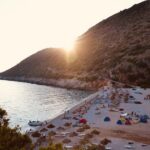
Then comes the sunset opportunity. The tour notes you have a chance to enjoy sunset from the top of the hill, then you head back to Tirana. Sunset itself isn’t guaranteed in the way a fixed clock-time show is, because the tour requires good weather. But even when the sky cooperates, the timing is set up so you’re not racing through ruins in harsh midday brightness.
Price and Value: What Your $126.16 Gets You (and What It Doesn’t)
At $126.16 per person, this is priced like a real day tour rather than a bargain shuttle. You’re paying for transport, guided time, and—most importantly—having admissions handled for some of the biggest pieces of the day.
Here’s the practical breakdown based on what’s included:
- Air-conditioned vehicle for the day
- Hotel pickup and drop-off
- Admission included at Berat Castle (including the Onufri Museum area)
- Admission included at Apollonia Archaeological Park
- Admission free at Berat itself
- English-speaking guide
- Mobile ticket and group discounts
- Group size capped at 50 travelers
Not included:
- Lunch is optional. You can add it for +10€ per person, and it’s listed as own expense.
So the value question becomes: do you want guidance and easier logistics between two far-apart heritage stops? If yes, the price makes sense. If you plan to self-drive and pay admissions on your own, you could potentially spend less, but you’d also lose the benefit of having the history explained while you’re actually standing in the places where it happened.
Also, the name of the experience hints at what you’re really buying: the shape of the day. You’re not just going to Berat and Apollonia—you’re seeing Berat in the morning and building toward a sunset moment at Apollonia.

Timing, Weather, and the Pace You Should Expect
The schedule is built for one big loop: start 8:30 am, then work through Berat, then Berat Castle, then Apollonia, with sunset light as the end goal. Total time is about 7–9 hours, so you’ll likely be on your feet in town lanes and on the hill near the sunset viewpoint.
The tour explicitly requires good weather. That means the sunset piece is dependent on conditions. If the weather doesn’t cooperate, the tour states it can be canceled due to poor weather, with an offer of a different date or a full refund. This matters because you’re paying for an experience that’s partly about timing.
One more pacing point: the stops aren’t long enough to treat each place like a standalone day trip. Berat (town) is about an hour, the castle is about 90 minutes, and Apollonia is about 90 minutes. This is ideal for getting highlights and context, but if you want hours and hours of unhurried wandering, you’ll feel the clock.
Who This Tour Suits Best (and Who Might Want Something Else)
This works best if you like structured sightseeing that still feels authentic. You’ll enjoy it if you want:
- UNESCO sites in one day without coordinating transport yourself
- An explanation of why Berat’s neighborhoods, churches, and castle matter
- A guided visit through Onufri Museum and Apollonia’s ancient storylines
- A realistic shot at golden-hour atmosphere at Apollonia
It may not be the best fit if you’re traveling ultra-slow. The day is long, and each stop is time-boxed. You’ll see a lot, but you won’t have “all day” to pick your own route through the neighborhoods.
Should You Book 1001 Windows of Berat & Golden Sunset in Apollonia?
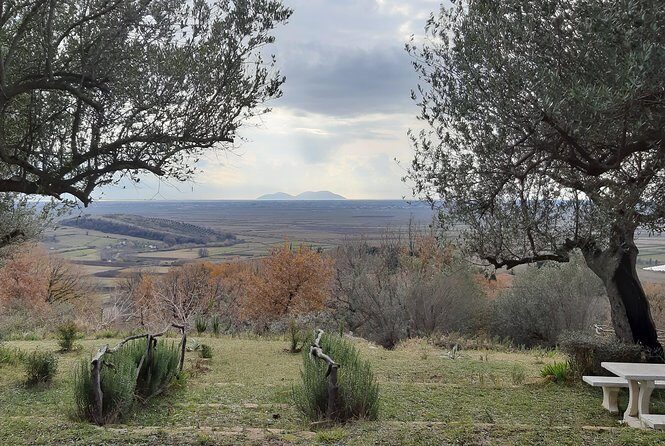
I’d book this if you want a guided, efficient day that mixes Ottoman-era influence, icon art, and Roman-era heritage, all wrapped around a sunset timing plan. The inclusion of major admissions at the castle and Apollonia keeps the budget easier to manage, and the hotel pickup removes one of the biggest hassles of day trips.
I’d skip it only if weather is already shaky during your dates or if you know you need lots of downtime and flexible stop lengths. When the sky is clear, though, the flow from Berat’s white-window charm to Apollonia’s hilltop ruins is exactly the kind of trip you remember.
FAQ
What time does the tour start?
The tour starts at 8:30 am.
How long is the tour?
The duration is listed as 7 to 9 hours (approx.).
Is lunch included?
Lunch is not included. You can reserve a traditional lunch for +10€ per person as an optional add-on.
Is hotel pickup and drop-off included?
Yes. The tour includes hotel pickup and drop-off.
What admissions are included in the tour?
Admission to Berat Castle and Apollonia Archaeological Park is included. Berat itself has free admission for the stop mentioned.
What languages and group size are included?
The tour is offered in English, and it has a maximum of 50 travelers.
What happens if the weather is poor?
The experience requires good weather. If it’s canceled due to poor weather, you’ll be offered a different date or a full refund.