REVIEW · SARANDA
Bënja Thermal Baths (Përmet) & Gjirokastër Fortress Tour
Book on Viator →Operated by Leka Tours & Car Rentals · Bookable on Viator
Thermal water meets Ottoman-era stone. This tour links the Bënja Thermal Baths (llixha) with the dramatic fortress town of Gjirokastër, using the scenic Drinos Valley route to get you from river caves and warm mineral pools to high-walled views. What makes it especially interesting is that the day isn’t just sightseeing on flat ground—you’re moving through the Albanian Alps and the Accursed Mountains area, then switching to a town that’s literally balanced on a steep hillside.
I especially like the private feel—no waiting around for a slow-moving cluster of strangers—and the way the stops are timed so you actually have breathing room. I also like the hands-on contrast between recovery-focused thermal pools (steady 29–30°C year-round) and the castle’s museum displays, including Communist resistance memorabilia and a captured US Air Force plane. The one thing to factor in is that the drive can be long, so if you’re sensitive to road time, plan to settle in and bring a little patience.
In This Review
- Key reasons to go
- The Drinos Valley route: why the drive is part of the experience
- Bënja Thermal Baths (llixha) near Përmet: warm pools and mineral legends
- From valley water to fortress walls: what Gjirokastër Castle gives you
- Inside Kalaja e Gjirokastrës: the military museum and the big names
- Private tour energy: small group pace and tailored attention
- Price and value: what $100.41 buys you in real terms
- Who this tour fits best (and who should think twice)
- Should you book the Bënja Baths and Gjirokastër Castle tour?
- FAQ
- FAQ
- What’s the price per person for this tour?
- How long does the tour take?
- Is pickup offered?
- Are tickets included for the main sites?
- Where does the tour start and end?
- What are the main stops?
- What’s the maximum group size?
- Does the tour run in any weather?
- Is free cancellation available?
Key reasons to go
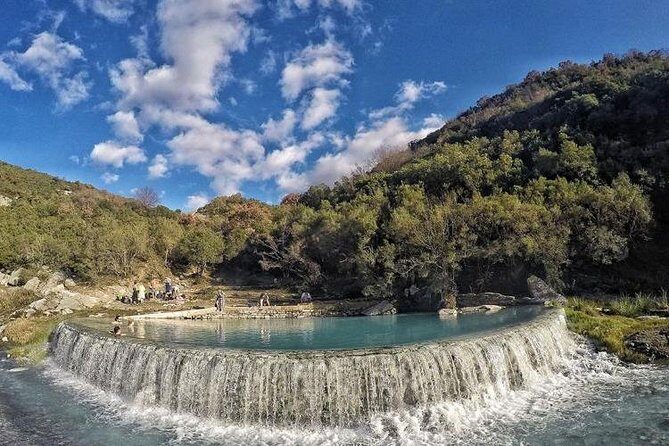
- Thermal baths at steady 29–30°C year-round, fed by the Langarica water system
- Gjirokastër Castle at 336 m high, with views over the river-valley route
- Admission tickets included for both the baths and the castle
- Small-group cap (max 15), plus a private-tour approach that reduces waiting
- Guides that can tailor the day, with Aleksia as guide and Kevin as driver on some departures
The Drinos Valley route: why the drive is part of the experience
The day starts in Saranda, where you meet your tour team at Leka Tours & Rent a Car. From there, you’re not just getting from point A to point B—you’re traveling through the wider Drinos Valley on a route that leads you toward the Albanian Alps. You’ll pass through the same kind of terrain that shapes this region: valleys, canyon cuts, and mountain ridges.
This matters because it changes how you feel when you arrive. Thermal baths don’t land the same way if you come straight off a highway. Here, the switch from mountain scenery to warm water feels like a real change of gear, and that makes the baths more relaxing when your body finally catches up.
Also, the tour duration can vary a lot (it lists 2 to 8 hours approx.). That gives flexibility depending on timing and your pacing, but it’s a reminder to plan your day loosely. If you’re the type who hates transportation time, this route may feel like a stretch—just know that it’s built around two meaningful stops.
You can also read our reviews of more tours and experiences in Saranda.
Bënja Thermal Baths (llixha) near Përmet: warm pools and mineral legends
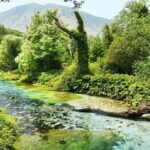
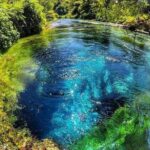
Your first major stop is the Bënja Thermal Baths in Përmet’s area, about 13 km from Përmet’s center. In Albanian, you’ll hear them called llixha. The story of why this place feels different comes from the water system: the Vjosa River flows across the valley, then branches into the Langarica River, and the baths are linked to the Langarica canyon area.
Here’s the standout detail you should remember: the waters stay at a comfortable 29–30°C all year-round. That’s not a seasonal thing. It’s steady, which means you can go in cooler months and still expect warm mineral pools rather than a lukewarm soak.
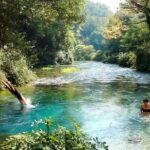
The setting is also part of the attraction. The Langarica Canyon has caves, and the thermal water blends with a river that would otherwise be naturally cold. When warm water meets that canyon landscape, you get the warm-green-blue look people associate with thermal sites.
On the wellness side, the mineral pools are traditionally associated with relief for conditions like rheumatism, skin issues, and kidney ailments. You don’t need to treat this as a medical promise to enjoy it as a cultural idea and a relaxing routine. The practical takeaway is simpler: if you want to unwind with warm water in a natural-feeling environment, these pools deliver.
You typically get around 3 hours at this stop, and admission is included. That’s enough time to do more than one pool area and still take a break between short swims and just sitting. If you plan to dip, bring swimwear you’re happy to re-wear and use a simple towel strategy (fast-drying if you have it).
One small consideration: with thermal baths, comfort matters more than “perfect photos.” Focus on how the pools feel and on finding a spot that matches your mood—quiet corner versus social pool—rather than rushing through everything.
From valley water to fortress walls: what Gjirokastër Castle gives you
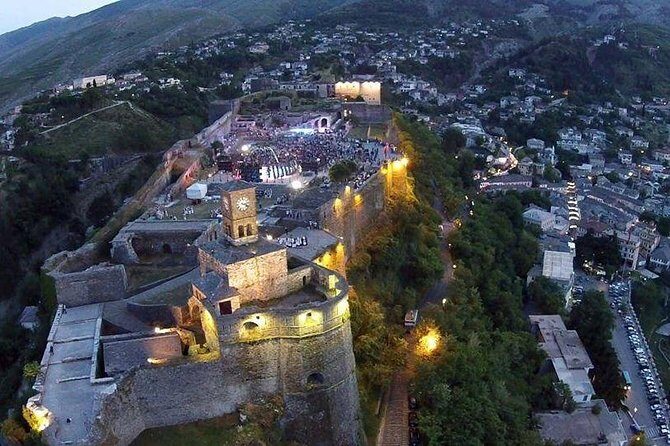
After the baths, the day shifts up the scale—literally. Gjirokastër Castle (Kalaja e Gjirokastrës / Kalaja e Argjirosë) sits at about 336 m (1,102 ft), towering over the town. The castle overlooks the strategically important river-valley route, so you’re not only looking at a historic site—you’re seeing the reason it was built there.
Time at the castle is listed as about 2 hours, and that’s a realistic window for walking, looking out, and reading key exhibits without feeling trapped. The castle dominates the town’s skyline, and the views from that height help you understand why Gjirokastër’s fortress style made sense for centuries. You can spot the valley lines and the roads that connect the region.
The tour also sets you up to appreciate the fortress town layout beyond the castle walls. It includes a look at the best preserved examples of a Medieval bazaar alongside the fortress itself. Even if you only spend a short time there, it gives you context for why the castle mattered: trade and daily life sat below while defense stayed above.
A practical note: when a town is built on a steep hillside, walking can feel more tiring than you expect. Wear shoes you trust. If you’re planning to enjoy both the baths and the castle, think about foot comfort so your day stays easy.
Inside Kalaja e Gjirokastrës: the military museum and the big names
Gjirokastër Castle isn’t only walls and views. It includes a military museum filled with artifacts connected to 20th-century conflict and the Ottoman-era context that shaped the broader region. On display, you’ll see captured artillery and memorabilia tied to the Communist resistance against German occupation.
There’s also an exhibit element that’s unusual for a small castle: a captured United States Air Force plane, kept to commemorate the Communist regime’s struggle against what the regime framed as imperialist Western powers. You don’t need to agree with the politics to find the exhibit gripping. It’s the kind of museum object that makes you stop, look again, and reflect on how different sides write their own history.
If you’ve visited other fortress museums, you’ll recognize the pattern: castles were built for control, then later used to display control narratives. Here, the castle becomes a stage where military storytelling changes with each era—Ottoman names historically referenced as Ergiri, and local Greeks referring to Argyrokastro. Those names help explain why this place feels layered rather than one-note.
One balanced caution from what you might experience: if you’re hoping for a deep historical lecture, you may wish your guide went even further with background. The best way to handle that is simple—ask direct questions when you’re at the museum screens and key artifacts. A good guide can often stretch explanations when you prompt them.
Private tour energy: small group pace and tailored attention
This is built as a private tour, which is a big deal when you’re balancing two very different activities. Thermal baths are slow by nature. Castle visits have a built-in walking pace. A private approach helps you avoid a common pain point: being rushed because someone else wants to move faster, or waiting because someone else wants to take long breaks.
The group size max is 15 travelers, which keeps things from turning into a full bus day. That small scale also makes it easier to ask questions, get timing advice, and adjust when you want to take an extra minute at a viewpoint.
The tour runs with a guide and driver team; on some departures you may travel with Aleksia as the guide and Kevin as the driver. The standout feedback tied to that team is how kind they are and how skilled they feel at handling the day. One review notes they were happy to tailor the experience, which is exactly what you want on a tour that mixes soaking with stairs.
Practical tip: if you’re traveling solo, this structure helps you feel less stranded. If you’re traveling as a couple, it helps you keep your rhythm without syncing up to a larger group’s timing.
Price and value: what $100.41 buys you in real terms
At $100.41 per person, the price is easy to evaluate when you look at what’s included. You get pickup offered, mobile ticketing, and admission tickets included for both Bënja Thermal Baths and Gjirokastër Castle. That matters because it reduces decision fatigue when you arrive—no last-minute ticket lines or separate ticket searches.
You’re also paying for transportation between Saranda and the Përmet/Gjirokastër area by way of a scenic route through the Drinos Valley. The drive time can be long, and that’s a real cost in energy. But it’s also the reason the day feels like more than a single stop.
So what’s the “value” verdict? If you want both the warm baths and the castle in one day, and you’d rather let someone else handle the route, this pricing feels fair. If you’re only interested in one stop, it might feel pricey compared to doing the other on your own.
Also, the tour’s flexible duration (listed as 2 to 8 hours approx.) suggests that your exact day length can shift. If your schedule is tight, you’ll want to treat it as a range and plan around the possibility of a longer travel window.
Who this tour fits best (and who should think twice)
This combo works well for solo travelers and couples, especially if you like mixing relaxation with history. The thermal baths give you a reset, while the castle and medieval bazaar give you a strong “place” feeling—stone, height, and museum exhibits.
It also makes sense if you’re the type who likes a short curated route. Two stops, a guided context, and a manageable time block at each place. You won’t have to design transportation or stitch together tickets from different sources.
You might want to think twice if you’re highly sensitive to road time. The drive can be a factor, and one caution you can take seriously is that the ride is long even when it’s worth it. You’ll get the payoff in the warm pools and the fortress views, but you should expect the transit to be part of the story.
Good to know: service animals are allowed, and most people can participate based on the tour’s note. If you have mobility concerns, you’d still want to take the hillside and museum walking seriously, because castles are rarely flat.
Should you book the Bënja Baths and Gjirokastër Castle tour?
Book it if you want one efficient day that mixes warm mineral soaking with towering fortress views, and you don’t want to juggle transport and tickets on your own. This is a good call if you’re traveling from Saranda and want a guided way to reach both the Përmet thermal area and the castle town without losing half your day to logistics.
Skip or reconsider if you mainly want rest and dislike long drives, or if you want the deepest possible historical lecture without asking questions. In that case, you might prefer something more focused on one stop.
If you do book, I’d plan your mindset for two phases: warm-water calm first, then comfortable walking shoes for castle time. And when you reach the museum exhibits, ask your guide to explain the story behind what you’re seeing—especially the military items and the US Air Force plane—so your visit lands the way you want.
FAQ
FAQ
What’s the price per person for this tour?
The price is $100.41 per person.
How long does the tour take?
The duration is listed as 2 to 8 hours approximately.
Is pickup offered?
Yes, pickup is offered.
Are tickets included for the main sites?
Yes. Admission tickets are included for the thermal baths and Gjirokastër Castle.
Where does the tour start and end?
The activity starts at Leka Tours & Rent a Car Saranda, and it ends back at the meeting point.
What are the main stops?
The tour visits the Bënja Thermal Baths and Gjirokastër Castle, with time also for seeing the town’s medieval bazaar area.
What’s the maximum group size?
The maximum is 15 travelers.
Does the tour run in any weather?
It requires good weather. If it’s canceled due to poor weather, you’ll be offered a different date or a full refund.
Is free cancellation available?
Yes. You can cancel for a full refund up to 24 hours in advance. Within 24 hours, you won’t receive a refund.