REVIEW · TIRANA
Day Tour of Gjirokastra & Blue Eye from Tirana or Durres
Book on Viator →Operated by Go as Local · Bookable on Viator
One long day can beat many short ones. You’ll get Gjirokastra’s Ottoman lanes plus a stop at Syri i Kaltër (Blue Eye), all wrapped into a comfortable, guided drive south. Even if you only have a day, it feels like you’re covering two different sides of Albania’s personality: stone-and-stories, then clear-water nature.
What I like most is how the day is built around walkable history—from the bazaar area anchored at Cerciz Topulli to the castle viewpoint that dominates the city. Then there’s the practical bonus of hotel pickup/drop-off and a guide who helps you make sense of what you’re seeing. One consideration: the Blue Eye stop is relatively short and can disappoint if you’re expecting a long beach-style hang. It’s a beautiful spring, but you’re there to see and refresh, not to spend hours in a resort setting.
In This Review
- Key highlights worth planning for
- A long southbound day that starts at 8:00
- Entering Gjirokastra’s Bazaar: Cerciz Topulli and cobblestone streets
- Gjirokaster Castle: the “Crown of the City” viewpoint
- Rruga Palorto and the Enver Hoxha / Ismail Kadare contrast
- Syri i Kaltër (Blue Eye): what you’ll see and how long it lasts
- The drive, the comfort, and the part you shouldn’t ignore
- What you get for the price: $162.56 worth it?
- Who this tour suits best
- Should you book this Gjirokastra and Blue Eye tour?
- FAQ
- How long is the day tour?
- What time does the tour start?
- Is hotel pickup and drop-off included?
- What stops are included in the day?
- Are tickets included for each stop?
- Does the tour include a guide and transport?
- Is the tour offered in English?
- Is this a private tour?
- What is the cancellation policy?
Key highlights worth planning for
- A 230 km southbound drive from Tirana, with a route that runs through fertile fields and past the Vjosa River
- Gjirokastra Bazaar time (about 45 minutes) in the heart of the Ottoman-era trading streets
- Gjirokaster Castle included (about 1 hour) with restored fortifications and big views over the stone city
- Rruga Palorto stop (about 1 hour), mixing 20th-century politics and literature through sites tied to Enver Hoxha and Ismail Kadare
- Syri i Kaltër visit (about 1 hour), including an easy hike from the parking area and time to photos or a quick swim
- Private setup: only your group, in an air-conditioned vehicle with a driver and a tour guide
A long southbound day that starts at 8:00
This is an all-day outing, and the schedule is built on one simple fact: getting to southern Albania takes time. You leave around 8:00 am, then spend the day in motion with breaks tied to specific sights. Expect a 10 to 12 hour total day, since travel time is already part of the plan.
The ride is a big part of why this tour works. You’re not wrestling with buses, maps, or transfers. You also get air-conditioning and a guide in the vehicle, which matters when you’re facing winding roads and long distances. The drive goes through parts of Albania known for agriculture—fields stretching alongside the road—and it also passes by the Vjosa River, one of the wild rivers in the Balkans.
One practical note: if you’re the type who needs a slow morning, plan for it. Starting early means you’ll likely eat something before pickup, or have a light breakfast ready at home. Lunch and snacks aren’t included, so you’ll want to bring your own small supply or be prepared to buy something on the go.
You can also read our reviews of more tours and experiences in Tirana.
Entering Gjirokastra’s Bazaar: Cerciz Topulli and cobblestone streets
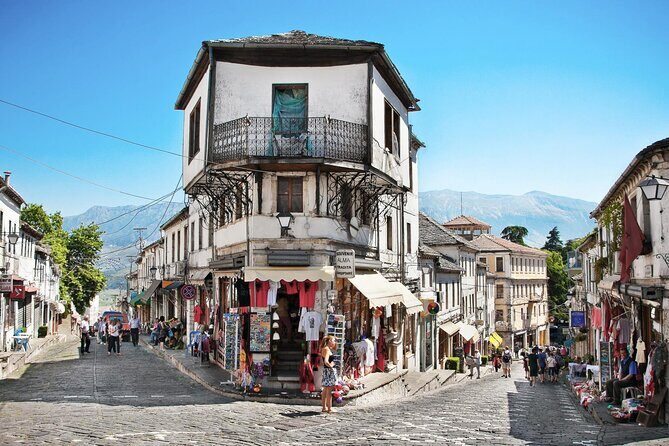
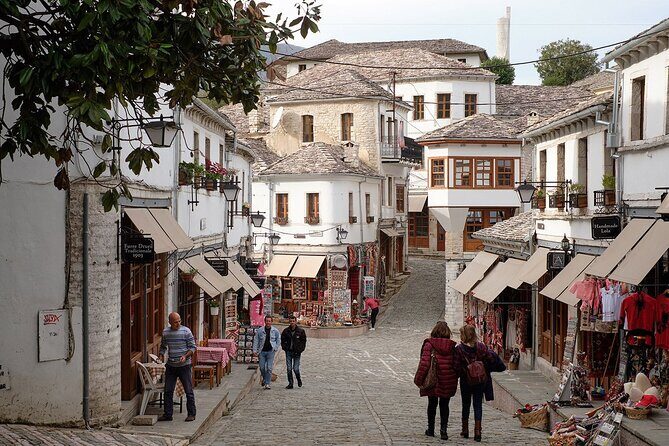
Gjirokastra doesn’t feel like a typical stop-and-photo town. It feels structured. The tour brings you into the historic core around Cerciz Topulli, a major square from which the cobblestone lanes slope away—often toward the big castle on the hill. If you’ve ever wondered why some old towns feel easy to navigate despite their age, this is one of those places: the city’s layout gives you a natural path forward.
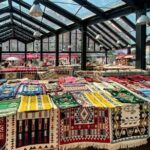
The bazaar stop is focused and efficient—about 45 minutes—so you’re not stuck watching a group march through storefront after storefront. Instead, you get the atmosphere of an Ottoman-era trading district: places where people bought and sold, met for coffee, and caught up on the rumors of daily life. In this part of the city, even the idea of a public square linked to daily commerce tells you a lot about how the town worked.
What to watch for here is the sense of center. The bazaar area functions as a social engine, not just a marketplace. If you’re into architecture and urban planning, you’ll enjoy how the old streets funnel your attention toward the castle. If you prefer quiet sightseeing, this is also a good time to slow down, step off the main flow, and look at doorways and stonework before you head up toward the fortress.
Gjirokaster Castle: the “Crown of the City” viewpoint
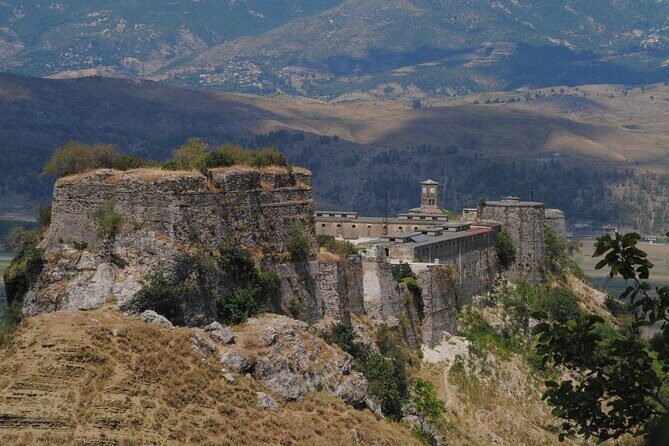
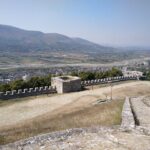
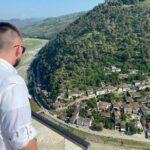
After the bazaar, you climb your way toward the Gjirokastra Fortress, perched in a naturally protected position on the hill. The tour gives you about 1 hour here, which is enough to see the fortifications, soak in the views, and still keep the day moving.
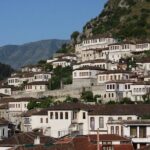
The castle is often described as the city’s crown, and you’ll feel why once you’re up there. Gjirokastra spreads across steep slopes, and from the fortress the stone city looks layered and deliberate—like the town grew upward because the terrain forced it. You’re not just looking at buildings; you’re seeing how geography shaped the city’s identity.
The tour also connects the fortress to the legend of Argjiro, a young princess who becomes part of the story of how the city is understood. Whether you care about legends or not, the point is that this is more than a pile of walls. It’s tied to how locals explain their town’s origin and character.
There’s also a clear historical angle: the castle has been heavily restored (the last major restoration is tied to the 19th century) and it has served as a fortress and prison across different regimes. Even if you only skim the details, you’ll likely notice how that history shows up in the fort design—everything is about defense and control.
If you’re short on time in Albania and want one place where the payoff is immediate, the castle is it. You’ll walk out with a mental picture of Gjirokastra that doesn’t fade.
Rruga Palorto and the Enver Hoxha / Ismail Kadare contrast
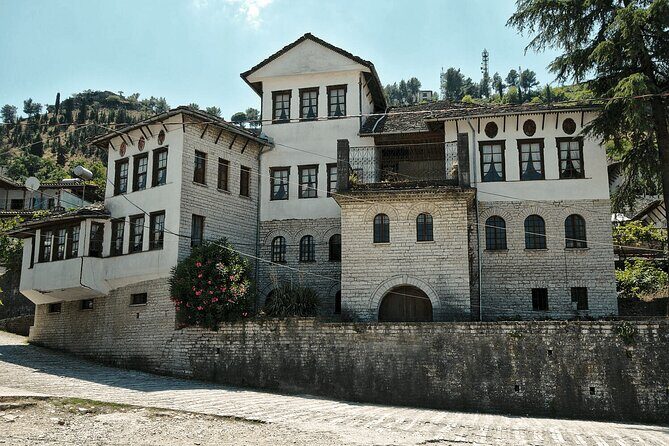
The next stop takes you onto Rruga Palorto, a section of Gjirokastra where 20th-century influence is visible in the built environment. The tour includes about 1 hour and focuses on the proximity of two figures who loom large in modern Albanian life: the family house of Enver Hoxha and the neighbor connected to Ismail Kadare.
That pairing matters. It’s not just about seeing two sites; it’s about seeing the contrast in what Albania chose to remember. Hoxha represents political power under a communist regime, while Kadare is tied to modern Albanian literature and international recognition. Standing in the space between those stories helps you understand how the 20th century shaped the country in more than one direction.
The tour also mentions something called The Path of Mad People, with an interesting story connected to it. You don’t have to be a history nerd to appreciate why that kind of name sticks. In a place like Gjirokastra, the street names and small narrative references are a way people keep memory in circulation.
Practically, this stop is ticket-free for the tour component, and it’s paced so you don’t feel rushed. If you’re sensitive to heavy political topics, tell your guide where you’d like to focus—sometimes you can spend more time looking at architecture and less time on interpretation. The guide’s role is useful here: they can steer you to what you’ll enjoy most.
Syri i Kaltër (Blue Eye): what you’ll see and how long it lasts
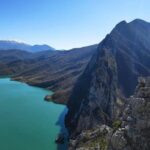
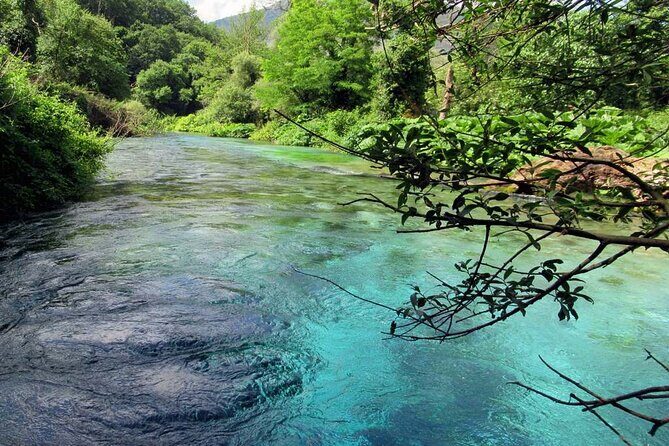
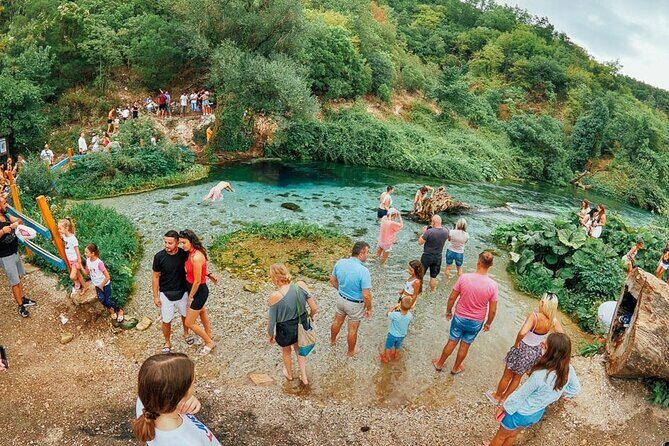
The Blue Eye stop is the day’s nature break: Syri i Kaltër, located near Finiq. The tour gives you about 1 hour, and it’s designed around a simple sequence: park, a short easy hike, then time at the spring itself.
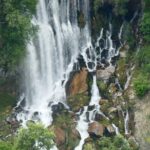
So what is it, really? It’s a water spring with water so clear that you can see down to the bottom. Sunlight makes the color look almost unreal, and that’s why people take pictures here. There’s also mention of the chance for a quick swim, plus nearby cafes where you can refresh.
Here’s the consideration I’d put first: this is not a long beach day. Even with a cafe nearby, you’re not there to sit for hours. You go to see the water, get a feel for the place, and move on. If that matches your idea of the Blue Eye—clean water, quick photos, a brief dip—you’ll likely love it.
If you’re expecting a massive, developed attraction, you might feel like the time is too short. And if you’d rather spend that time on ruins, another kind of coast outing, or something more structured, you could ask the operator whether there’s flexibility (not guaranteed, but it’s a reasonable question to bring up when you book). The strongest value of this tour is how it combines Gjirokastra and the spring without leaving you to figure out logistics alone.
The drive, the comfort, and the part you shouldn’t ignore
A quick word about the vehicle and the driving style, because this is one of the places where “tour comfort” becomes real comfort. This route involves winding hills and the kind of driving environment that can feel intense if you’re used to strict lanes and slow speeds. With pickup and drop-off, you avoid the stress of navigating roads yourself.
In a place like this, the vehicle timing matters. The tour is built so the travel time is accounted for, which helps you avoid the common problem of tours that run late and squeeze your time at the sights. You get guided stops with set durations: 45 minutes at the bazaar, 1 hour at the castle, 1 hour for Rruga Palorto, and 1 hour at Blue Eye.
You’ll also want to think about food timing. Snacks and lunch aren’t included, so plan for hunger. Bring small things you can eat in transit or carry a light lunch expectation for later. The Blue Eye area mentions cafes nearby, so you might have an option there, but don’t count on it without looking at what’s available the day you go.
What you get for the price: $162.56 worth it?
At $162.56 per person, this tour is priced for a full-day package: private transportation, an air-conditioned vehicle, hotel pickup/drop-off, a tour guide, and included entry fees for certain stops.
The real value question isn’t just cost—it’s time and hassle. You’re paying to cover:
- a long distance day without transfers
- guide interpretation across multiple sites
- entry for key sights (castle and Blue Eye)
- fees and taxes
- pickup and drop-off so you don’t spend your energy arranging logistics
Compared with cobbling together your own plan, especially if you’re not traveling with a driver, this kind of pricing can be fair. You’re basically buying a smooth day with direction. And in Albania, where roads and timing can be variable, buying that smoothness often pays off.
Two entry fees notes to keep in mind: the bazaar area is free in this plan, and the Rruga Palorto component is also listed as free, while the castle and Blue Eye include admissions for the tour portion. In other words, you aren’t paying extra repeatedly on-site as long as you follow the included stops.
If you’re comfortable driving yourself and you only care about one main sight, you might do it cheaper. But if you want the day handled for you, with a guide and a controlled schedule, this pricing usually makes sense.
Who this tour suits best
This is a great match if you want a single guided day that hits big visual targets without turning the day into a logistics project.
You’ll likely enjoy it if you:
- like old towns where the streets lead you upward toward a hilltop fortress
- enjoy guides who explain what buildings meant beyond just what they look like
- want one nature stop where the highlight is the water and the colors
- prefer private-group pacing over being pulled in different directions
You might reconsider if:
- you only care about long nature time (Blue Eye is about 1 hour)
- you’d rather replace the spring with more time at ruins or a coastline plan
- you get uncomfortable with early starts and a long day
Should you book this Gjirokastra and Blue Eye tour?
If you want the most efficient version of Gjirokastra plus a classic spring stop, I’d say yes. The combination works because the day moves from market life to fortress views to a modern Albania story layer, then ends with a nature moment that’s easy to understand at a glance: clear water, color, photos, and a quick refresh.
Book it if you appreciate structure. The guide and transport handle the hard part—getting you there and keeping your time usable. And if you’re already aiming to see Ottoman-era Gjirokastra, this tour gives you the “whole picture” in one pass, not just a single photo stop.
One last decision tip: if the Blue Eye doesn’t appeal to you as much as history ruins or beach time, ask during booking whether substitutions are possible. If they aren’t, you can still have a great day—you’ll just treat Blue Eye as a short, scenic finale rather than the main event.
FAQ
How long is the day tour?
The tour runs about 10 to 12 hours, and that total already includes travel time.
What time does the tour start?
It starts at 8:00 am.
Is hotel pickup and drop-off included?
Yes. Hotel pickup and drop-off are included.
What stops are included in the day?
You’ll visit Gjirokastra Bazaar, Gjirokaster Castle, the Rruga Palorto area, and Syri i Kaltër (Blue Eye).
Are tickets included for each stop?
The Gjirokastra Bazaar portion is listed as free. Gjirokaster Castle is included, and Syri i Kaltër (Blue Eye) is included. The Rruga Palorto stop is listed as free.
Does the tour include a guide and transport?
Yes. Tour guide and private transportation are included, and the vehicle is air-conditioned.
Is the tour offered in English?
Yes, it’s offered in English.
Is this a private tour?
Yes. It’s private, meaning only your group participates.
What is the cancellation policy?
You can cancel for a full refund if you cancel at least 24 hours before the experience’s start time. If you cancel later than that, the amount paid is not refunded.