REVIEW · TIRANA
Tirana and Kruja Full Day Tour
Book on Viator →Operated by Travel Albania · Bookable on Viator
Clock towers and communist relics in one day? That’s the appeal of this Tirana and Kruja tour: you’ll move through Tirana’s Ottoman-era clock and central landmarks, then head to Kruja for the Skanderbeg Museum and bazaar area. I love how it packs entrance fees and round-trip transport into the price, so you’re not constantly checking ticket lines. One possible drawback: meals and drinks aren’t included, so you’ll want to plan for lunch on your own schedule (an optional traditional lunch is offered).
The day runs in a small group (maximum 12) and it’s offered in English, which makes it easier to get real answers instead of just listening to a script. If you’re assigned guides like Ilir or Iris, expect lots of clear context—especially around the Ottoman and Communist-era stops.
At $96.12 per person for roughly 6–8 hours, the value is in the convenience: hotel pickup and drop-off, A/C transport, and the museum admissions that matter most. It’s the kind of trip that helps you get your bearings fast—then gives you time to enjoy the places, not just rush past them.
In This Review
- Key highlights at a glance
- Tirana to Kruja: the route that makes sense in 6–8 hours
- The Clock Tower plus Ethem Bey Mosque: details you’ll actually remember
- Skanderbeg Square and the Enver Hoxha Pyramid: two eras, two moods
- Kruja Castle and the Skanderbeg Museum: where the hero story becomes physical
- Ethnographic Museum of Kruja and Pazari i Vjeter: customs and trade, not just monuments
- Lunch timing and managing the 6–8 hour day
- Price and value: what $96.12 really covers
- Guide impact: the difference between seeing and understanding
- Who should book this Tirana and Kruja tour?
- Should you book it?
- FAQ
- How long is the Tirana and Kruja full day tour?
- What does the tour cost?
- Does the tour include hotel pickup and drop-off in Tirana?
- Are entrance fees included?
- Is lunch included?
- Is the tour offered in English?
- What is the maximum group size?
- Can I cancel for a full refund?
Key highlights at a glance
- Two big stops, one logical route: Tirana landmarks first, then Kruja’s castle/cultural sites.
- Small group size: capped at 12 travelers, so questions stay easy.
- Entrance fees handled for you: museums in Kruja are included, with key Tirana sights also free.
- Ottoman and later history side-by-side: the Clock Tower and Ethem Bey Mosque contextualize the city.
- Skanderbeg focus that feels place-based: the museum sits in the Krujë castle setting.
- Old bazaar time with shopping potential: Pazari i Vjeter is built for walking and browsing.
Tirana to Kruja: the route that makes sense in 6–8 hours
This is a classic “best-of” day, but it’s not lazy. You get a full sweep of Tirana’s central identity, then you shift gears to Kruja where the atmosphere changes—more historic, more castle-centered, and built for slower wandering. The itinerary is timed so you’re not stuck in the van for hours without breaks.
What makes it practical is that the transport is handled (A/C vehicle plus hotel pickup and drop-off), and you don’t have to piece together transit between cities. That also matters for first-timers in Albania: you spend your limited time seeing real places instead of figuring out logistics.
A few more Tirana tours and experiences worth a look
The Clock Tower plus Ethem Bey Mosque: details you’ll actually remember
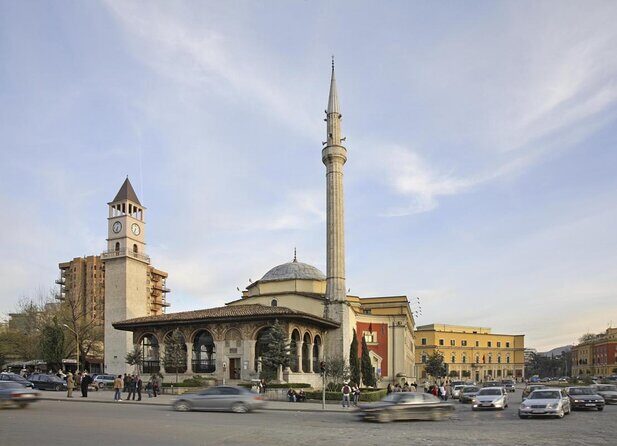
Tirana’s Clock Tower is more than a photo stop. It was built by the Ottoman Turks in an Islamic style and—here’s the wonderfully specific part—its bell originally came from Venice. It was damaged during World War I, and the replacement mechanism didn’t appear until 1928.
If you like history that has numbers in it, this tower delivers. The new mechanism was purchased in Germany for 13,300 golden francs, funded from wealthy families and the Tirana Municipality. Watchmaker Arif Tufina and his sons installed it, and because the mechanism was bigger than the tower, the builders added five extra meters plus a new roof.
Then the tour connects you to the surrounding “why this area matters” story through the Ethem Bey Mosque complex. Construction started around 1791 or 1794 under Molla Bey, and it was finished around 1819 or 1821 by his son Haxhi Ethem Bey. It’s tied into the older historical-center layout, including where the old bazaar sat in front of the mosque.
Two reasons this stop is worth your attention:
- You see Ottoman-era architecture as part of a living city plan, not a standalone monument.
- The timeline is layered—Ottoman construction, later repairs, and the modern replacement of systems after war damage.
Practical tip: bring comfortable shoes. Even with guided pacing, these are walk-and-look stops in central streets.
Skanderbeg Square and the Enver Hoxha Pyramid: two eras, two moods
After the older Ottoman layer, the tour moves to the emotional center of Tirana. Skanderbeg Square is the main plaza, named for Albania’s national hero Gjergj Kastrioti Skënderbeu. The square is about 40,000 square metres, and the Skanderbeg Monument dominates the space.
You also get a sense of how the city was planned. The master plan was initially designed by Armando Brasini in 1925, with later continuation by Florestano Di Fausto in a Neo-Renaissance style. After the Italian invasion, the plan was updated again in 1939 by Gherardo Bosio.
This stop is free for admission and set at around 30 minutes. That’s long enough to orient yourself, take photos, and connect the square’s monuments to what you’ll see next.
Then it’s a sharp left turn: the Enver Hoxha Pyramid. The structure opened in 1988 as the Enver Hoxha Museum, and it was designed with input from Hoxha’s daughter Pranvera Hoxha and her husband Klement Kolaneci, along with Pirro Vaso and Vladimir Bregu.
The Pyramid has a reputation as a politically charged object, and the facts help you read it without needing extra storytelling. When built, it was said to be the most expensive individual structure ever constructed in Albania. It’s sometimes joked about as a mausoleum, but it was never an official label for its intended use.
This is also a free stop, again around 30 minutes. The value is not that you’ll “like” it; it’s that you’ll understand what the state built—and why it still stands in the city’s visual memory.
Kruja Castle and the Skanderbeg Museum: where the hero story becomes physical
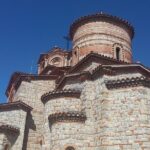
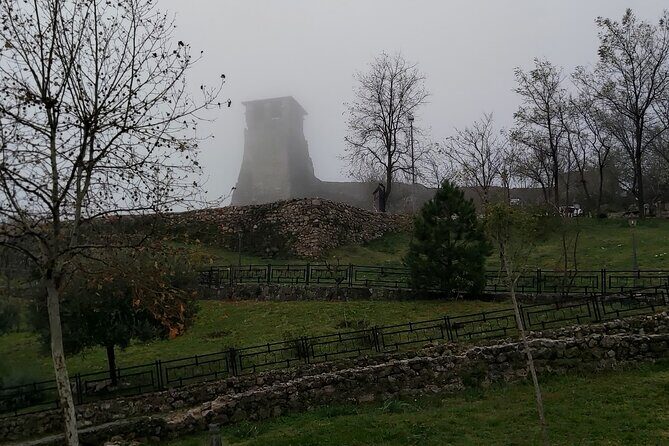
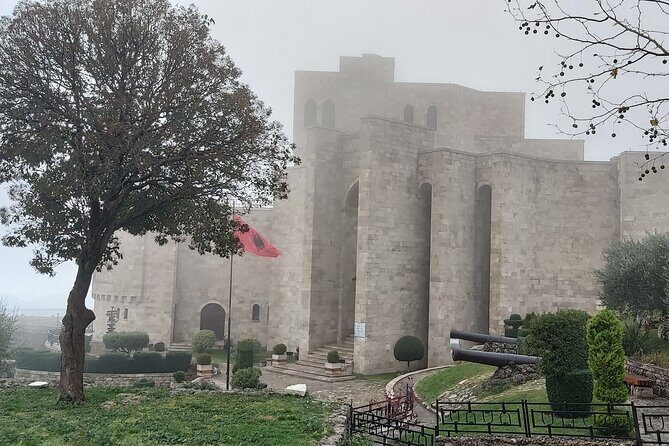
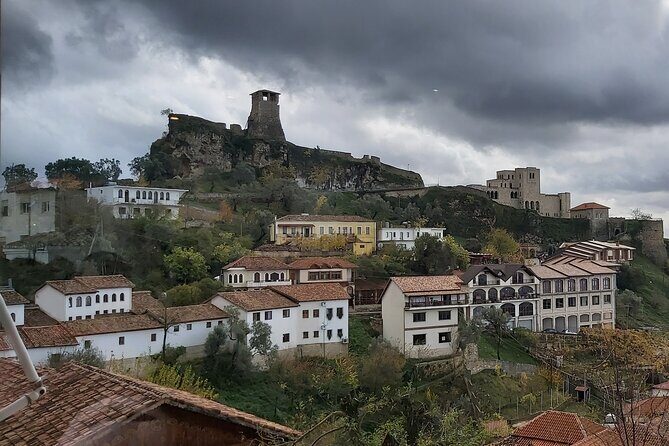
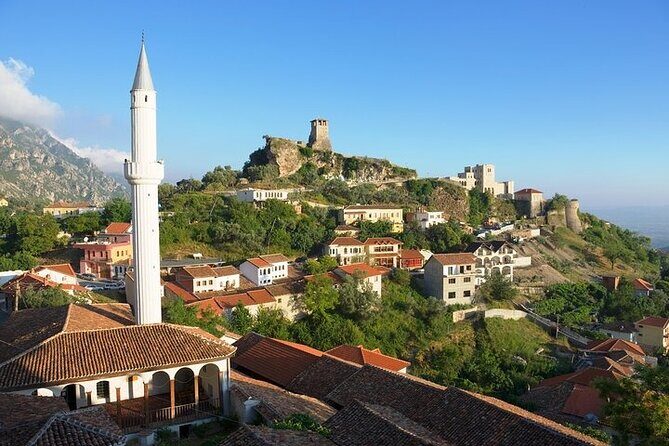
Kruja is where the day starts feeling more like a journey and less like a walking checklist. The Skanderbeg Museum (National Museum “Gjergj Kastrioti Skënderbeg”) is set in the Krujë Castle area, and that location matters. The tour doesn’t treat the museum like a generic building; it’s framed as a memorial-like setting inspired by Albanian stone-tower forms and medieval Romanesque architecture.
You get about one hour here, and admission is included. The museum was built at the end of the 1970s and inaugurated on November 1, 1982. The architecture is credited to Pirro Vaso and Pranvera Hoxha, with construction led by a local team managed by Robert Kote.
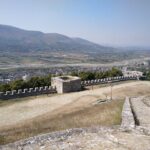
What I like about this stop for you (especially if you’re short on time) is how the story is built into the setting. The Krujë Castle is described as a historic citadel that Ottoman troops attacked three times—1450, 1466, and 1467—and failed to take. So when you walk around the museum area, the hero narrative isn’t floating in space. It’s grounded in the terrain and the fortress concept.
If you’re the type who likes to understand national symbols, this is the anchor stop of the day.
Ethnographic Museum of Kruja and Pazari i Vjeter: customs and trade, not just monuments
After the museum focus, the tour shifts to everyday culture—still in Kruja, but with a different energy.
The Ethnographic Museum (National Ethnographic Museum in Kruja) is timed at about 40 minutes and admission is included. It’s designed to tell the story of Albanian customs and traditions through the centuries, and the experience is strongly guided. In other words, you’re not expected to guess your way through labels; you’re there to connect the exhibits to a clearer explanation.
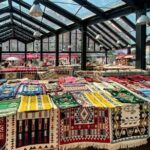
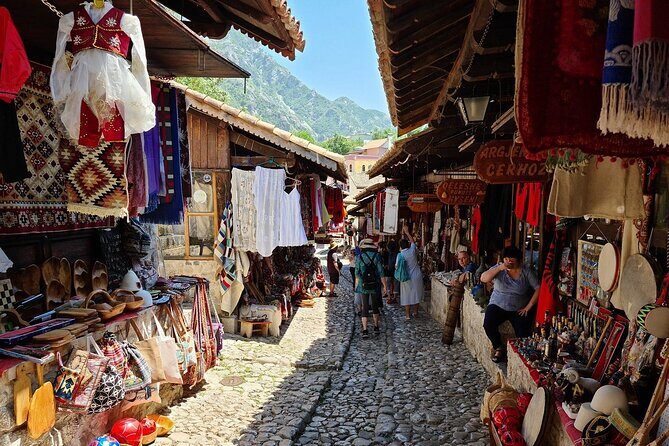
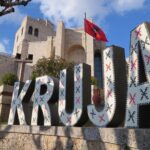
Then comes Pazari i Vjeter, the Old Bazaar. This is a more relaxed, human-scale stop with practical payoff. The bazaar is famous for being one of the oldest in Albania, with construction dating back over 400 years. It served as a starting point for free trade among the city’s established merchants, and it sits on the main road leading toward the Castle of Kruja.
Admission is free, and you’ll get about 40 minutes to enjoy the space. This is also the part of the day where you’ll likely want to slow down. Even if you’re not buying anything, it’s a place to look at how commerce shaped the historic center—shops and streets built for walking and bargaining rhythms.
One caution: shopping areas can turn into time drains if you get carried away. Set your own limit so you don’t cut into your museum time.
Lunch timing and managing the 6–8 hour day
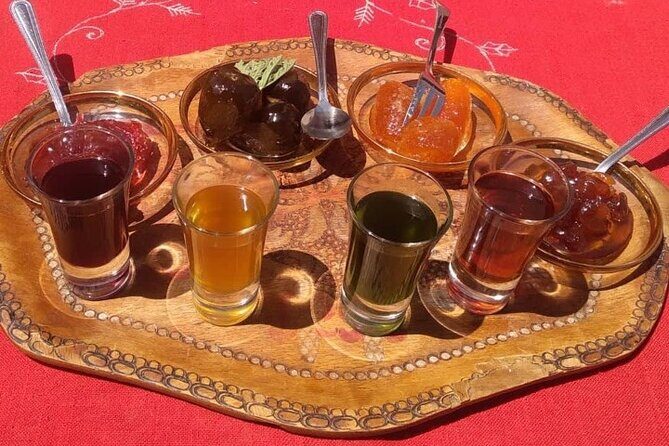
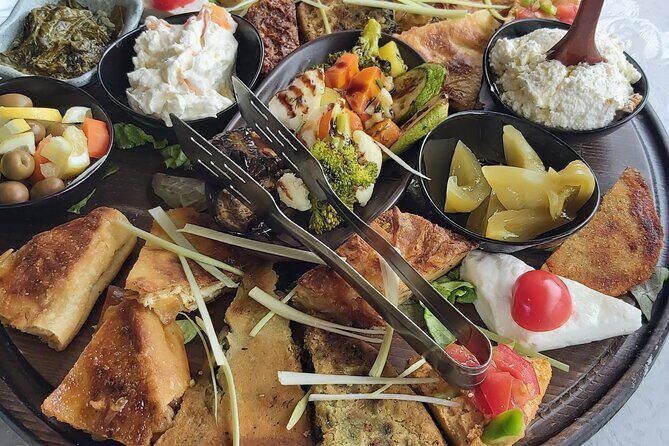
Meals and drinks are not included. That’s not a dealbreaker—it just means you should treat lunch as a planned part of your day. The tour offers an optional traditional Albanian lunch at a local restaurant, but you’ll need to decide whether it fits your tastes and budget.
If you like to travel light, bring a small snack for the gap between stops. If you prefer a slower meal, choose lunch and then let the museums/bazaar be your later-day pace.
The big advantage of this structure is that you’re not starving in between long ticketed visits. Still, because the schedule runs about 6–8 hours, staying flexible with food makes the day smoother.
Price and value: what $96.12 really covers
This tour costs $96.12 per person, and that price isn’t only about transportation. It includes:
- A/C vehicle transport
- City tour of Tirana and Kruja
- Driver/guide
- Hotel pickup and drop-off
- Entrance fees for the included museum stops
What you’re effectively buying is time and reduced friction. If you tried to assemble this yourself, you’d still need intercity transport, guided interpretation (unless you want to read everything alone), and museum admissions. Here, those pieces are handled inside one organized format, with a maximum group size of 12.
Is it perfect value for everyone? If you’re the type who loves deep museum time, one day can still feel busy. But if you want the key Tirana symbols and Kruja’s museum-bazaar combination without getting stuck in logistics, it’s priced like a practical day trip.
Also, the “English offered” detail matters more than it sounds. When you’re dealing with layered histories—Ottoman architecture, war damage, modern political symbols—clear explanations help you connect the dots faster.
Guide impact: the difference between seeing and understanding
This is a guided tour, and the guide role is a big part of the payoff. The museum stops (especially the Ethnographic Museum) are explicitly designed to be understood through commentary, not just signage.
If your guide is someone like Ilir or Iris (names that have shown up in this tour’s recent history), you’re likely to get explanations that connect the architecture to later events and modern Albanian culture. Other guide names that have appeared include Illya, Abdul, Ed, and Ilia—so it’s smart to treat the guide assignment as part of your decision, not a random variable.
What should you look for while you’re on the day?
- Ask one or two questions during the bus ride. You’ll learn more than you think.
- Use the museum time to ask about what you’re looking at, not just what happened historically.
- Don’t worry if you miss one detail. The tour’s stops are structured to repeat themes in different ways (state power, everyday life, national identity).
Who should book this Tirana and Kruja tour?
Book it if:
- You have limited time in Albania and want both a capital-city overview and a fortress-town cultural day.
- You like history that’s tied to specific buildings (Clock Tower, Ethem Bey Mosque, Skanderbeg Museum).
- You want a structured day with entrance fees handled, but not a full-day museum marathon.
Skip it if:
- You’re only interested in one place (either Tirana or Kruja) and hate time pressure.
- You want fully independent pacing with zero group flow.
Best match: first-timers, culture lovers, and history-minded travelers who value convenience without giving up meaningful stops.
Should you book it?
Yes, with one simple condition: plan your food and be ready for a packed but readable day. This tour is strongest when you want a guided sweep—Tirana’s central landmarks (including the Clock Tower and Enver Hoxha Pyramid) paired with Kruja’s Skanderbeg Museum, ethnographic stop, and Old Bazaar.
If you want to squeeze in two destinations, get museum access without headache, and still have time to walk and browse, it’s an easy choice. And if you’re the type who asks questions, you’ll likely walk away with the day feeling more coherent than just a list of sights.
FAQ
How long is the Tirana and Kruja full day tour?
It runs about 6 to 8 hours.
What does the tour cost?
The price is $96.12 per person.
Does the tour include hotel pickup and drop-off in Tirana?
Yes. Hotel pickup and drop-off are included, along with transport in an A/C vehicle.
Are entrance fees included?
Yes. The tour includes entrance fees for the included museum stops, and some Tirana sights on the schedule are free.
Is lunch included?
Meals and drinks are not included. Traditional Albanian lunch is offered as an optional add-on.
Is the tour offered in English?
Yes, the tour is offered in English.
What is the maximum group size?
The tour has a maximum of 12 travelers.
Can I cancel for a full refund?
Yes, you can cancel up to 24 hours in advance for a full refund.