REVIEW · TIRANA
Tour a Piedi di Tirana
Book on Viator →Operated by Tirana Walking Tours · Bookable on Viator
Tirana reads best on foot. This 2.5-hour walk through Tirana’s core sites is led by an English and Italian licensed guide like Martin, with stories that help you connect monuments to the real Albania you’ll see on the street. I like how the pacing is built for first-timers, so you don’t just collect photos—you get a sense of where things sit and why they matter.
What I also like is the value: the route hits major sights with free admission at every stop listed, so your $20.93 goes mostly to the guide and your time. You also get a tight loop of Ottoman-era places, religious landmarks, and Albania’s 20th-century political architecture—so the city makes more sense when you move on to your next plan.
One consideration: the stop times are short (often around 10 minutes each), which means you’ll want comfortable shoes and a bit of patience for moving on. If you prefer to linger at one location, you may feel a little rushed during the walk, especially during the most popular checkpoints.
In This Review
- Key highlights I’d pack into your mental map
- First afternoon magic: getting oriented fast in Tirana
- The route’s real theme: layers of Tirana in one loop
- Stop-by-stop: from Skanderbeg Square to House of Leaves
- 1) Skanderbeg Square
- 2) Et’hem Bej Mosque
- 3) Bunk’Art 2 (plus context for BunkArt 1)
- 4) Fortress of Justinian
- 5) Parliament of Albania
- 6) Mosque of Namazgah
- 7) Tanners’ Bridge
- 8) Saint Paul Cathedral
- 9) Enver Hoxha Pyramid
- 10) Postbllok – Checkpoint Monument
- 11) The Bllok area (explained)
- 12) Enver Hoxha’s Former Residence
- 13) Taiwan Pool (Pishina Taiwan)
- 14) Orthodox Autocephalous Church of Albania
- 15) House of Leaves
- 16) Back to Skanderbeg Square
- Price and value: does $20.93 buy a good afternoon?
- How long is enough? Timing you can actually use
- Getting the most from the walk (without feeling rushed)
- Logistics that matter: meeting point and the no-show risk
- Who should book this tour (and who might skip it)
- Should you book Tour a Piedi di Tirana?
- FAQ
- How long is the Tour a Piedi di Tirana?
- What does it cost per person?
- Where does the tour start and end?
- What languages are the guides?
- Are entrance tickets included for the stops?
- How big is the group?
- Is it near public transportation, and are service animals allowed?
- What happens if the tour is canceled due to poor weather or minimum travelers?
Key highlights I’d pack into your mental map
- Skanderbeg Square as your hub, with an easy start and finish right where you can re-plan the rest of your day
- Licensed English/Italian guides, with clear explanations and time for questions
- Free-entry stops across the full loop, so you’re not budgeting tickets site by site
- A single route through big eras of Tirana, from mosques and churches to communist-era sites
- Small-group feel (max 25), which keeps the tour from feeling like a cattle line
- Mobile ticket, so you can travel light and avoid printouts
First afternoon magic: getting oriented fast in Tirana
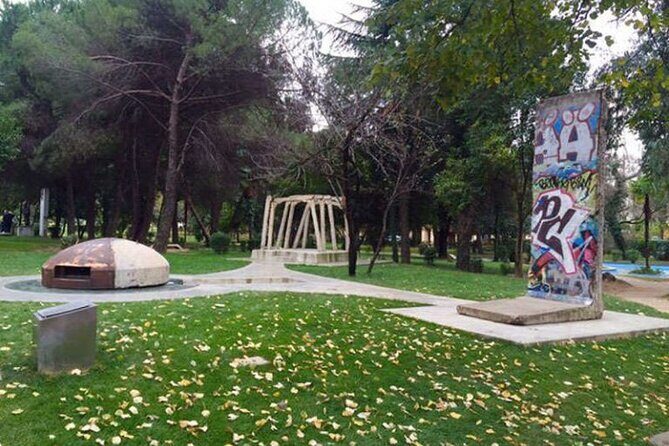
If this is your first day in Tirana, this is a solid choice because it’s designed like a city orientation walk. You start at Et’hem Bej Mosque and circle back to Skanderbeg Square, which is handy if you want to continue wandering afterward without restarting from scratch.
The tour’s strength is how it links places you’d otherwise treat as separate photo stops. A mosque doesn’t just become a building; it becomes a clue about religious and cultural life. A parliament building doesn’t just look official; it becomes a prompt for understanding the political situation in Albania.
And because the guide is English and Italian speaking (licensed), you can expect explanations to be tailored to the group you’re with. In real life, that can matter a lot—especially if you’re mixing languages and need the story repeated clearly.
You can also read our reviews of more tours and experiences in Tirana.

The route’s real theme: layers of Tirana in one loop
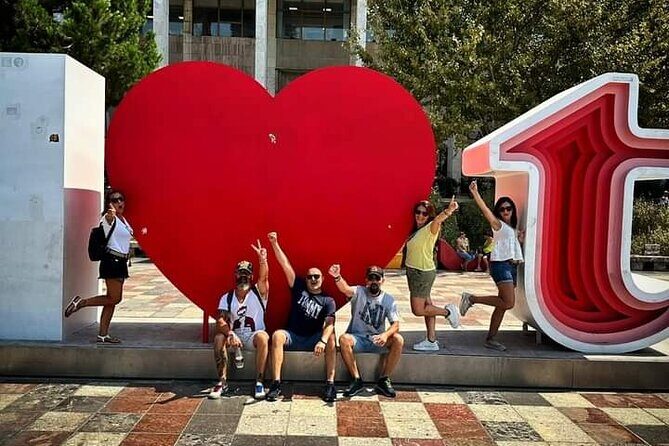
This walk is basically a tour through different chapters of the city. You see the civic heart around Skanderbeg Square, then you move through Ottoman-era religious landmarks, then into the heavy 20th-century imprint—dictatorship-era sites and memorials—before finishing back at the grand central vibe.
That structure is more than just convenience. It helps you notice how Tirana can feel like multiple cities stacked on top of each other. Walking the streets in a set order turns random impressions into something you can explain to yourself later.
Just note the style: it’s not a long museum day. It’s a brisk, guided “read the city” experience where each stop gives you context, then you keep moving.
Stop-by-stop: from Skanderbeg Square to House of Leaves
Each stop is short—often around 10 minutes—so think of this as a series of chapters rather than a single deep session.
1) Skanderbeg Square
Skanderbeg Square is your opening anchor. It’s a free, quick introduction point that helps you orient instantly, especially since the tour also ends back near here.
Why it matters: once you understand the square as a central reference, everything else on the walk becomes easier to place mentally when you’re back out on your own.
2) Et’hem Bej Mosque
Next comes the Et’hem Bej Mosque, also free to view on the tour. The stop is short, but it’s a strong way to start the city’s religious layer early.
Practical tip: if you visit during prayer times or find restrictions at the entrance, be flexible and follow local guidance.
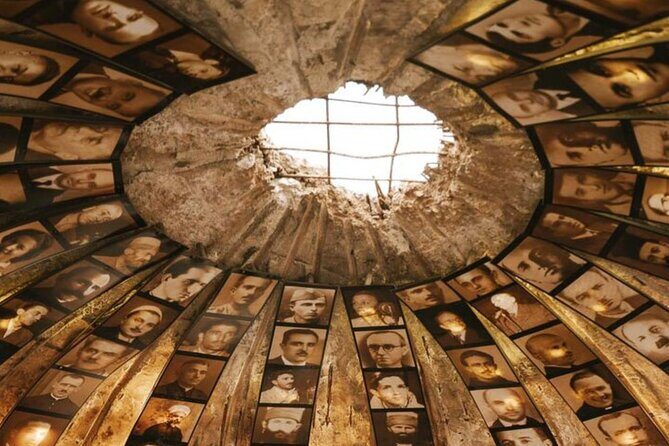
3) Bunk’Art 2 (plus context for BunkArt 1)
Then you reach Bunk’Art 2. The tour frames it as part of the broader BunkArt story by referencing the two museums, so you’re not just seeing a name—you’re getting orientation on what this museum area represents.
What to expect: you’ll get an explanation rather than a full museum-style walkthrough. If you want more time here later, this stop can be your cue that you should return independently.
4) Fortress of Justinian
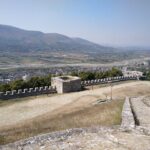
This is where the walk touches older defensive history through the ruins of Tirana castle, described as the Fortress of Justinian. Again, the time is brief, so treat it as a map marker for the past rather than a full archaeology lesson.
The value is in connecting how Tirana’s strategic importance played out over time—then watching how that story changes once modern political sites take over the route.
5) Parliament of Albania
From ruins to modern governance: the Parliament of Albania stop comes with an explanation of the political situation in Albania. It’s a quick stop, but it’s placed deliberately after earlier layers so the shift feels logical.
If politics makes you zone out, this is still useful because it’s guided in a way meant to help you interpret what you’re seeing rather than memorize facts.
6) Mosque of Namazgah
The Mosque of Namazgah is described as the biggest mosque in the Balkan region, which makes this an easy landmark to recognize even if you only spend a moment there. You’ll get context during the explanation, which helps turn scale into meaning.
Dress note: since this route includes mosques and churches, you might want clothing that works for religious sites—shoulders covered and no overly casual attire.
7) Tanners’ Bridge
Now you shift to the practical beauty of Tirana’s older infrastructure: Tanners’ Bridge. The tour gives a straightforward explanation of the bridge itself, which is a nice change of pace from the bigger political monuments.
This is one of those stops where you can take a few photos without feeling like you’re rushing a major checklist.
8) Saint Paul Cathedral
Saint Paul Cathedral is explained in the context of religion in Albania. You’re seeing how religious identity shows up in the city’s architecture and public spaces, not just in history books.
If you’re the type who likes understanding “why this exists here,” this stop does that job in a short time slot.
9) Enver Hoxha Pyramid
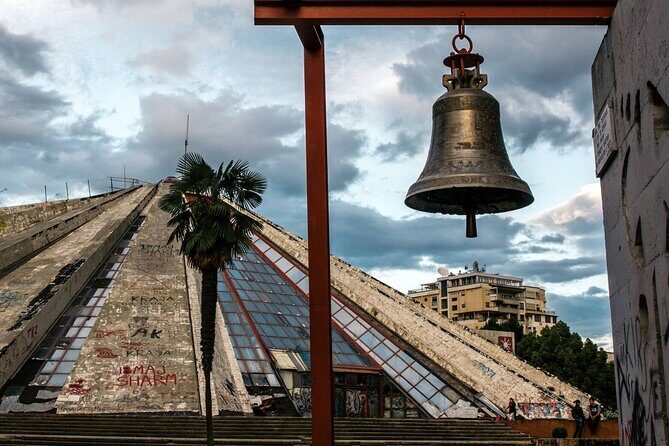
Then comes the Enver Hoxha Pyramid, described clearly as the dictator pyramid. It’s one of the most emotionally loaded stops on the walk, and the tour’s explanation is meant to give you context so you don’t leave with only a dramatic photo.
What I like about including it here: it’s not tacked on randomly. It fits the tour’s central arc—20th-century political power shaping public life.
10) Postbllok – Checkpoint Monument
Next is Postbllok, the checkpoint memorial. This stop helps you understand how surveillance and border-style control became part of daily life during the dictatorship years.
Because it’s a memorial, keep your expectations respectful and low-key. This isn’t a place you linger for fun scenery; it’s a place you absorb.
11) The Bllok area (explained)
The tour includes a dedicated explanation for the Bllok area. That matters because Bllok isn’t just a street—it’s the idea of a controlled zone tied to power.
Short stop or not, this is one of the points that helps you connect the dictatorship sites you’ve already seen with what the city became around them.
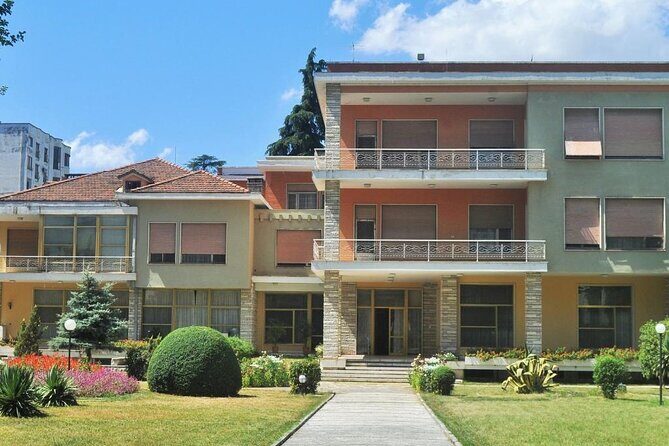
12) Enver Hoxha’s Former Residence
From the area concept to the residence itself: Enver Hoxha’s former residence gets its own explanation stop. Again, it’s brief, but it keeps the thread going from ideology and control to the physical spaces used by leaders.
13) Taiwan Pool (Pishina Taiwan)
A surprising left turn: Taiwan Pool (Pishina Taiwan), described as part of a youth park and a Taiwan center in Tirana. This is where the walk makes room for a more social, present-day side of the city.
Why it works: after heavy historical weight, you get a human-scale landmark that feels less like a monument and more like where life happens.
14) Orthodox Autocephalous Church of Albania
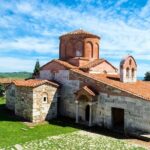
The Orthodox Autocephalous Church of Albania is explained as an Orthodox church stop. It continues the religious thread, balancing the route after you’ve already seen mosques and a cathedral.
This stop is useful if you’re trying to understand how different faith communities coexist in the same city space.
15) House of Leaves
Finally, you reach House of Leaves, explained as the house of leaves. It’s another marker of Albania’s dictatorship story, with a name that instantly sparks curiosity.
This is a strong closer because it’s memorable. Even if you forget every detail of the building’s background, you’ll probably remember what the guide made you connect it to.
16) Back to Skanderbeg Square
The tour ends back at Skanderbeg Square, which is convenient. You can instantly switch from guided mode to explore-on-your-own mode.
Price and value: does $20.93 buy a good afternoon?
At $20.93 per person, this is one of those tours that feels like good value if you’re traveling solo, short on time, or new to Tirana. Here’s why: you get a licensed guide, the walk is structured, and the tour is built around a dense set of major landmarks.
Also, the route is explicitly framed as free admission at each listed stop. That matters because it reduces the risk of the tour turning into a ticket-by-ticket expense that balloons your budget.
The time commitment is also reasonable. The duration is about 2 hours 30 minutes, which fits easily into an arrival-day plan or a day where you’re still building stamina.
One more value point from real traveler experience: some guides have a habit of expanding the day with extra time and added street-level context, including local coffee and shops. That’s not guaranteed, but it’s a good sign that your guide may bring the city to life beyond the scripted stops.
How long is enough? Timing you can actually use
The planned rhythm is tight: many stops are around 10 minutes, and the tour includes a few transitions where you’re walking between sights.
For you, that means this is best if you want:
- a guided overview to set the direction of your trip
- key context that makes later independent exploring easier
- a city story that fits into a morning or afternoon slot
If you want to sit inside museums for long periods or you like slow, detailed street wandering, you might combine this with a follow-up on one or two places you care about most—Bunk’Art 2 and House of Leaves are the types of stops people often come back to.
Getting the most from the walk (without feeling rushed)
Because the stops are short, your job is to show up ready. Bring water, wear comfortable shoes, and pace yourself mentally—think of each stop as a prompt.
If you’re the type who asks many questions, the small group size helps. The maximum is 25 travelers, which usually keeps the guide from talking past people.
Language matters too. Since the guide is English and Italian speaking, your group experience can change depending on who else joins. If your group needs explanations in more than one language, expect the guide to repeat key context so everyone stays on the same page.
Logistics that matter: meeting point and the no-show risk
The meeting point is Et’hem Bej Mosque at Sheshi Skënderbej 1, Tiranë 1001, Albania, and the tour ends back at the same meeting point. This makes your plan easy: arrive a little early, then use Skanderbeg Square as your anchor afterward.
There are also occasional complaints about staff not showing up as expected. I can’t predict whether you’ll face that, but I strongly recommend you confirm the day-of details before you leave your hotel and keep your contact method available. With any small group city walk, your best protection is a calm backup plan—like knowing the area so you can still enjoy the sights even if coordination hiccups happen.
Who should book this tour (and who might skip it)
This tour fits you best if:
- you want Tirana orientation in a short window
- you like city history tied to specific places, not vague overviews
- you want a walking route that covers both civic landmarks and political-era sites
- you appreciate a licensed guide and a guided explanation at each stop
You might skip or supplement it if:
- you hate fast transitions and prefer long museum time
- you want only one era (for example, only religious sites or only political memorials)
Should you book Tour a Piedi di Tirana?
If you’re trying to make Tirana click quickly, I’d book it. The mix of Skanderbeg Square, religious landmarks, and dictatorship-era sites like the Enver Hoxha Pyramid and Postbllok gives you a city-wide storyline in about 2.5 hours. The price is low for a guided, structured walk, and the free-entry framing helps your budget stay predictable.
Just go in with the right mindset: it’s a guided sprint through major chapters, not a slow, deep museum day. If you want, you can always return later to the one or two places that stuck hardest after the tour.
FAQ
How long is the Tour a Piedi di Tirana?
The tour lasts approximately 2 hours 30 minutes.
What does it cost per person?
The price is $20.93 per person.
Where does the tour start and end?
The tour starts at Et’hem Bej Mosque, Sheshi Skënderbej 1, Tiranë 1001, Albania, and it ends back at the meeting point.
What languages are the guides?
The tour includes an English and Italian speaking licensed guide.
Are entrance tickets included for the stops?
The stops listed in the route are marked as admission ticket free.
How big is the group?
The tour has a maximum of 25 travelers.
Is it near public transportation, and are service animals allowed?
Yes, it is near public transportation, and service animals are allowed.
What happens if the tour is canceled due to poor weather or minimum travelers?
If it’s canceled due to poor weather, you’ll be offered a different date or a full refund. If it’s canceled because the minimum number of travelers isn’t met, you’ll be offered a different experience or a full refund.