REVIEW · TIRANA
5-hour Tour Kruja Castle and Old Bazaar from Tirana
Book on Viator →Operated by Discover Albania · Bookable on Viator
Kruja packs real Albanian drama in five hours. I love how the Kruja Bazaar gives you a working taste of old-school trade, and I also love the chance to connect the hilltop sights to Skanderbeg’s story at the Skanderbeg Museum inside the castle complex. The one drawback to plan for: the castle experience can feel more like ruins plus museums than a big, fully intact fortress you can wander like a movie set.
This is built as a tight day trip with a small group (max 20), an English-speaking guide, and an air-conditioned ride that takes about 30–45 minutes each way from Tirana. You’ll spend about 30 minutes in the bazaar, around two hours in the castle area, and about an hour at Sari Salltiku, so you’re not stuck all day on one stop.
One more thing I’d watch: the guide experience varies, and there’s an extra language wrinkle—English is offered, but if you want Spanish audio, you should confirm it ahead of time. If your guide is the kind who really brings Skanderbeg’s era to life, Kruja goes from sightseeing to understanding fast.
In This Review
- Kruja in five hours: key points to know
- Why Kruja works as a day trip from Tirana
- Getting there smoothly: transport, timing, and comfort
- Stop 1: Kruja Bazaar and its 400-year-old trading vibe
- Stop 2: Kruja Castle—Skanderbeg’s legacy plus museum time
- What to look for during the castle portion
- Stop 3: Sari Salltiku Mosque and the holy cave stories
- The guide matters: what to expect from the human factor
- Price and value: does $84.11 make sense?
- Potential snags to plan around
- Who should book this Kruja Castle and Bazaar tour?
- Should you book this Kruja Castle and Bazaar tour?
- FAQ
- How long is the Kruja Castle and Old Bazaar tour from Tirana?
- What time does the tour start, and where do we meet?
- Is hotel pickup included?
- What language is the tour offered in?
- What’s included in the price?
- Can I cancel for free?
Kruja in five hours: key points to know
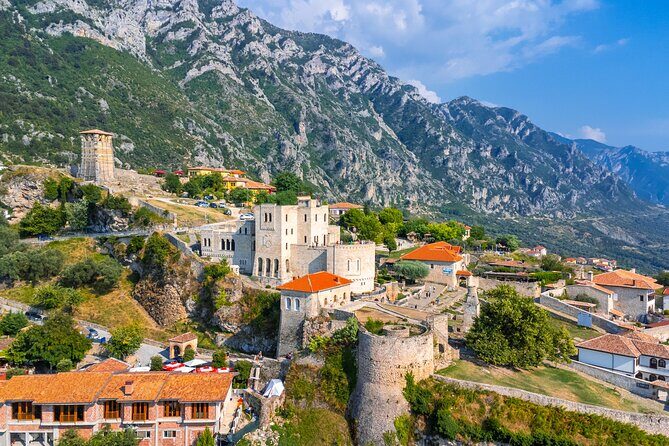
- 400-year-old market setting: the bazaar sits on the main road to the castle and is part museum, part shopping street.
- Skanderbeg’s story is the center of gravity: castle walls date back to early centuries, and the museums explain how Kruja became a resistance bastion.
- You get more than one viewpoint: castle time includes views from the craggy setting on Mount Kruja.
- Sari Salltiku adds faith and folklore: expect a mosque linked to Bektashi tradition and stories tied to a holy cave.
- Good value depends on your expectations: it’s ticketed and guided, but the castle is not an all-royal, all-intact fortress.
Why Kruja works as a day trip from Tirana
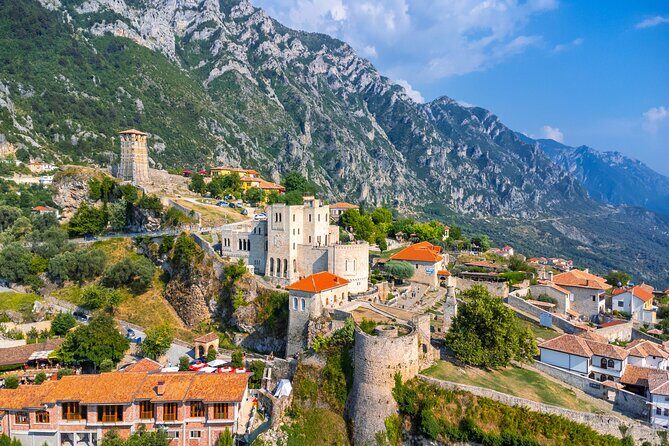
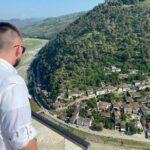
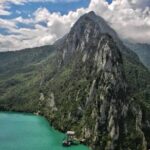
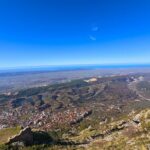
Kruja is the kind of place where geography helps the story. The town sits on the slope of Mount Kruja at about 608 meters above sea level, and that elevation makes the views and the historical framing feel more immediate than you’d expect from a short drive.
This tour is also a smart “first taste” of Albanian history because it connects three layers: trade (the bazaar), resistance (Skanderbeg and the castle), and spirituality (Sari Salltiku). If you’re the type who likes your monuments with context, the structure makes it easier to remember what you’re seeing.
You can also read our reviews of more shopping tours in Tirana
Getting there smoothly: transport, timing, and comfort
The ride is about 30–45 minutes from Tirana to Kruja, and you’ll return on the same schedule. That timing matters because it keeps the day focused; you’re not losing half your time to the car.
You travel in an air-conditioned vehicle, which is a real help in warmer months or on days when the streets are already busy. With a 5-hour total duration, you’ll want to be ready to move promptly at each stop—Kruja is best when you don’t rush, but also when you stay on schedule.
Stop 1: Kruja Bazaar and its 400-year-old trading vibe
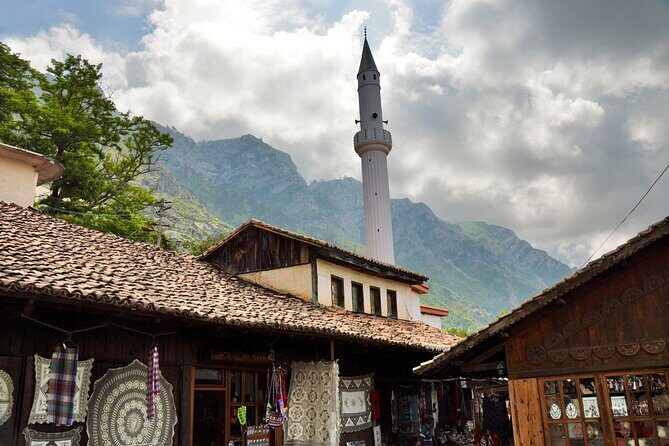
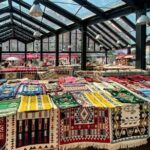
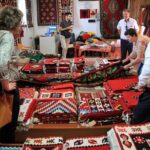
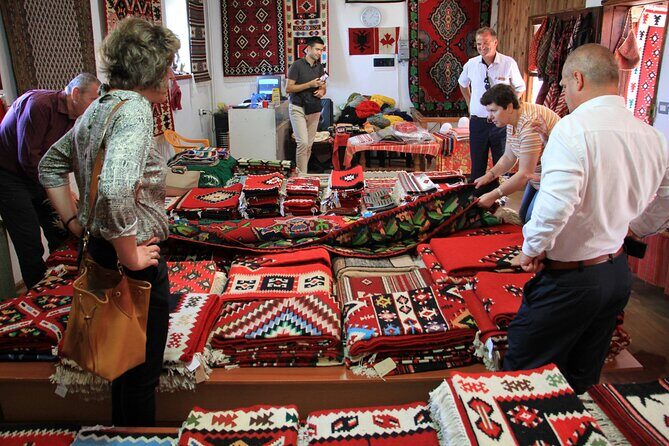
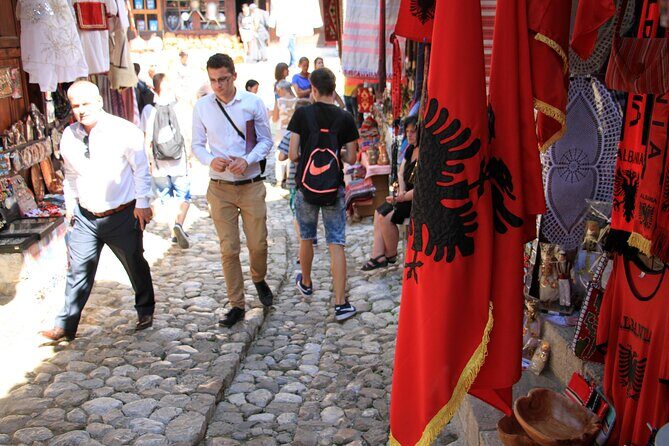
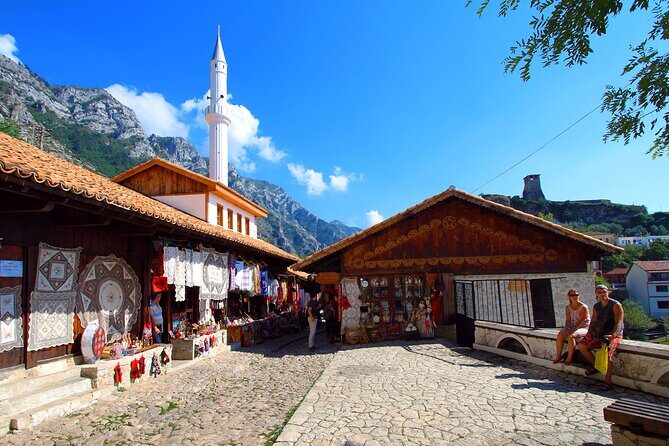
The Kruja Bazaar is one of Albania’s older markets, with roots going back over 400 years. It was a key point for free trade among established merchants, and it’s still built along that old logic: goods move, people browse, and commerce happens in the open.
What I like here is how the bazaar is not just a photo stop. It’s positioned on the main road leading to Kruja Castle, so it feels like the natural approach to the hill rather than a separate attraction thrown in.
You’ll have about 30 minutes here, and that’s enough time to get your bearings, spot traditional items, and enjoy the atmosphere without feeling trapped in souvenir traffic. If you’re sensitive to crowds, this short window can be a plus; you get flavor without a long slog.
Stop 2: Kruja Castle—Skanderbeg’s legacy plus museum time
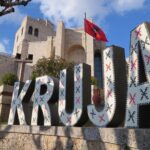
Kruja Castle is where the day becomes historical. Kruja’s importance ties closely to Skanderbeg’s long stretch of activity—about 25 years—when Kruja became a bastion of stubborn resistance against the Ottoman. Even if you know the basics, this stop helps you picture why this town mattered.
You’ll spend around two hours in the castle area, and the castle entry ticket is included. Inside the castle walls, you’ll find museums that connect the setting to the people and culture there—plus the broader story of the site.
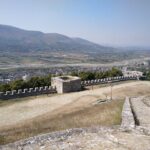
One detail that helps you set expectations: the castle walls date back to the fifth and sixth centuries A.D. That means you’re touring a layered site—old structures, later additions, and museum interpretation—rather than expecting one perfectly preserved fortress you can treat like a single coherent building.
Inside, the focus is often on the Gjergj Kastrioti Skanderbeg Museum, which was inaugurated in 1981. You may also encounter other collections in the castle walls, including an ethnographic museum and the Dollma Tekke.
Skanderbeg National Museum can be an add-on in some formats, and it lists as optional at 7 Euro. To avoid any awkward surprises, check whether your included ticket covers what you personally want to see, especially if museums are the main reason you booked.
Time inside can also be affected by your guide and your pace. If your guide is the type who names people and connects events clearly (there’s one guide name that often gets mentioned: Basi), the museum portion can feel like it clicks into place instead of just being facts on walls.
What to look for during the castle portion
- The fortress setting: the stone and the slope give you a sense of why this place was defendable.
- The museum framing: if you’re curious about Skanderbeg, you’ll get more out of the castle when you let your guide link items to the 15th-century context.
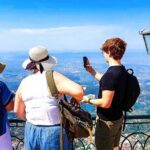
- The views: you’ll get outlooks that explain why the city is where it is.
A few more Tirana tours and experiences worth a look
Stop 3: Sari Salltiku Mosque and the holy cave stories

After the castle, the tour shifts from fortification to faith and legend. Sari Salltiku is a mosque in Kruja built in honor of Sari Salltiku, a cleric of the Bektashi faith.
The stories place him in the 1300s, and the mosque is connected to big names in the wider Bektashi circle. You’ll also hear about a footprint at the entrance of the mosque, said to be associated with Sari Salltiku.
One of the most interesting facts tied to this site is the modern history: the communist regime demolished the mosque in 1967, along with other religious sites across Albania, and it was reconstructed in 1991. That adds a layer of meaning—this is not just medieval legend, it’s also a story about what survived and what had to be rebuilt.
You’ll have about an hour here, which is enough time to understand what the site is and to hear the context without rushing. There’s also folklore tied to the holy cave in the Kruja mountain, with paranormal-style stories reaching back to 1325, when Sari Salltiku is said to have arrived from Turkey at the direction of Haxhi Bektesh Veliu to practice rites away from people.
If you like cultural stops that mix belief, history, and storytelling, this hour is often the one that makes the day feel more human and less purely chronological.
The guide matters: what to expect from the human factor
This tour is built around a professional guide, and that can be the difference between Kruja feeling like a quick hit and feeling like a clear story you carry home.
When the guide is strong at Albania’s history, you’ll notice it right away in the Skanderbeg Museum portion. The best guides help you understand why Skanderbeg’s base in Kruja wasn’t just symbolic; it was strategic, and the local geography played a role.
But there are also real-world signals to watch for. Some people reported that the guide didn’t always deliver as much information as they expected, and that can leave you with a checklist tour instead of a guided explanation. If you care about depth, ask your guide a question early—something simple like what Kruja’s role was during Skanderbeg’s resistance—and see how they respond.
Language can be another issue. English is explicitly offered, but one mismatch came up around Spanish audio options not being available as expected. If Spanish (or any language option besides English) is important to you, confirm availability before you go, or be ready to rely on the guide’s English explanations.
Price and value: does $84.11 make sense?
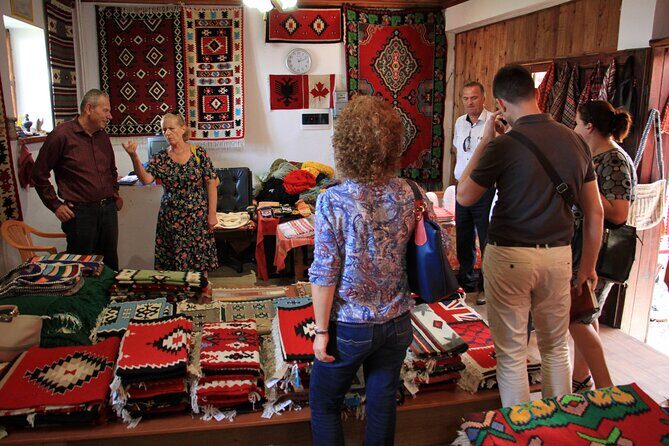
At $84.11 per person for about five hours, you’re paying for a few things working together: round-trip transportation from Tirana, a professional guide, and included entry for the Kruja Castle. The bazaar also includes an admission ticket.
That’s not just sightseeing for cheap—Kruja is a short ride, but you’re paying to save time and get context. If you were to do it on your own, you’d still need transport, and you’d still want a plan for what to prioritize so you don’t lose the story thread once you’re there.
Where value can shift is in optional add-ons. Skanderbeg National Museum is listed as optional at 7 Euro, and pickup/drop-off can be added at 10 Euro per booking. If you’re the type who wants every museum stop, you may spend a bit more on top.
Still, for most people looking for a focused day and guided storytelling, the included tickets plus the time structure make the price feel fair.
Potential snags to plan around
Not every day trip goes smoothly, and Kruja has a few realities you should consider.
First, manage your expectations about the castle. One negative experience described it as not much to see if you were hoping for a larger, intact castle you can explore like a full fort. The castle complex can be underwhelming if you only want dramatic walls and lots of outdoor fort sections. If you’re open to museums and interpretation, you’ll likely enjoy it more.
Second, there have been cancellation-style issues reported around reservations. I can’t promise that won’t happen to you, so the practical move is simple: keep your booking confirmation handy, double-check your meeting details the day before, and arrive with enough time to settle in.
Third, guide quality can vary. If you care about commentary, ask questions early, and if you feel information is thin, point it out calmly and ask for clarification.
Fourth, the Spanish audio expectation issue is worth flagging. Even if Spanish isn’t your priority, it’s still a good reminder that language add-ons can differ from what you assume. Confirm what’s available so you’re not stuck translating in your head all day.
Who should book this Kruja Castle and Bazaar tour?
This tour fits best if you want a structured day with a historical arc: market to fortress to spiritual site. You’ll enjoy it most if you like museums and if you appreciate a guide who can connect names, dates, and place.
It’s also a solid choice for first-timers to Kruja. The pacing is tight, but you hit the major anchors without needing a full day of self-planning.
If you’re the type who wants total freedom—lingering in one alley, skipping museums entirely, or exploring deeper markets—you might find the schedule limiting. In that case, you might prefer a flexible plan where you control your time on-site.
Group size is small enough (up to 20) that the day can feel manageable, not like you’re swallowed by a huge bus crowd.
Should you book this Kruja Castle and Bazaar tour?
I’d book it if you want a quick, guided orientation to Kruja with ticketed access and a story-driven route. The value is strongest when you’re excited for Skanderbeg context and you like the idea of short stops that still feel connected.
I’d think twice if you’re only chasing dramatic outdoor fort vibes and you expect a fully intact castle you can wander for hours. Also, if language options beyond English are important, confirm them before travel.
If your goal is a memorable day trip that makes Kruja make sense—then five hours is a good length, and this plan is easy to recommend.
FAQ
How long is the Kruja Castle and Old Bazaar tour from Tirana?
The tour lasts about 5 hours.
What time does the tour start, and where do we meet?
It starts at 9:00 am. The meeting point is Rruga Myslym Shyri 65, Tiranë, Albania, and the tour ends back at the meeting point.
Is hotel pickup included?
Hotel pickup and drop-off are optional and cost 10 Euro per booking.
What language is the tour offered in?
The tour is offered in English.
What’s included in the price?
Included are an air-conditioned vehicle, all fees and taxes, a professional tour guide, and entry/admission for Kruja Castle. The bazaar stop also includes an admission ticket.
Can I cancel for free?
Yes. You can cancel for a full refund up to 24 hours before the experience starts.