REVIEW · TIRANA
Bike or E-Bike Tour Tirana: Highlights & Grand Park Guided Cycle
Book on Viator →Bookable on Viator
Tirana feels huge until you ride it. This guided cycle strings together the city’s big landmarks with an easy, bike-friendly route and real context along the way, then finishes in Grand Park for a slow reset.
Two things I really like: the way the tour helps you name what you’re seeing (from Skanderbeg Square to modern installations), and the built-in pace shift from busy streets to park calm.
One possible drawback: the central riding can feel tight when there are pedestrians and cars, so you’ll want to stay alert, especially early on. And because the route is outdoors, you’ll want good weather for the best experience.
In This Review
- Key highlights you’ll actually remember
- Why biking Tirana works (especially in a short time)
- Getting oriented: Old Bazaar to Skanderbeg Square
- The Clock Tower and the Enver Hoxha Pyramid: seeing political shifts in plain sight
- Passing Bunk’Art 2: Cold War architecture on the city route
- Tirana Castle area (Toptani) and the Roman/Illyrian finds
- Postbllok Checkpoint and the Berlin Wall fragment: history you can’t ignore
- Namazgah Mosque and Mother Teresa Square: faith and identity in the city center
- Grand Park: the best pedal-to-rest payoff
- The Cloud (Reja) and Justinian’s Fortress: small stops with personality
- Price, timing, and what you get for your $42.33
- Who should book this bike tour (and who might prefer something else)
- Should you book it?
- FAQ
- How long is the Tirana bike or e-bike tour with Grand Park?
- Where does the tour start and where does it end?
- Is the tour offered in English?
- Is admission included for the stops?
- Is this tour private?
- Do I need good weather for the tour?
- Can I cancel for a full refund?
Key highlights you’ll actually remember
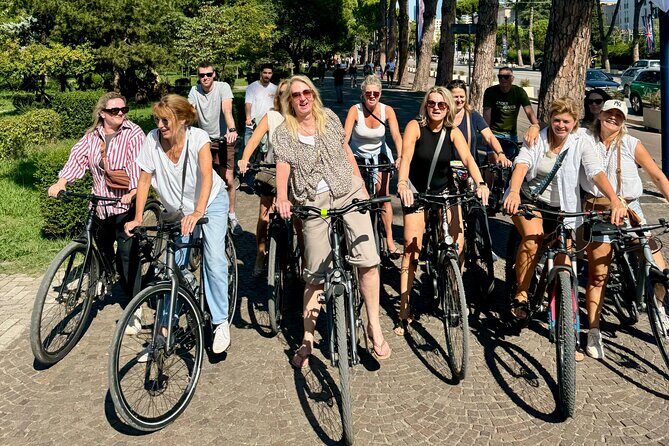
- Old Bazaar + Skanderbeg Square fast orientation: you’ll learn what matters where, in a short ride
- Clock Tower to Enver Hoxha Pyramid: clear signals of Tirana’s changing eras
- Postbllok Checkpoint + Berlin Wall fragment: Cold War history made tangible near city streets
- Toptani Castle area + nearby Roman/Illyrian finds: history you can spot without a museum ticket
- Grand Park lake break: a long, relaxing payoff at the end of the tour
- Reja The Cloud and Justinian’s fortress remnants: small stops that add big variety
Why biking Tirana works (especially in a short time)

Tirana is the kind of city where the best plan is simple: pick a tight route, see the essentials, then leave yourself energy to wander. This bike tour is built for exactly that. You cover a lot of ground without spending your whole day zigzagging on foot, and the focus stays on recognizable places you’ll otherwise miss or misunderstand.
The ride is mostly flat, which matters more than you’d think. When the terrain doesn’t fight you, you notice details: shop signs, street art, architectural shifts, and the way different neighborhoods “announce” their era. It also keeps the tour feeling relaxed, not like a workout you didn’t ask for.
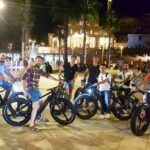
One more practical bonus: it’s set up as a private tour for your group. That usually means fewer delays and a guide who can tailor the pace to your comfort level. English is supported, and the tour runs about 2 to 3 hours, so it fits neatly into a day plan.
You can also read our reviews of more cycling tours in Tirana

Getting oriented: Old Bazaar to Skanderbeg Square
You start in Tirana’s Old Bazaar, a lively day area with markets, cafés, and street art. The ride begins on ground that’s easy to cycle, which is smart—warm-up matters. In the first moments, you’re already getting the sense of what Tirana feels like when it’s not trying to perform for tourists.
Then you roll to Skanderbeg Square, the city’s central plaza (40,000 square meters) with major landmarks around it. The guide points out the big visual anchors, including the National History Museum, the Opera House, and the National Bank, plus the 11-meter Skanderbeg statue. If you want to understand Tirana in one sentence, this is one of the places that teaches it.
A nice side effect of starting here: it makes later stops easier to place. Once you’ve got the square in your head, the city’s layout starts to click while you’re cruising.
The Clock Tower and the Enver Hoxha Pyramid: seeing political shifts in plain sight
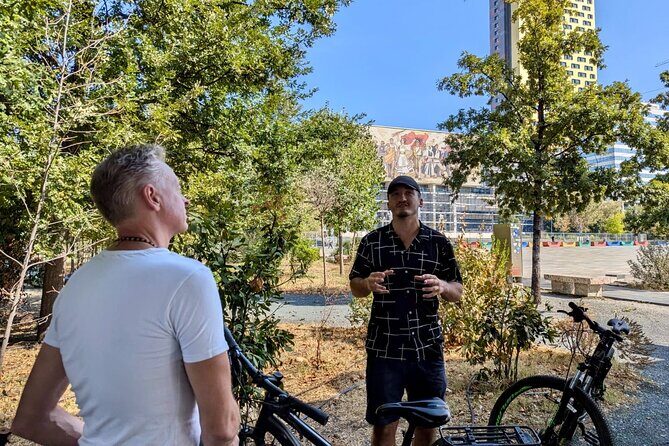
From Skanderbeg Square, you head to the Clock Tower, a landmark that was Tirana’s tallest building until 1970. It’s one of those “small stop, big takeaway” moments. You’re right beside the Skanderbeg statue, and the guide’s job is to connect the geography with the story—how Tirana grew and how power left its stamp on the skyline.
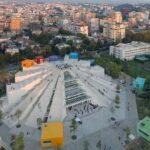
Next comes the Enver Hoxha Pyramid. It used to function as a museum dedicated to Albania’s former communist leader, and it’s now repurposed as a cultural and innovation hub. The structure is eye-catching enough that you’ll remember it later when you spot pictures online, but what matters is the framing: you’re seeing how the country repackages its own past rather than pretending it never existed.
There’s also an optional moment here—you can climb to the top for city views. If you like a quick viewpoint without committing to a full hike, this is the stop.
Passing Bunk’Art 2: Cold War architecture on the city route
Between the classic center sights and the older fort area, you pass by Bunk’Art 2, located in a former nuclear bunker built during Albania’s communist era. It was meant to protect government officials during a nuclear attack.
Even without going inside on this ride, the fact that it sits in the city fabric is the point. Tirana isn’t only showing you history in museums; it’s showing you history in the ground beneath your wheels. It’s also a reminder that “modern city” doesn’t automatically mean “modern story.”
Tirana Castle area (Toptani) and the Roman/Illyrian finds
Now you shift to the Tirana Castle area, near Toptani Castle, a restored Ottoman-era fortress tucked close to the city center. The route passes through Pedonalja, a popular pedestrian street where you’ll notice shop energy and colorful building façades.
What makes this segment especially worthwhile is the “layers” angle. Recent excavations have uncovered Illyrian and Roman ruins nearby, including parts of a Roman wall and other foundations older than 2,000 years. You don’t need a museum ticket to catch the significance—your guide helps you connect the ruins to the place you’re standing, then back to the wider city story.
One caution: since you’re outdoors and moving, you won’t get long browsing time at every historical feature. This tour is for orientation and key stops, not for digging deep into any one site.
You can also read our reviews of more guided tours in Tirana

Postbllok Checkpoint and the Berlin Wall fragment: history you can’t ignore

If you want the tour’s emotional punch, this is it. At Postbllok – Checkpoint Monument, you encounter a fragment of the Berlin Wall now standing in Tirana. It symbolizes the end of Cold War division, and it was gifted to the Albanian people by the German government.
Nearby, you also see Postbllok Checkpoint, a more direct look at Albania’s communist past. The monument includes concrete pillars from a labor camp, a bunker typical of the era, and a mine shaft connected to the Spac labor camp. The point here isn’t to overwhelm you; it’s to educate you with a clear, physical reminder of what people endured under that system.
This is also where a good guide matters. Strong English, clear pacing, and honest context make the difference between memorizing dates and actually understanding why the monument exists. In past tours, guides like Denis and Owen are known for connecting these political stories to everyday Albanian life, so the stop lands harder without turning grim.
Namazgah Mosque and Mother Teresa Square: faith and identity in the city center
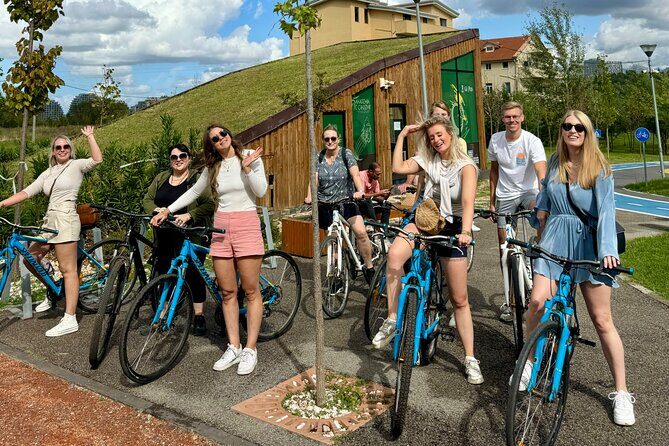
After the heavy stop, the route gives you room to breathe and keeps things moving toward modern identity.
First is the Mosque of Namazgah, described as the largest mosque in Albania and one of the biggest in the Balkans. The guide frames it in a broader way—Albania’s long record of religious coexistence among Muslims, Catholics, and Orthodox Christians. You’re seeing how Tirana’s public spaces reflect faith without turning it into a lecture.
Then you roll toward Mother Teresa Square (Sheshi Nënë Tereza), named for the Albanian-born nun, missionary, and Nobel Peace Prize laureate. Even if you only know her through international headlines, the square helps make her feel rooted in Albania rather than imported from somewhere else.
These stops aren’t “wow because they’re huge.” They’re “wow because they show values.” That’s a different kind of sightseeing win.
Grand Park: the best pedal-to-rest payoff
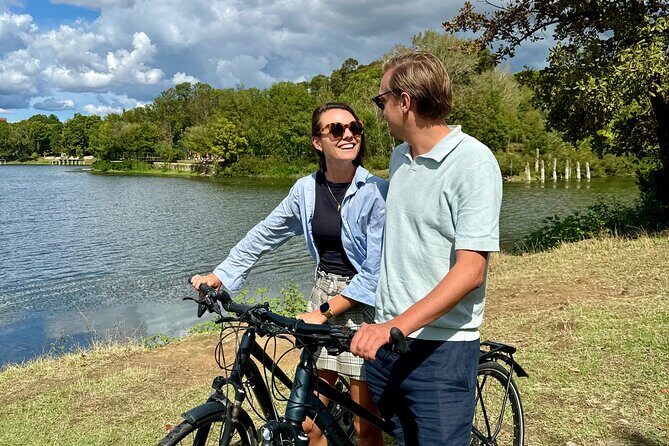
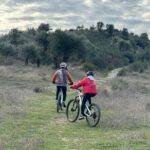
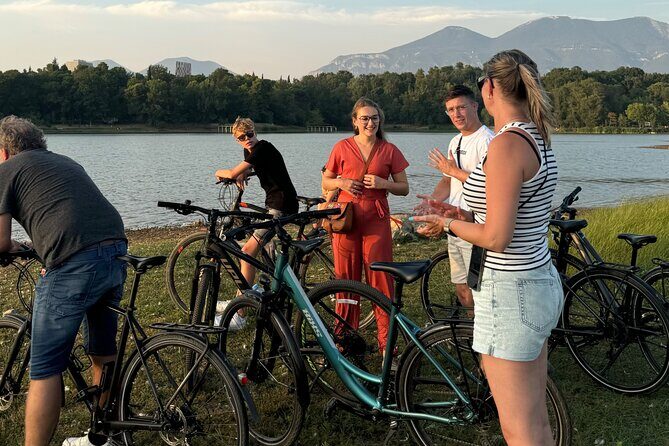
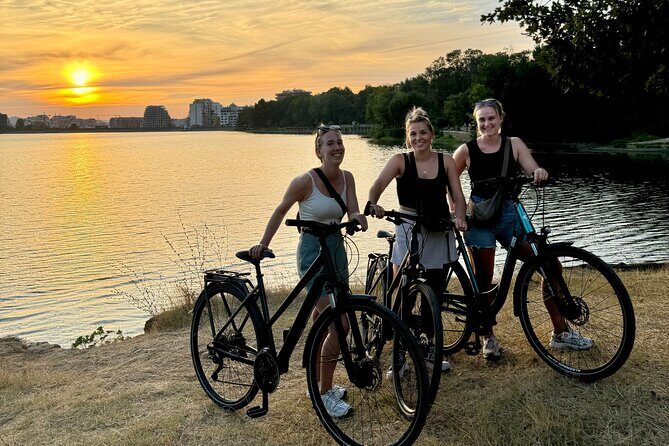
At the end, you head to Grand Park (Parku i Madh), a major green space inside Tirana. This is where the tour converts energy into comfort. The park includes an artificial lake created in 1955, plus memorials, an amphitheater, and Tirana’s only zoo. It’s huge—over 1.5 million square meters—so even on a city day, it feels like the air changes.
The ride up to the park matters too. You go from monuments and hard-edged history to paths and open space. It’s a smart structure: get your information early, then let your brain cool off.
If you like taking photos, you’ll also appreciate the layout. The lake gives you a natural background, and the park setting helps you remember Tirana as more than a stop-and-go list.
One quirky extra: in at least one guided outing, the guide climbed a tree to pick huckleberries for everyone to try. It’s the kind of moment that turns a standard landmark tour into a real memory.
The Cloud (Reja) and Justinian’s Fortress: small stops with personality
Back in central areas, you pass the Reja “The Cloud” installation by Sou Fujimoto. It’s made of white steel rods and is walkable and see-through, which makes it a fun pause for photos and a quick change of pace. It also hosts events, so even if you don’t catch one, you’re seeing a living part of the city—not just a monument behind ropes.
Then you get a brief stop near the Fortress of Justinian. It’s a small Byzantine-era remnant of walls, with a restored stone wall and a courtyard where cafés operate nearby. This one works because it’s close to everyday life. You’re not traveling away from the city center to see history; you’re meeting history in the middle of dinner plans.
Price, timing, and what you get for your $42.33
At $42.33 per person for roughly 2 to 3 hours, this is priced like a “high value” city orientation. You’re paying for more than bike rental. You’re paying for guided context across multiple layers of Tirana—Ottoman-era traces, communist-era monuments, Cold War symbols, modern public art, and green space relief.
Also, because it’s offered in English and your group stays together (private tour), you’re less likely to waste time trying to decode what you’re looking at. That matters in a city where architectural shifts can be subtle if you don’t know what to look for.
If you’re budgeting for one guided experience in Tirana, this is a strong candidate because it ties lots of recognizable spots into one coherent route.
Who should book this bike tour (and who might prefer something else)
This tour fits you best if you want:
- A fast, low-stress way to see central Tirana
- A guide who can connect sites to Albanian history and politics without turning it into a long lecture
- A route that includes both major landmarks and a meaningful park break
It may be less ideal if you want:
- Long museum time at any one site
- A slow, wandering-only pace with no structured stops
- A fully car-free experience all the way through (some parts of central cycling can feel busy)
The good news: most people can participate, and the route is set up around a mostly flat ride. If you want extra ease, e-bikes are an option, and you should confirm availability when booking.
Should you book it?
Yes, if your priority is orientation plus memorable stops in one outing. The tour’s real strength is balance: you get major squares and monuments, you also get the emotional gravity of the Postbllok and Berlin Wall fragment, and then you end with the kind of calm you don’t get on purely urban sightseeing days.
Book it especially if you like your sightseeing with names, dates, and context attached. And if you’re short on time in Tirana but want to feel like you understood the city rather than just photographed it, this is a smart move.
FAQ
How long is the Tirana bike or e-bike tour with Grand Park?
It lasts about 2 to 3 hours.
Where does the tour start and where does it end?
It starts at the Old Bazaar area (meeting point at Old Bazaar, 8RJF+3PR, Rruga Qemal Stafa, Tiranë) and ends back at the same meeting point.
Is the tour offered in English?
Yes, it is offered in English.
Is admission included for the stops?
The tour description notes that admission tickets are free for the listed stops.
Is this tour private?
Yes. Only your group participates.
Do I need good weather for the tour?
Yes. The experience requires good weather.
Can I cancel for a full refund?
You can cancel up to 24 hours in advance for a full refund. If you cancel within 24 hours, the amount paid is not refunded.