REVIEW · TIRANA
Tirana Walking Tour: History, Culture &Gems by a Passionate Guide
Book on Viator →Operated by Experience Tirana with a Smile · Bookable on Viator
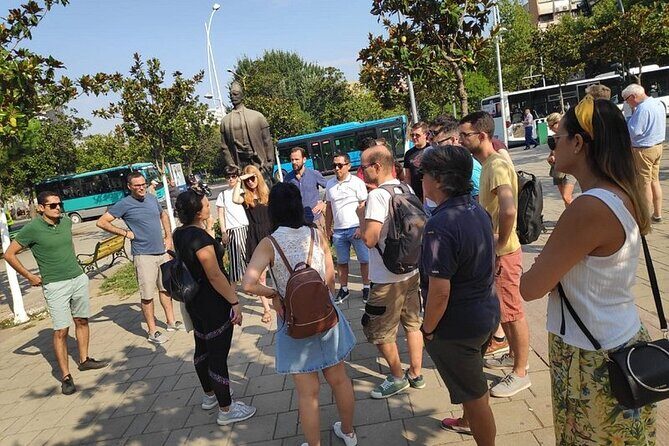
Tirana is a city you read by walking, not by looking up facts. This small-group tour strings together landmarks and everyday places so you get a real sense of how Tirana layers centuries on top of each other.
Two things I really like: first, the tour has a small group feel (max 11), so you can ask questions and keep up without feeling rushed. Second, you get a local guide’s perspective, including history that connects the difficult communist years to how people live now—plus a complimentary shot of rakia.
One possible drawback: it’s a lot of stops in a short window (about 3 to 4 hours), so if you prefer slow wandering with long museum time, you may feel a bit of a pace change.
In This Review
- Key Things I’d Block Time For
- Getting Your Bearings in Skanderbeg Square (and Why That Matters)
- Et’hem Bej Mosque and the Ottoman Touch You Can Actually See
- Clock Tower and Sulejman Pasha Square: The City’s Old-Meets-New Signals
- Pazari i Ri New Bazaar: Market Time, Not Museum Time
- Teqja Pazari and Bektashi Traditions: Spiritual History with Human Scale
- Kapllan Pasha’s Tomb: Carved Stone and a Founder’s Footprint
- Toptani Sarajet House and Ethnographic Museum: Everyday Albania, Not Just Power
- Bunk’Art 2: Communism Under Concrete
- Rruga Murat Toptani and Tirana Castle: Streets With Personality
- Saint Paul’s Cathedral and Orthodox Resurrection Cathedral: Religion After Suppression
- Komiteti Kafe Museum: Socialist-Era Memory With a Human Tone
- Pyramid of Tirana: A Modern Shape With a Past to Question
- Postbllok Checkpoint Memorial and Enver Hoxha’s Villa: The Regime as Physical Geography
- The Museum of Secret Surveillance (House of Leaves): Decide How Much You Want
- Bank of Albania: A Clean Break Into Civics and Time
- How the Rakia Tasting Fits the Story
- Price and Value for a $36.20 Tirana Walking Tour
- Practical Tips to Make the Most of the Walk
- Who This Tour Fits Best
- Should You Book This Tirana Walking Tour With Albiona?
- FAQ
- How long is the Tirana walking tour?
- How much does the tour cost?
- Is the tour offered in English?
- What’s included during the tour?
- Are entrance tickets included for all stops?
- How big is the group?
Key Things I’d Block Time For
- Skanderbeg Square as your compass: Tirana’s main public room, with the national hero framing the whole walk.
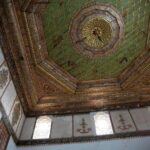
- Et’hem Bej Mosque interiors: modest outside, but frescoes inside with natural motifs like trees, waterfalls, and bridges.
- Blloku and the communist-era mood: Postbllok checkpoint reminders, Enver Hoxha’s former villa area, and the neighborhood’s transformation.
- Bunk’Art 2 for a sci-fi kind of history: a former communist bunker turned into an immersive historical stop.
- Rakija tasting included: a quick, simple way to taste local culture early.
- You still have choice on one bigger site: Museum of Secret Surveillance (House of Leaves) is not included, so you can decide how much time you want there.
Getting Your Bearings in Skanderbeg Square (and Why That Matters)
Most Tirana visits start with a maze of streets and traffic noise. This tour starts where the city gives you a handle: Skanderbeg Square. You’ll learn why it’s called the center of Tirana’s public life, and why naming it for Skanderbeg matters for Albanian identity.
Here’s the practical value: you don’t just see a landmark. You leave the first stop with a mental map. After that, the rest of Tirana starts making sense—Ottoman-era architecture, Venetian influences, religious sites, and later the communist-era symbols. When you know what you’re looking at, you can walk back on your own afterward and feel confident.
You can also read our reviews of more walking tours in Tirana
Et’hem Bej Mosque and the Ottoman Touch You Can Actually See
Next comes Et’hem Bej Mosque, a landmark with a surprising contrast. The outside is fairly restrained, but inside you get frescoes with detailed floral and natural motifs. The room’s peaceful mood comes from the art itself—depictions of trees, waterfalls, and bridges create a quiet kind of wonder that’s not what most people expect from an Ottoman mosque in an urban square.
A good way to enjoy this stop is to slow down your eyes. Look at the fresco patterns, then look at the overall space. You’ll understand what makes this mosque special: Islamic art here doesn’t just decorate; it creates an atmosphere.
If you’re sensitive to crowds or you like to sit with what you’re seeing, this stop is quick (around 10 minutes). Still, it’s long enough to notice the main motifs if you keep your phone away for a moment.
Clock Tower and Sulejman Pasha Square: The City’s Old-Meets-New Signals
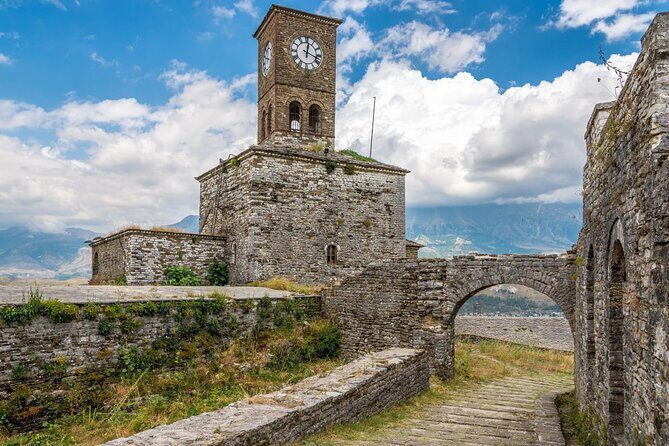
The Clock Tower is next—35 meters tall and built in the 19th century with Ottoman and Venetian architectural influences. Even if you’re not a buildings person, a clock tower tells you the city’s pulse. It’s a visual anchor that helps you orient in Tirana’s center.
Then you shift to Sheshi Sulejman Pasha (Sulejman Bargjini Square). It’s smaller than Skanderbeg Square, but that’s kind of the point. Tirana isn’t one giant monument. It’s a network of civic spaces. This square is a key one for understanding the city’s founding story and how leadership is memorialized in stone and public space.
These “in-between” stops are valuable because they prevent the tour from feeling like you’re only checking boxes. You get a sense of the urban rhythm.
Pazari i Ri New Bazaar: Market Time, Not Museum Time
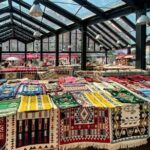
The tour moves to Pazari i Ri (New Bazaar), and this is where Tirana starts feeling like Tirana. You’ll pass colorful stalls and shops selling fresh produce, spices, local crafts, and traditional foods.
This stop is about more than shopping. Market walking teaches you what locals pay attention to: ingredients, colors, smells, and what’s for sale right now. If you’ve ever arrived in a city and thought, okay, now I need to figure out everyday life—this is that moment.
It’s also a good time to ask your guide about what to eat next. You’ll get suggestions that feel grounded, not generic.
Teqja Pazari and Bektashi Traditions: Spiritual History with Human Scale
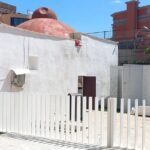
At Teqja Pazari, you visit a Bektashi site in Tirana. The teqe (Bektashi monastery) matters because the Bektashi Order is a Sufi Muslim sect known for mysticism and progressive values.
This stop helps you balance the rest of the tour’s political story. Tirana isn’t only Ottoman and communist chapters. It also has religious and spiritual layers that continued through time and shaped local culture.
Expect this as a short stop (around 10 minutes). Treat it like a window: you’re not meant to “finish” Bektashi culture in one visit, but you should leave with a clearer sense of why it exists here and how it shows up in the city.
You can also read our reviews of more guided tours in Tirana
Kapllan Pasha’s Tomb: Carved Stone and a Founder’s Footprint
Kapllan Pasha’s Tomb is next, and it’s one of those places that feels quiet even when the city is moving. It’s a Cultural Monument of the first category, declared by the Albanian government in 1948. The tomb dates to the early 19th century, with carved stones and an octagonal shape.
The detail that makes it memorable is the context: the former ruler of Tirana was interned here in the 19th century, then later repatriated back to Istanbul, Turkey. That single fact ties Tirana into wider regional history rather than keeping it boxed in as a local story.
This stop runs about 10 minutes. Even so, it’s a strong example of how Tirana’s past is preserved in forms that look simple until you learn what they mean.
Toptani Sarajet House and Ethnographic Museum: Everyday Albania, Not Just Power
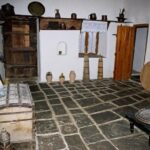
Then you’ll visit the Ethnographic Museum of Tirana, also known as Toptani Sarajet Old Typical House. This is the counterweight to political landmarks. Instead of focusing only on rulers, it gives you a preserved example of traditional Albanian life.
It’s a short stop (around 5 minutes), so don’t expect a deep study of domestic architecture. But it’s still worth it because it changes how you interpret the city. When you’ve seen what “typical” life looked like in earlier eras, the communist-era story that follows later feels more human.
Bunk’Art 2: Communism Under Concrete
Now you hit Bunk’Art 2, one of the tour’s most striking experiences. You’ll step into a former bunker used during Albania’s communist era. This is history you can walk through—literally designed spaces built for a regime’s fear and control.
The tour stop is brief (around 5 minutes), but the impact is big. Even a quick look gives you a mental image that helps everything else click: Postbllok, surveillance-era memory, the Blloku neighborhood’s closed-off past, and why the city has so many memorial symbols.
If you want more time here, you can plan a longer standalone visit on another day. But as a first-day “context builder,” Bunk’Art 2 does serious work.
Rruga Murat Toptani and Tirana Castle: Streets With Personality
You’ll also pass Rruga Murat Toptani, a culturally rich street blending historical charm with modern life. This is a good moment to look around and practice your own navigation. After you’ve learned what the major squares mean, the streets become more legible.
Then there’s Tirana Castle, a historic site with ancient ruins and modern attractions. The stop is short (about 5 minutes), so think of it as a quick taste. You’re meant to leave with curiosity, not to finish the entire castle story in one go.
Saint Paul’s Cathedral and Orthodox Resurrection Cathedral: Religion After Suppression
Tirana’s religious landmarks are a strong reminder that Albania’s story includes periods of suppression and later rebuilding.
You’ll visit Saint Paul’s Cathedral for a brief look (around 5 minutes). You’ll also stop at the Orthodox Cathedral of Resurrection, which is where the timeline gets clearer. The cathedral represents Albania’s religious revival after decades of suppression under Enver Hoxha’s regime. Albania declared itself the world’s first atheist state in 1967, and religious practices were banned. Churches, mosques, and religious sites were destroyed or repurposed.
Construction of the Resurrection Cathedral took place between 2001 and 2012, and it was consecrated June 24, 2012. That means you’re not only looking at architecture—you’re looking at a rebuilt public life.
Komiteti Kafe Museum: Socialist-Era Memory With a Human Tone
One of my favorite types of museum stops is the one that doesn’t pretend the past was only dark. Komiteti Bar is described as Komiteti Kafe Museum, capturing nostalgic socialist-era culture intertwined with traditional Albanian hospitality.
This stop is about 20 minutes. It’s long enough for you to absorb the mood and short enough that you won’t feel trapped in a timeline. It’s a smart contrast to the bunker and checkpoint stops: communism wasn’t only fear. It also shaped everyday social spaces.
Pyramid of Tirana: A Modern Shape With a Past to Question
Next is the Pyramid of Tirana. The key idea here is transformation: you’ll see a unique structure that has shifted in meaning over time.
This is the kind of landmark that becomes more interesting when you understand the city’s political arc. Early on, you might just see an odd shape. Later in the tour, after Blloku and surveillance-era memories, that same shape reads differently.
Postbllok Checkpoint Memorial and Enver Hoxha’s Villa: The Regime as Physical Geography
If you want a clear emotional center to the communist-era part of Tirana, it’s here.
You’ll stop at Postbllok – Checkpoint Monument, an open-air installation near the entrance of the Blloku neighborhood. It’s meant to remind you of the communist past and the oppressive regime’s presence.
Then comes Shtepia Partise Enver Hoxha, Enver Hoxha’s former villa in Blloku. This is a key part of Albania’s communist history. The neighborhood used to be off-limits to ordinary citizens, restricted to the communist elite. Standing in that area, you grasp how power worked through geography.
After that you’ll walk through Blloku itself, now transformed into the heart of Tirana’s social life. That before-and-after contrast is the entire lesson. The city didn’t erase the past, but it also didn’t freeze it.
This section is short stops (5 to 10 minutes each), but the meaning builds with every step.
The Museum of Secret Surveillance (House of Leaves): Decide How Much You Want
The tour includes Museum of Secret Surveillance in the mix, described as the House of Leaves, but admission is not included.
That means you should treat it as optional time you control. If you’re curious and you like intense history, make it a priority. If you’d rather keep your day lighter, you can skip it and still get a full, coherent tour.
Either way, it’s good to know it’s there, because it connects directly to the surveillance theme of the checkpoint memorials and communist-era sites you’ve already visited.
Bank of Albania: A Clean Break Into Civics and Time
Not every stop has to be heavy. Bank of Albania is a short stop (about 5 minutes) that adds a civic angle. It’s the central bank of Albania, established in 1925, making it one of the oldest financial institutions in the country. It was founded to manage currency and monetary policy.
This is a useful mid-to-late tour breather. By now you’ve walked through architecture, religion, and political memory. Talking about institutions helps you see how countries move from regime to systems.
How the Rakia Tasting Fits the Story
This tour includes a complimentary shot of rakia. It’s a tiny stop time-wise, but it’s smart culturally: it gives you a taste of something Albanian people share without needing a lecture.
In practical terms, I like doing the tasting as part of an orientation walk. It’s a low-stakes welcome. If you don’t feel like drinking, you can usually just observe. But if you do, it makes the rest of the city feel more personal.
Price and Value for a $36.20 Tirana Walking Tour
At $36.20 per person for roughly 3 to 4 hours, the big question is what you’re really buying: a list of sights or a way to understand them.
This tour is built for the “understand” part. You’re getting:
- a small group cap (max 11), which supports questions,
- English guidance,
- free admission for most stops,
- and a guide who connects landmarks to real Albanian identity and daily life.
If you’re visiting for the first time and you want a guided orientation that doesn’t feel like a classroom, this price is a strong value. If you already know Tirana well or you prefer quiet self-guided strolling, you might not use the guide as much. But for newcomers, this kind of structure saves time and prevents the usual I saw things but learned nothing feeling.
Practical Tips to Make the Most of the Walk
A few things I’d do before your day starts:
- Wear comfortable shoes. It’s a walking tour with multiple short stops, so your feet do most of the sightseeing.
- Bring a small bottle of water. You’ll be out moving around for hours.
- If you care about photos, plan for quick shots early, then put the camera away during indoor fresco or cathedral moments.
- Ask your guide what to do next after the tour. You’ll get suggestions that fit what you’ve already seen.
Also note the tour depends on good weather. If it gets canceled for weather, you should be ready to reschedule.
Who This Tour Fits Best
This is a great match if you:
- are in Tirana for a short time and want a clear overview,
- like your history explained through specific places, not generic facts,
- want a guide who answers questions and ties the past to life today,
- enjoy walking in a compact, human-sized group.
It’s less ideal if you only want museum time, or if you get overwhelmed by lots of topics in a single morning or afternoon.
Should You Book This Tirana Walking Tour With Albiona?
If you’re asking me for a simple call: yes, book it—especially for your first day in Tirana.
The reasons are practical. You get a concentrated loop of Tirana’s defining symbols (Skanderbeg Square, Ottoman-era mosque art, Bunk’Art 2, communist memory in Blloku and Postbllok, then modern civic and religious landmarks). You also get something harder to price: a guide who makes the history feel understandable, not just collected.
One more thing: several reviews praised Albiona for being flexible with timing when traffic delayed arrival, and for keeping the tour enjoyable without overload. That matters, because Tirana days don’t always follow a perfect schedule.
FAQ
How long is the Tirana walking tour?
It runs about 3 to 4 hours.
How much does the tour cost?
The price is $36.20 per person.
Is the tour offered in English?
Yes, it is offered in English.
What’s included during the tour?
The tour includes a complimentary shot of rakia.
Are entrance tickets included for all stops?
Most stops list admission as free, but the Museum of Secret Surveillance is not included.
How big is the group?
The tour has a maximum of 11 travelers.