REVIEW · TIRANA
Self-guided: Peaks of the Balkans Tour in 8 days
Book on Viator →Operated by Choose Balkans · Bookable on Viator
A mountain daydream with borders you can step into. The Peaks of the Balkans trek is built for big, wide views and small, local moments, from Theth hikes to high passes over the Accursed Mountains. You’ll travel early, walk hard, and sleep in simple places where the trail life is the point.
Two things I really like are the mix of famous highlights and lesser-known details: the Blue Eye of Theth hike and the tripoint moment on Tromedja Mountain. I also like that you get real support built in—shared transport to start and finish, cross-border paperwork, and 7 breakfasts—so you’re not solving logistics at altitude.
One drawback to plan around: this is not a casual walk. Expect a strong fitness level and a very early start (meeting at 5:00am), plus basic beds and no included dinners.
In This Review
- Key points to know before you go
- From Tirana or Shkodra to Theth: why the start sets the tone
- Day 1 in northern Albania: Shkoder, Boge, Blue Eye, and Theth’s church tower
- Shkoder: lake country, then straight into the mountains
- Boge and Qafa e Thores: lavender vibes and a steep climb
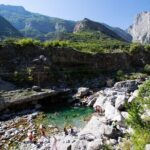
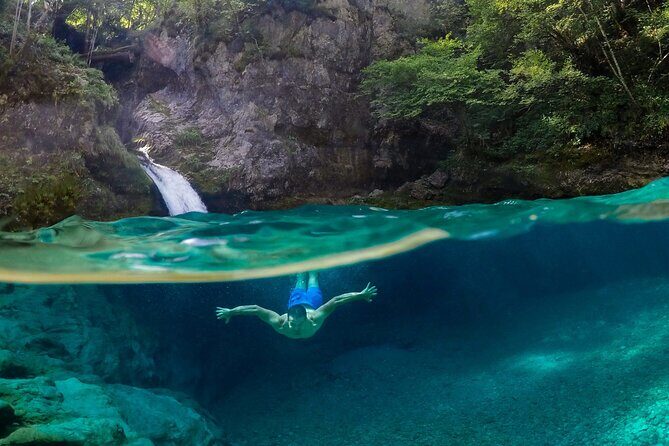
- Blue Eye of Theth: a moderate hike with cold-water honesty
- Qender Theth: old church and the Lock in tower
- Day 2: Valbona Pass and the adrenaline viewpoint over the Accursed Mountains
- Day 3: Valbona to Cerem, canyon country, snow pockets, and the Zla Kolata option
- Cerem: shepherd huts at about 1300m and the Zla Kolata add-on
- Day 4: Cerem to Doberdol via a Montenegro border crossing and a lynx reserve
- The reserve note: brown bears and lynx
- Doberdol overnight: basic beds, good food, and altitude
- Day 5: Tromedja tripoint day and the meadows of Babino Polje
- Tromedja Mountain: standing at three countries
- Follow the border to Babino Polje
- Day 6: Babino Polje to Plav via Lake Hrid and its pine-forest calm
- Lake Hrid: the cooling break after real walking
- Day 7: From Plav to Vusanje, long views after a cathedral-like forest climb
- Day 8: Vuthaj to Theth with Arapi and Jezerca views, then the shared ride back
- A hidden water place you can’t find without the location
- Arapi and Jezerca area: high peaks next to each other
- Transfer back: Theth to Tirana/Shkodra bus terminal
- Price and what $1,366.86 really covers (and what it doesn’t)
- The practical stuff that makes or breaks a trek like this
- Self-guided doesn’t mean “no support”
- Pack lightly, because your bag is your partner
- Expect basic sleeping
- Weather and schedule changes
- Who should book this trek (and who should skip it)
- Should you book Peaks of the Balkans in 8 days?
- FAQ
- What time does the tour start?
- Where does the tour begin?
- Is this tour fully self-guided?
- How many nights of accommodation are included?
- Are breakfasts included?
- What’s included for transportation?
- Is a cross-border pass included?
- Are private rooms available?
- How big is the group?
- What meals are not included?
- What if I need help with luggage?
Key points to know before you go
- A self-guided route with real scaffolding: local transfers to Theth and back, plus cross-border pass and taxes handled for you.
- The Blue Eye of Theth is a full hike day, not a quick look—moderate terrain, real elevation gain, and cold water you probably won’t want to swim in.
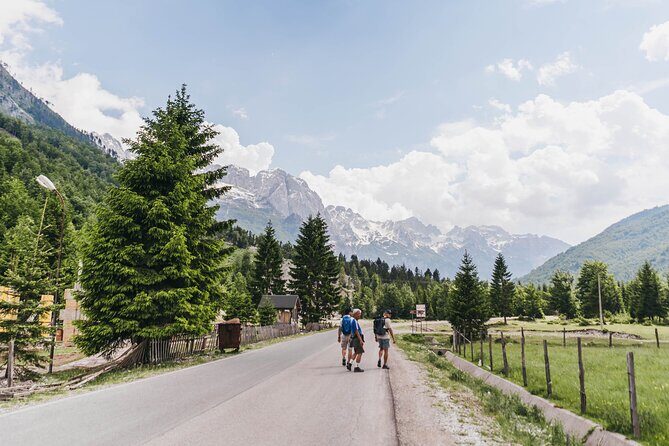
- High passes with adrenaline: Valbona Pass is described as a 6–8 hour effort with big summit views in remote terrain.
- Cerem and Doberdol = shepherd-country basics: huts, pine forests, berries, and nights on mattresses, not hotel beds.
- Tromedja puts you at the Albania–Montenegro–Kosovo tripoint, right on the trail border.
- Lake Hrid is the reward day-stop: a cooling break with a local legend and a route that goes through thick pine forest.
From Tirana or Shkodra to Theth: why the start sets the tone
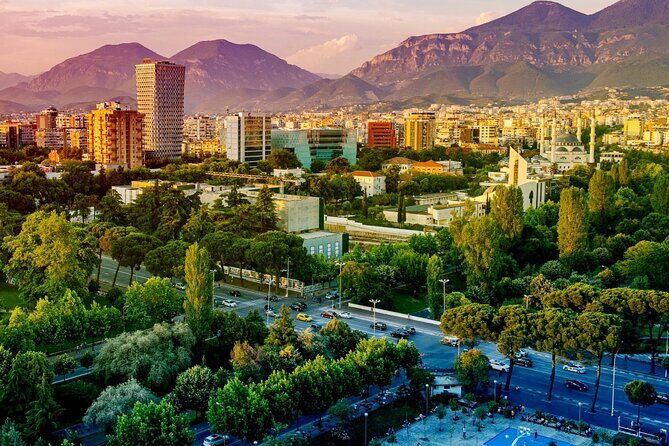
You kick things off very early from Tirana or Shkodra, meeting at 5:00am. The point of that early launch is simple: you lose less daylight to getting out of the city and more time to hiking while the mountains are calm and the air is cooler.
The first leg is shared transportation arranged through local partners, and you’ll switch modes once you reach Shkoder. That shift matters because the roads change fast as you head north—urban bus comfort gives way to mountain-region transport, where timing and patience are part of the experience.
If you like a trek that feels like it’s really going somewhere, this one delivers. You’ll leave the flatlands behind and enter a world of rivers, rugged hills, and the Albanian Alps feel that makes every later day more dramatic.
You can also read our reviews of more guided tours in Tirana
Day 1 in northern Albania: Shkoder, Boge, Blue Eye, and Theth’s church tower
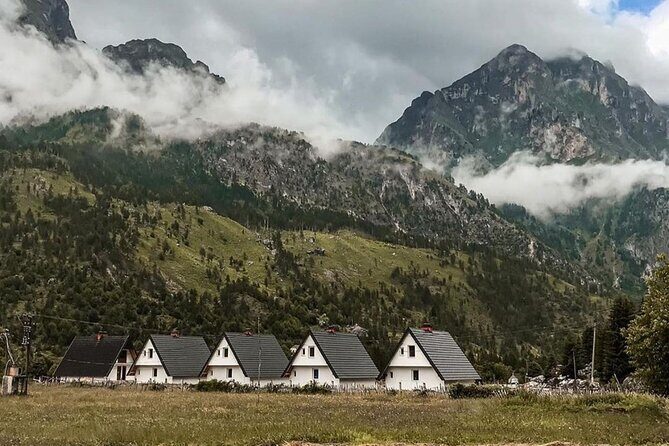
Day 1 is a “settling-in” day that still asks for effort. You’re driving north, switching local transport, then stacking a short scenic stop with a real hike and a village history stop.
Shkoder: lake country, then straight into the mountains
In Shkoder, you’ll switch to the next local transport to continue toward Theth. You get a quick taste of why this region is so visually consistent: the route runs through wild fields, river stretches, and Shkodra Lake country, before turning into something much more remote.
This part is easy on the body—your work begins later. It’s mostly about arriving ready, not arriving relaxed.
Boge and Qafa e Thores: lavender vibes and a steep climb
After the turn toward Theth, you hit more rural scenery with fewer cars and more open nature. Boge is described as a medicinal herb-growing area, and if you’re there in May–June, you might catch lavender fields that give the hills a Provence-like feel.
Then comes a “best picture” moment at Qafa e Thores. The route passes a steep hillside reaching up to about 1700 meters. Even if you don’t stop long, the terrain change is obvious—you’re being dragged upward by the geography.
Blue Eye of Theth: a moderate hike with cold-water honesty
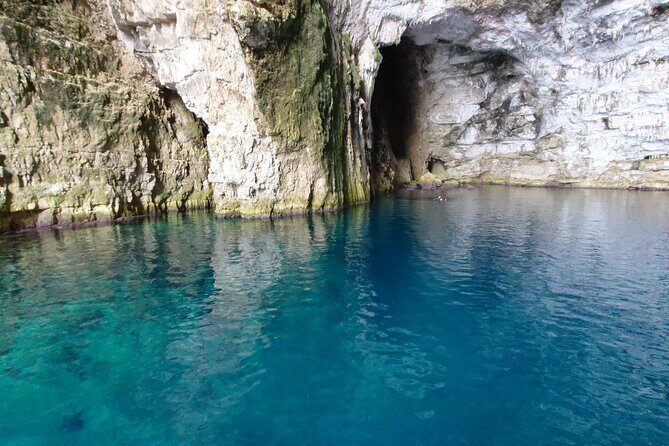
Midday is when you start your hike toward Blue Eye of Theth. The story is classic mountain geology: it forms from erosion by melting snow from the Albanian Alps. What you’ll actually feel is the long slog and the reward colors—bright blues and greens that look unreal even after a couple days of mountain views.
The hike is listed as moderate with about 700m of elevation gain and roughly 6.2 km both ways (and the day also notes an overall loop estimate of about 18 km and around 6 hours). Translation: you’ll be working for it, and your timing matters if weather changes.
Practical note: the water temperature is around 5°C. You probably won’t want to test that, but it’s a fun barometer for how cold the water really is.
A few more Tirana tours and experiences worth a look
Qender Theth: old church and the Lock in tower
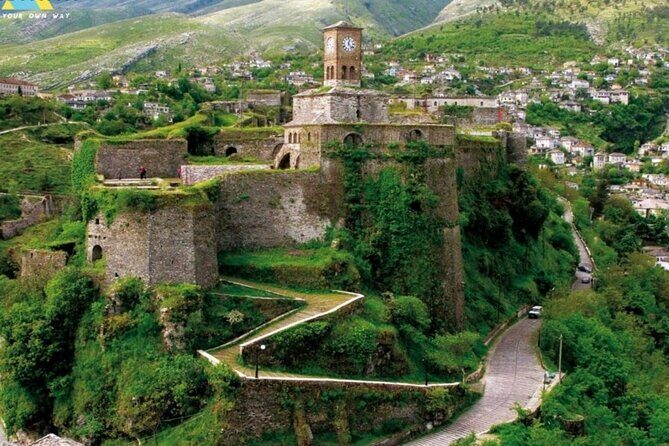
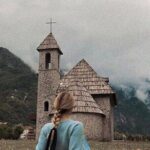
After hiking, you drop back into the village center. Here you visit the Old Church and the Lock in Tower, a symbol of Theth. This stop is short, but it gives your body a break while giving your brain context: the buildings reflect centuries of life in a place that stayed difficult to reach.
If you’re the type who likes understanding where you are, this is a nice palate cleanser after physical work.
Day 2: Valbona Pass and the adrenaline viewpoint over the Accursed Mountains
Day 2 is the highlight day that people mark in their memory fast. You trek Theth to Valbona, around 6–8 hours with roughly 1050m elevation. The terrain is described as remote, so you’re not expecting easy walking or frequent services.
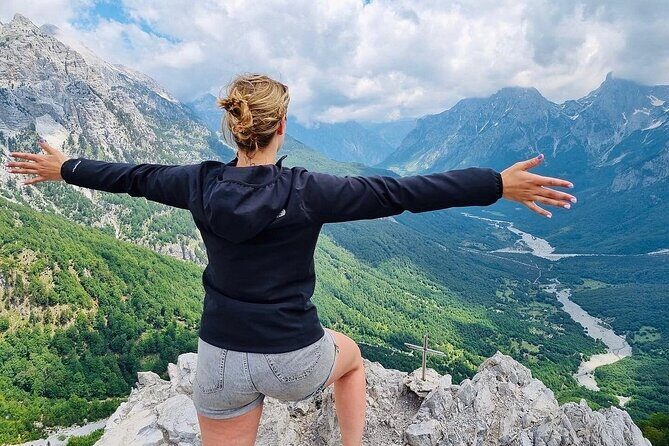
At Valbona Pass, the reward is a wide look at the Peaks of the Balkans and the Accursed Mountains. It’s framed as an adrenaline moment at the top—standing at a viewpoint where you can see valleys on both sides and taking photos that feel bigger than your camera.
Then you start your descent toward the Valbona Valley and continue on to your next destination. The important takeaway is that day 2 isn’t only about the pass—it’s about controlling your pace on the climb so your knees survive the downhill.
Day 3: Valbona to Cerem, canyon country, snow pockets, and the Zla Kolata option
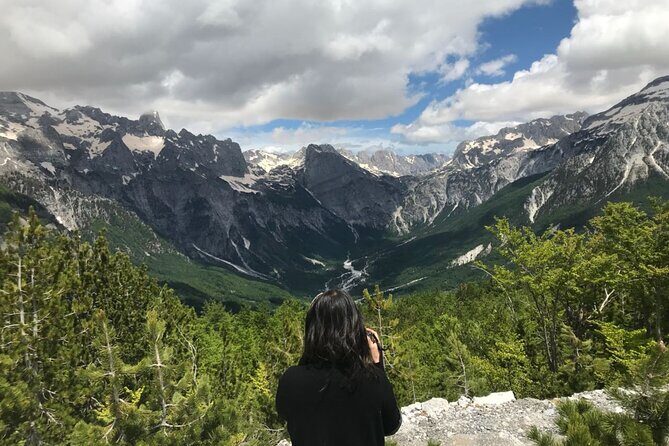
Day 3 is a “slow build” into higher, wilder terrain. You hike toward Cerem, walking through forests and meadows. You’re moving into a place described as canyon-like, with the note that you can still find snow even during summer.
That snow detail isn’t just poetry—it hints that mornings may feel cooler and that shaded spots can stay cold. Start early, dress in layers, and keep your expectations realistic.
Cerem: shepherd huts at about 1300m and the Zla Kolata add-on
Once you reach Cerem, you’re around 1300m above sea level, near shepherd huts. The description emphasizes limited connection to civilization here, which is exactly why this day works: you’re living closer to the landscape and the daily rhythms of mountain life.
There’s also an optional hike to Zla Kolata peak (2033m). It adds about 3 more hours of hiking. This is a real “choose your adventure” moment: if you’re feeling strong and the weather is stable, it’s a great way to make day 3 feel even bigger.
Day 4: Cerem to Doberdol via a Montenegro border crossing and a lynx reserve
Day 4 shifts the vibe toward pine forest walking and wildlife country. You hike from Cerem toward Doberdol following a mule track. For about two hours, the route crosses into Montenegro.
The terrain includes pine forests and seasonal berries like blueberries, blackberries, and raspberries depending on timing. Even if you don’t pick any, that note tells you what kind of understory you’ll be walking through—more shade, more texture underfoot, and likely cooler conditions.
The reserve note: brown bears and lynx
A specific highlight is that you pass within the only National Reserve in Albania, described as home to brown bears and the last population of approximately 40 lynxes in the Balkans. You’re not going to see everything on schedule, but it adds weight to the idea that you’re moving through genuine wildlife terrain, not just scenic scenery.
Doberdol overnight: basic beds, good food, and altitude
The day reaches a highest point around 2100m, and you arrive in Doberdol around 1800m. Along the way, you can stop for coffee or drinks at shepherd hut villages.
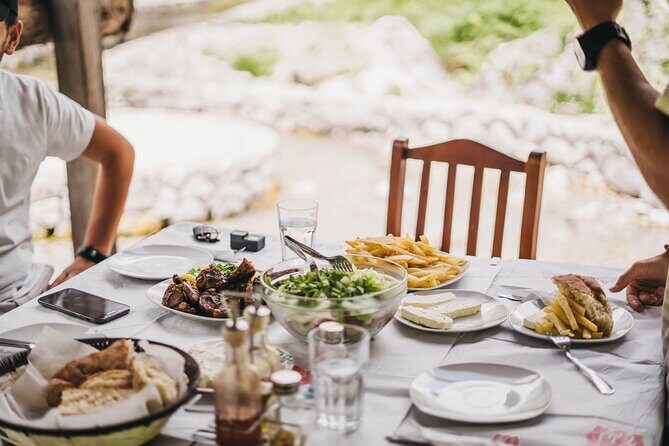
Your overnight is in a shepherd hut setup: beds are described as mattresses with basic conditions, not hotel comfort. The upside is the human warmth—locals are described as welcoming, and food is described as delicious and locally sourced. If you’re okay with “simple,” this kind of night can be one of the trip’s best memories.
Day 5: Tromedja tripoint day and the meadows of Babino Polje
Day 5 is built for people who like both physical effort and the odd-but-true geopolitical feeling of standing in the right place.
Tromedja Mountain: standing at three countries
You start with a big climb up Tromedja Mountain. The standout detail is that at a point on the summit, you can stand in Albania, Montenegro, and Kosovo at the same time—a tripoint moment that’s hard to experience on normal vacations.
It’s about more than a photo. It’s about the sensation that these borders are lines drawn across terrain you’re actually walking on.
Follow the border to Babino Polje
From Tromedja, you continue hiking along the border between Kosovo and Montenegro. The route includes Bogicevica National Park and features endless meadows, blueberry bushes, and a more leisurely feel once you’re past the initial climb.
You finish in Babino Polje, a charming village where you can settle into the pace of the region. Since dinners aren’t included, you’ll want to be ready to plan meals with what’s available on arrival.
Day 6: Babino Polje to Plav via Lake Hrid and its pine-forest calm
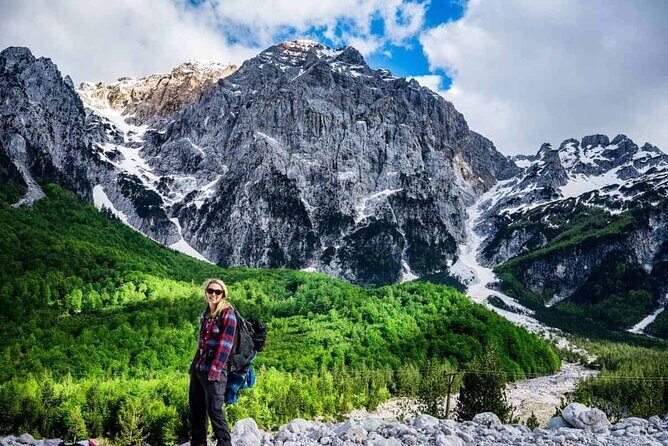
Day 6 is the “reward day” energy. You hike from Babino Polje to Plav, moving through untouched forests with Lake Hrid as the highlight.
Lake Hrid: the cooling break after real walking
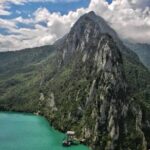
Lake Hrid is described as the most beautiful lake in all of Montenegro. The hike passes through thick pine forest, and the idea is that you get a rare sense of distance from the outside world—quiet enough that you can hear your own steps and breathing.
There’s also a local legend: swimming in Lake Hrid brings good health and good luck in marriage. I can’t promise the romance part, but the practical value is real: it’s a natural cooling stop if you still have water and energy.
When you arrive, Plav opens up in front of you like a postcard. And because this is a trek, that feeling usually hits harder after a day of forests and altitude.
Day 7: From Plav to Vusanje, long views after a cathedral-like forest climb
After breakfast at your guesthouse, you continue into the Peaks of the Balkans again. The route runs through dense forests with ancient trees—described like a cathedral of greenery—then gradually shifts into a higher alpine feel.
The walking builds as the scenery changes into panoramic views across rugged valleys and expansive meadows. You approach Vusanje with the valley opening up, with the village shown as a meeting point between people and mountain terrain.
A note on the effort: this day is listed as one-way with about 21 km, elevation max around 2100m, and roughly 1194m of elevation gain. Time is around 7 hours. That’s a serious day, so treat it like a climb-first, photo-second plan.
Day 8: Vuthaj to Theth with Arapi and Jezerca views, then the shared ride back
Your final day brings you back toward Albania. You head from Vuthaj toward Theth, crossing the border back to Albania and stacking in two big “only on a real trek” moments.
A hidden water place you can’t find without the location
There’s a hidden water spot described as difficult to find on your own without knowing the exact location. This is a classic self-guided challenge: routes like this often matter because someone already knows where the interesting side path goes. You’ll want to follow the provided route guidance closely, especially if signage is minimal.
Arapi and Jezerca area: high peaks next to each other
You also pass by Arapi peak (2217m) near Jezerca peak (2694m). Even without climbing either summit, passing through the area around them gives you that “big peaks looming” feeling that lowland walking can’t fake.
There are also multiple shepherd’s huts along the way, which gives you continuity with earlier days. You’re not just walking through nature—you’re moving through a working mountain system.
The hike is listed around 21 km, elevation gain about 1294m, and roughly 8 hours. After that, you’re ready for the finish.
Transfer back: Theth to Tirana/Shkodra bus terminal
Once you arrive in Theth, you get a shared transfer back to Tirana or Shkodra via local partners. You’ll be dropped at the bus station, and from there you handle your own way to your hotel (bus or taxi, not included).
Price and what $1,366.86 really covers (and what it doesn’t)
At $1,366.86 per person for about 8 days, the value depends on what you consider “must-have” vs “you’ll handle it.”
What’s included:
- 7 nights in traditional homestay/guesthouse/lodge-style places or shepherd’s huts
- Local transport from the meeting point in Tirana or Shkodra to Theth on day 1
- Local transport from Theth back to Tirana/Shkodra bus terminal on day 8
- Cross Border Pass and tourist taxes
- Choose Balkans Assistance
- Breakfast (7)
What’s not included:
- Lunches, dinners, drinks, and snacks
- Private room upgrades (available for an extra €40 per night per room based on availability)
- Transfers from your hotel to the meeting point on day 1 and from the drop-off bus terminal to your hotel on day 8
- Tour guide (this is self-guided)
- Anything not listed above
For me, the strong value is the combo of: (1) accommodation for a week in mountain settings, (2) cross-border paperwork and taxes handled, and (3) transport at both ends. Those are the cost magnets on independent trips.
The cost risk is meals. If you want predictable sit-down dinners every night, you’ll need to budget for about €12–15 per meal (as stated). Bring snacks and a plan for where you’ll eat, because the remoteness of the route means you can’t count on constant options.
The practical stuff that makes or breaks a trek like this
Self-guided doesn’t mean “no support”
You’re self-guided, and a tour guide isn’t included, but the trip is still structured. You’re not left with only a blank map: you get local transport, cross-border support (pass and taxes), and assistance from the company.
That matters most on the hardest days, when you don’t want to spend energy guessing logistics while your legs are already working.
Pack lightly, because your bag is your partner
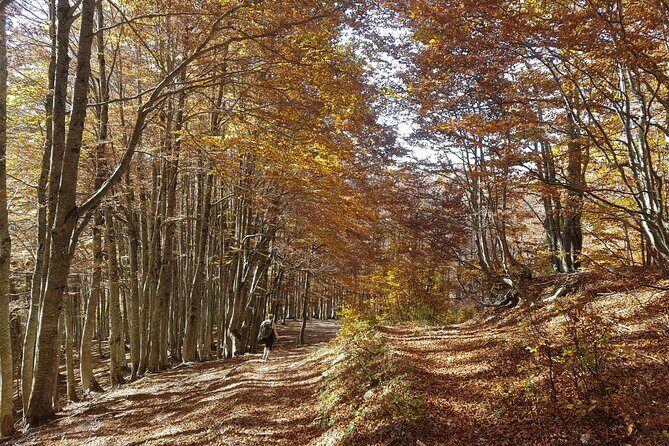
You’ll carry your belongings during the trek, so the recommendation is to pack lightly. Excess luggage can require extra arrangements: luggage transportation might be possible depending on availability, with a minimum fee stated (one person minimum €880, or €440 per person for groups).
If you’re the type who overpacks for “just in case,” this trek punishes that habit. Stick to a realistic layering system and keep your load tight.
Expect basic sleeping
Your accommodation is described as simple homestay/guesthouse/lodge-style or shepherd’s hut with basic bathroom amenities. Rooms typically fit two to five travellers, and male/female sharing may happen unless you book a private room.
Bring or plan for the fact that comfort is practical, not cushy. If you’re okay with that, the night experience can feel more honest and more connected to the area.
Weather and schedule changes
Like all mountain treks, your route timing can shift due to weather or other external forces. Build flexibility into your vacation days after the hike, so an altered departure or arrival doesn’t wreck your wider plans.
Who should book this trek (and who should skip it)
This tour suits you if you want:
- Moderate to serious day hiking, with elevation gain and long walking hours
- A route across Albania, Montenegro, and Kosovo, with real border-crossing trail sections
- Mountain-country stays: homestays, guesthouses, and shepherd hut nights
- A self-guided experience that still provides transport and cross-border basics
I’d suggest skipping if:
- You don’t have the fitness for long hiking days (several days list 6–8 hours and around 1000m+ gain)
- You need included dinners and predictable meals every day
- You want hotel-level comfort and private rooms as the default
Also, the early start and the amount of hiking mean you’ll benefit from arriving rested. If you arrive the day before and sleep poorly, the mountains will still show up at 5:00am.
Should you book Peaks of the Balkans in 8 days?
If your dream trip is waking up in mountain country, hiking through passes and borders, and ending each day in a simple place where the trail dominates, I think this is a strong choice. You’re paying for the hard parts: accommodation across remote nights, cross-border admin, and transport at both ends.
Book it if you’re comfortable with basic lodging, carrying your bag, and spending evenings sorting your own meals. Don’t book it if you want a light, guided walk with minimal effort and included dining—this route is built around walking, not sightseeing buses.
One last reality check: this experience is non-refundable and cannot be changed. If your plans are uncertain, you’ll want travel insurance and flexibility in your calendar before you commit.
FAQ
What time does the tour start?
The start time is 5:00am, with an early departure from Tirana or Shkodra.
Where does the tour begin?
You depart from Tirana or Shkodra. The exact meeting point details are provided at booking.
Is this tour fully self-guided?
Yes, it’s described as a self-guided trekking tour. A tour guide is listed as not included.
How many nights of accommodation are included?
You get 7 nights of shared accommodation in traditional homestays/guesthouses/lodges or shepherd’s huts.
Are breakfasts included?
Yes. Breakfast is included for 7 days.
What’s included for transportation?
Included transportation covers local transfers from the meeting point in Tirana or Shkodra to Theth on day 1, and from Theth to the Tirana/Shkodra bus terminal on day 8.
Is a cross-border pass included?
Yes. The Cross Border Pass and tourist taxes are included.
Are private rooms available?
Private rooms are possible for an extra €40 per night per room (based on availability). Room-sharing may occur otherwise, depending on your group.
How big is the group?
The tour has a maximum of 10 travelers.
What meals are not included?
Lunches, dinners, drinks, and snacks are not included. The cost for one meal is stated as about €12–15.
What if I need help with luggage?
You’ll carry your belongings, so pack lightly. Pre-arranged luggage storage in Tirana is suggested, and excess luggage transportation may be possible depending on availability for an additional fee (minimums are stated).