REVIEW · TIRANA
Small Group Hiking Tour; Peaks of the Balkans Trail in 7 Days
Book on Viator →Operated by Choose Balkans · Bookable on Viator
Three countries in seven days, all on foot. This small-group Peaks of the Balkans trek strings together the Albanian Alps with Montenegro and Kosovo, with border crossings and big mountain payoff views. Starting with an early pickup and ending in Gjakova, it’s a week that feels more like following a path than checking boxes.
I love the mix of lodging styles—guesthouses in mountain villages and shepherd’s hut nights when you’re deep in the hills. I also love the summit-driven route, where your effort actually turns into memorable viewpoints like Talijanka and Kosovo’s top peak, Gjeravica. The guide names you might hear in past groups—Samir, Saimir, Ervin—show up for a reason: they focus on pace and getting everyone through safely.
One thing to weigh before you book: this is serious hiking, with long days and steep sections, plus you carry your belongings on the trek. If you want mostly flat walking and full meals handled for you, this won’t be your vibe.
In This Review
- Key highlights you’ll feel fast
- Peaks of the Balkans: Why this trail feels like more than just hiking
- Day 1: Tamarë, Lëpushë, and the Talijanka-to-Vuthaj pivot
- Day 2: Theth’s old church, Arapi pass views, and a hidden water stop
- Day 3: The Valbona walk—mule trail history and that adrenaline pass
- Day 4: Cerem canyon trails and the option to tackle Zla Kolate
- Day 5: Doberdol mule track, berries, and shepherd’s hut sleep at altitude
- Day 6: Gjeravica summit plus Kosovo lakes where you can swim
- Day 7: Gjakova bazaar day—history, rebuilding, and a proper finish
- Price and logistics: what you’re paying for (and what you still need to budget)
- How fit do you need to be, and how should you pack?
- Who this hike suits best (and who should skip it)
- Should you book Peaks of the Balkans in 7 Days?
- FAQ
- What time does the tour start on day 1?
- How many people are in the group?
- What kind of accommodation is included?
- Are meals included during the hike?
- Do I need hiking experience or fitness?
- What if the tour is canceled due to weather or not enough travelers?
Key highlights you’ll feel fast
- Max 10 travelers means you’re not lost in a crowd on narrow trails
- Multi-country border crossings keep the scenery changing every day
- Summits like Talijanka and Gjeravica turn altitude into real payoff
- Guesthouse and shepherd’s hut nights make the trip feel local, not staged
- Options with bigger effort (like the Zla Kolate add-on) let you choose your level
- Gjakova’s bazaar finish gives you a grounded, human end to all that altitude
Peaks of the Balkans: Why this trail feels like more than just hiking
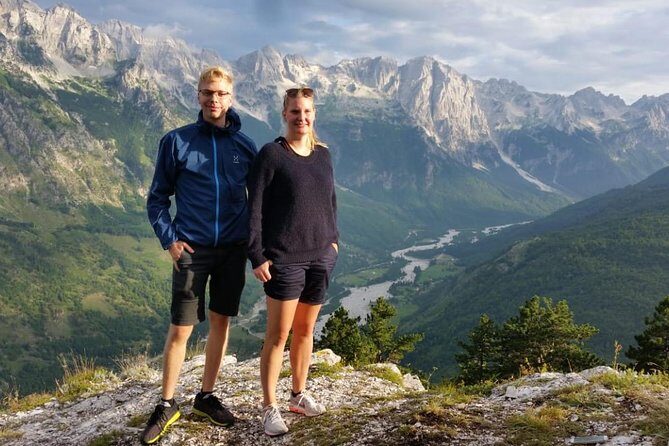
The Peaks of the Balkans is a mountain region shared by Albania, Kosovo, and Montenegro, tied together by the Dinaric Alps system. In practice, it means you don’t just climb one mountain range—you keep switching valleys, passes, and political borders while staying inside the same big mountain “world.”
You’ll start from Tirana (or nearby Shkodër pick-up) very early—6:00 am—and spend the week moving by van, 4×4, and on foot. That early start matters. It helps you hike in cooler morning air and gives you time to reach guesthouses before dark in remote areas.
This tour is built for people who like mountain travel with real logistics. You’ll hike long days (up to around 8 hours, and sometimes more with optional goals), then sleep in shared rooms in traditional guesthouses or shepherd’s huts. If that sounds fun to you, you’ll click with this trip.
You can also read our reviews of more hiking tours in Tirana
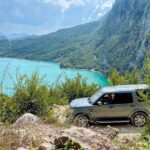
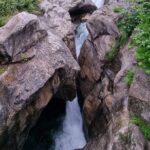
Day 1: Tamarë, Lëpushë, and the Talijanka-to-Vuthaj pivot
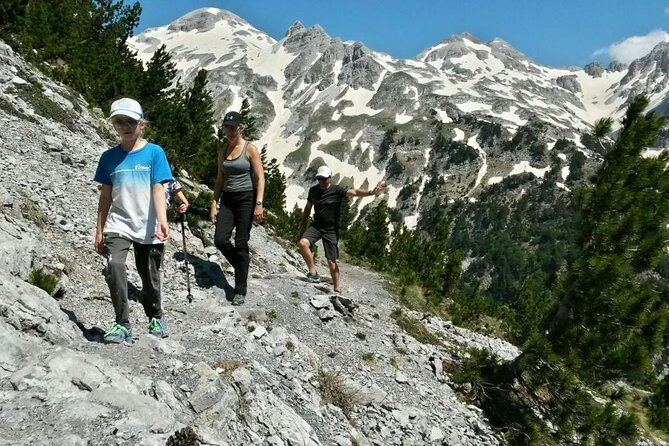
Day 1 starts with a hotel pickup in Tirana or Shkodër at 6:00 am, followed by a drive toward Tamarë in northern Albania. You’ll pass Shkodër and then begin your hiking adventure in the Albanian Alps, which are the highest part of the Dinaric Alps stretch through the Balkans.
Your first stop is Tamarë, a natural starting point for this mountain section. Then you move to Lëpushë, a small village known for spring yellow flowers (the name Lëpushë connects to a local yellow flower). The practical value here is that it’s a solid rest break after travel—plus northern Albania is known for regional bio-food dishes, so you have a chance to taste what locals eat when farming and shepherding matter.
The day turns into a real hiking highlight when you aim for Talijanka Peak and cross from Albania into Montenegro. Talijanka sits in Montenegro’s Grbaje Valley, shaped like a U-valley around sharp gray peaks. The view is the whole point: you can see Lake Plav on a clear day, and the drama of the rock shapes is the kind of thing that makes experienced hikers grin like kids.
After the peak, you take a minivan for about 40 minutes to Vuthaj for the overnight. There’s also an easy add-on from town: Ali Pasha springs, roughly a 40-minute walk from the guesthouse. If you have energy, it’s a good way to stretch your legs without committing to another big summit.
One note: day 1 mixes driving and hiking, so it can feel like a “setup day” even though it has a peak. Pack like you’ll be active early, not like you’ll start slowly.
Day 2: Theth’s old church, Arapi pass views, and a hidden water stop
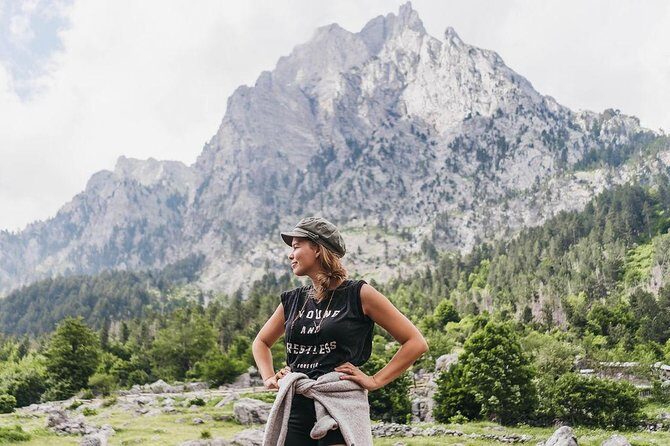
From Vuthaj, you head toward Theth, crossing back into Albania along the way. The trek includes a hidden water place—the kind of spot that’s hard to find on your own without the exact location. That’s one of the subtle reasons guided mountain trips are worth it: you don’t just see famous points, you get access to places that sit off the main path.
You’ll also pass by one of the Balkans’ high peaks: Arapi (2217m) near Jezerca (2694m). Even when you aren’t summiting, these passes give you a sense of scale—how close the high country sits to the trail.
Along the way you’ll come across shepherd’s huts, part of how people move through this region seasonally. In Theth, you visit two landmark structures: the Old Church and the Lock-in Tower, a symbol of Theth. It’s a nice balance: after hours of natural terrain, you get a sense of how the community built vertical landmarks in a place where weather and remoteness demand stubbornness.
Expect about 8 hours of hiking. It’s a long day on remote terrain, so keep your energy steady rather than sprinting early. The upside is that Theth guesthouse nights feel like a real base in a place that still runs on mountain time.
Day 3: The Valbona walk—mule trail history and that adrenaline pass
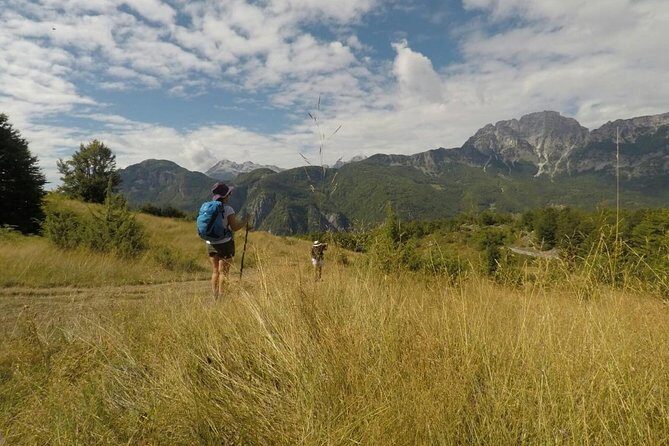
Day 3 is the intense connector: Theth to Valbona Valley National Park, roughly 6 to 8 hours of hiking. The trail follows an old mule path, which means the route feels shaped by livestock and people moving carefully through steep country—not by modern road thinking.
At key points, you’ll get that classic “two valleys at once” feeling. You can see the Theth valley on one side while Valbona sits on the other. Then comes the Valbona Pass, where the view is tied to the wider Balkans mountain story, including the Bjeshket e Nemuna, or Accursed Mountains, a national park area near the borders with Albania and Montenegro (with reference to Kosovo’s Gjakova/Peja region).
You’ll hike through wild forests and you might spot shepherds and flocks along the route. Whether or not you see animals, the presence of huts and shepherd life gives your hike more meaning than “just scenery.”
When you reach the top, expect a genuine adrenaline bump. The pass is the day’s turning point—after that, you’re in the descent and the sense of arrival builds fast.
Overnight is in a Valbona guesthouse, where you’ll likely get your energy back for the next mountain jump.
Day 4: Cerem canyon trails and the option to tackle Zla Kolate
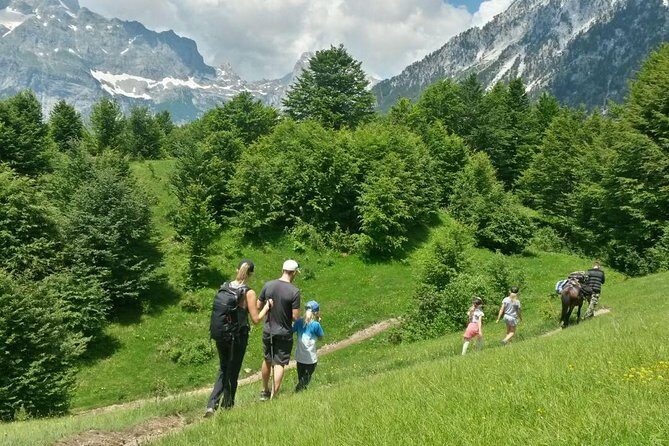
Day 4 moves you toward Cerem, and it starts with a transport step to reach the hiking starting point. Once you’re on the trail, you go through forests and meadows, then you’ll reach an area that feels like a canyon and is notable for one odd detail: you can find snow even in summer. That’s the kind of environmental cue that tells you you’re climbing into genuinely high terrain.
The big choice on this day is the optional hike to Zla Kolate Peak, the highest peak of Montenegro. The add-on is about 3 extra hours, pushing the total to around 10 hours for the full effort.
Along the trail you’ll pass striking features: a stone surface on the mountainside that looks like the face of a miserable old man, plus a cave with an extremely cold wind where no one knows the exit. The second detail is a reminder that some of these trails have local mysteries attached. Even if you’re not a lore person, it adds texture to the hike.
One caution: day 4 is where people overestimate themselves. If you’re feeling strong, Zla Kolate can be a win. If you’re already carrying fatigue from the earlier days, you may prefer to keep your plan realistic so you’re ready for the next week of summits.
Overnight is in Cerem after about 8 hours for the main route.
A few more Tirana tours and experiences worth a look
Day 5: Doberdol mule track, berries, and shepherd’s hut sleep at altitude
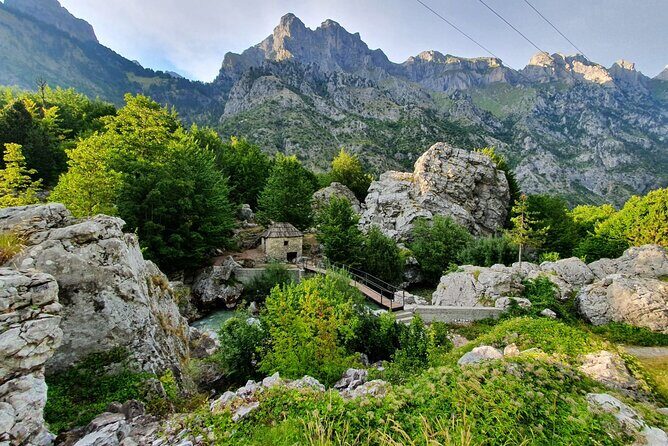
From Cerem to Doberdol, you hike via a mule track. This day includes another border crossing: you cross into Montenegro for about two hours. That rhythm—Albania, Montenegro, back again—keeps the trip from feeling repetitive and gives you a steady stream of new valley angles.
The trail goes through pine forests, and the hike is active but flavored by things you can actually notice: berries like blueberries, blackberries, and raspberries. You’ll also pass the only National Reserve in Albania, which helps explain why some routes here are protected and why you might see signs that you’re in a controlled natural area.
The hike’s highest point is about 2100 meters. Later, you get a practical break: there are shepherd’s hut villages where you can enjoy coffee or other drinks.
Your destination, Doberdol, sits at around 1800m. You’ll sleep in another shepherd’s hut overnight. This is one of the most “real” parts of the itinerary. You’re not just visiting a village—you’re staying inside the seasonally used rhythm of mountain life.
Meals like lunch and dinner aren’t included, so plan for buying food on the go or using whatever is offered at the hut villages and your guesthouse.
Day 6: Gjeravica summit plus Kosovo lakes where you can swim
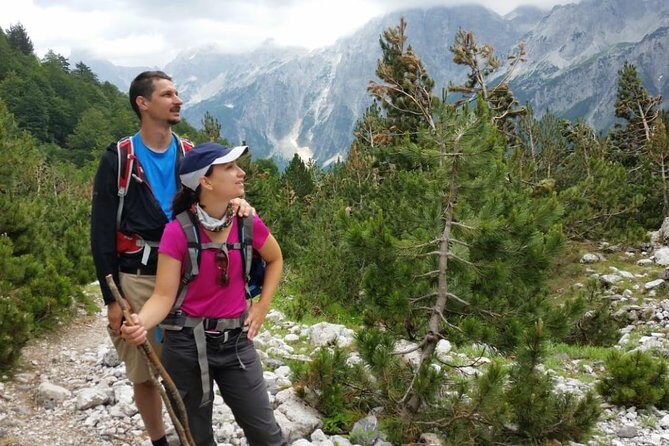
Day 6 is a big-ticket day: you head toward Gjeravica, the highest peak of Kosovo, and the second highest peak of the Accursed Mountains. From the top, you get a two-sided mountain view—Accursed Mountains on one side and the Sharr Mountains on the other.
The highlight isn’t only at the summit. You also have the opportunity to swim in three different lakes, formed by alpine and glacier waters. One of those lakes stands out because it’s heart-shaped. It’s an excellent way to cool down after altitude effort, and it’s the kind of experience that sticks because it changes the mood from “climbing” to “playing in nature.”
After the lakes, you continue through the Erenik area—specifically Gropat e Erenikut—for about 1 hour. Then you switch from hiking to vehicle logistics: you go by 4×4 to Gjakova for about 1 hour.
This is when the trip starts to shift from wilderness effort into town comfort. If your legs feel beat up, this travel segment helps you reset.
Day 7: Gjakova bazaar day—history, rebuilding, and a proper finish
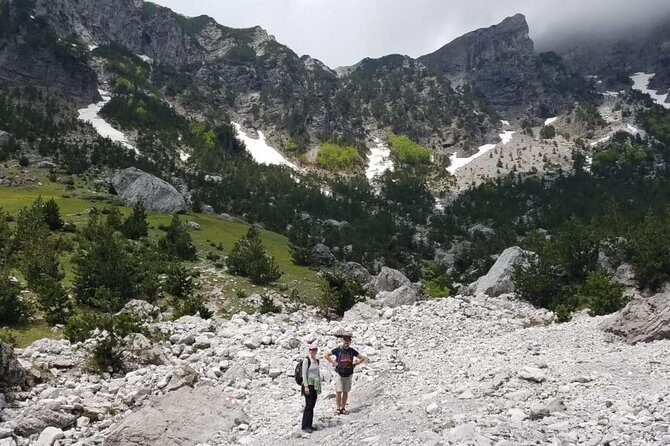
After days of high country, day 7 gives you a breather. You stay in Gjakova and do a short city tour, then transfer back to Tirana, marking the end of the trek.
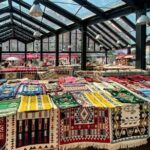
Gjakova is known for the oldest and largest bazaar of Kosovo. Even though the bazaar was damaged during the Balkan wars, WWII, and the Kosovo war, it was rebuilt to its former style. That’s part of what makes the tour feel meaningful: you’re not only seeing a market space, you’re seeing a community’s decision to restore it.
You’ll also visit the clock tower and the Hadum Mosque, built in the 16th century and still standing through major wars. The mosque is described as an early example of Islamic architecture in the Balkans, with arabesque decorations. After all that mountain walking, these details feel like a slower kind of travel—less altitude and more human craftsmanship.
Then it’s time to head back to Tirana. The trip ends back at the meeting point, which makes the finale feel clean.
Price and logistics: what you’re paying for (and what you still need to budget)
At $1,992.97 per person for 7 days, this is not a cheap “weekend hike” price. But it also isn’t just a leader and a map. You’re paying for a lot of hard-to-do mountain logistics: professional tour leadership, shared accommodation, and a mix of long-distance and local transport so you’re not trying to stitch together cross-border travel yourself.
Here’s what the tour price covers:
- Shared rooms in traditional guesthouses or shepherd’s huts (room shared by 2-5 travelers)
- Hotel pickup/drop-off in Tirana or Shkodër
- Transport segments from Tirana to the first area on day 1, and from Gjakova back to Tirana on day 7
- Local transport (including getting from Gerbaj to Vuthaj day 1, and from Gropat e Erenikut to Gjakova day 6)
- Entry tickets for sites you visit, plus tourist and road taxes and petrol
- Breakfast included (6 breakfasts)
- A mobile ticket
- Group discount is listed as a feature, and the group size stays limited (max 10)
What’s not included is the stuff that can sneak up on your budget:
- Lunches, dinners, drinks, and snacks
- Souvenirs and personal spending
- A meal is estimated around 12–15 euros depending on what you choose
Two practical money notes:
1) If you want a private room, it’s available for an extra €40 per night per room (based on availability).
2) You’re carrying your belongings during the trek, and excess luggage may require special transport. The listed minimum for excess luggage transport can start at €770 for one person, or €385 per person for groups, depending on availability.
So the value question isn’t whether you pay for a guide. You do. The real question is whether you want someone else to handle the hard parts: mountain lodging swaps, cross-border timing, and the sequence of hikes.
How fit do you need to be, and how should you pack?
This isn’t “walk for fun” hiking. The tour asks for a strong physical fitness level and good physical condition, with the note that some hiking experience is required. The schedule includes full days around 6–8 hours, and there’s an optional add-on that can make day 4 closer to 10 hours.
When you pack, your biggest constraint is simple: you carry your belongings. That’s why packing light is not a suggestion—it’s a comfort strategy. Layers matter because mountain weather changes quickly, but the key is keeping your daypack manageable so you’re not miserable on long climbs.
Also think about how you’ll move between hike days and overnight stops. You’ll sleep in shared rooms in guesthouses or huts, so you’ll want quick-dry essentials and a realistic plan for laundry (not promised on the trail). Wear shoes that can handle uneven mountain ground, since you’ll be on tracks, mule routes, and rocky sections.
Finally, go in with the expectation that your pace may be adjusted. Guides like Samir/Saimir and Ervin are praised for professionalism and attention to safety, including prioritizing comfort when group members had unanticipated ailments.
Who this hike suits best (and who should skip it)
This tour fits best if you want:
- A real hiking week with summits and passes, not just scenic stops
- Mountain lodging like guesthouses and shepherd’s huts
- The feeling of traveling between three countries without constantly dealing with transport yourself
- A guide who manages pace and safety in small-group settings (max 10)
You might want to look elsewhere if you prefer:
- Short walks with frequent comfort breaks
- Fully planned meals every day
- A trip where fitness demands are low
- An itinerary with no chance of long days around 8–10 hours
One more factor: it’s described as requiring good weather. If weather is poor, you’ll be offered another date or a full refund. That’s a good safety net, but it means you shouldn’t book this as a “set it and forget it” plan if your schedule is extremely tight.
Should you book Peaks of the Balkans in 7 Days?
I’d book it if you want a week where the mountains are the main character and the logistics are handled well enough that you can focus on hiking. The value feels strong because so much is included: guide leadership, transport, taxes, and most notably the accommodation style that makes this trip feel genuinely mountain-based.
I’d hesitate if you’re not confident with long hiking days or if you hate the idea of sharing rooms and buying meals while you’re away from towns. This is a trip for people who like simple, functional mountain travel—even when it’s tiring.
If you’re on the fence, ask yourself one question: do you want the hard-earned view at the top, or do you want the “safe and relaxed” version of the mountains? If you want the first one, this itinerary has the goods.
FAQ
What time does the tour start on day 1?
The start time is 6:00 am, with a hotel pickup in Tirana or Shkoder.
How many people are in the group?
The tour has a maximum of 10 travelers.
What kind of accommodation is included?
You’ll stay in shared rooms in traditional guesthouses or shepherd’s huts, with room capacity for 2-5 travelers.
Are meals included during the hike?
Breakfast is included (6 breakfasts). Lunches, dinners, drinks, and snacks are not included, and one meal is estimated around 12–15 euros.
Do I need hiking experience or fitness?
Yes. The tour requires strong physical fitness and good physical condition, and it states that some hiking experience is needed.
What if the tour is canceled due to weather or not enough travelers?
The experience requires good weather. If it’s canceled due to poor weather, you’ll be offered a different date or a full refund. If it’s canceled because the minimum number of travelers isn’t met, you’ll also be offered a different date/experience or a full refund. The experience is non-refundable and cannot be changed for any reason.