REVIEW · SARANDA
The Albanian Riviera, Porto Palermo, Qeparo Village, And A Big Ol’ Kalaja.
Book on Viator →Operated by Leka Tours & Car Rentals · Bookable on Viator
Albania’s coast keeps wartime secrets in plain sight. This guided outing connects Porto Palermo Castle with the hill village of Qeparo, where French and Ottoman influences meet the Ionian coastline and a very visible Soviet-era footprint.
I especially love how the scenery matches the story: you go from a closed, protected bay fortress to cobbled alleys and old churches right near Palermo Bay. I also like the group setup, since it’s restricted to your group and capped at 20, with the tour offered in English and Italian.
One drawback to plan around: this experience needs good weather, and if conditions are poor you’ll need to accept a different date or a full refund.
In This Review
- Key things to know before you go
- Where Porto Palermo and Qeparo Fit on the Albanian Riviera
- Price and logistics: what you actually get for $98
- Getting to the start point around Saranda
- Porto Palermo Castle: the “closed bay” fortress with Soviet tunnels
- What to watch for at the fortress
- A practical caution
- Ali Pasha’s French and Ottoman fingerprints you can actually see
- Qeparo village: cobbled lanes, old churches, and the Ali Pasha stronghold
- How to enjoy Qeparo without rushing
- Potential drawback at this stop
- Soviet-era occupation echoes: why Porto Palermo hits harder than you expect
- The tour pace: guided, but still flexible with the coast
- Group size and the private-feel factor
- Value: why this feels fair for the price
- Who should book this tour, and who might skip it
- Should you book Porto Palermo and Qeparo from Saranda?
- FAQ
- What does the Porto Palermo and Qeparo tour include?
- Is pickup available from Saranda?
- How long is the tour?
- What languages is the tour offered in?
- How many people are in the group?
- Is admission included?
- What happens if the weather is bad?
- Are service animals allowed?
- What if I cancel my booking?
Key things to know before you go
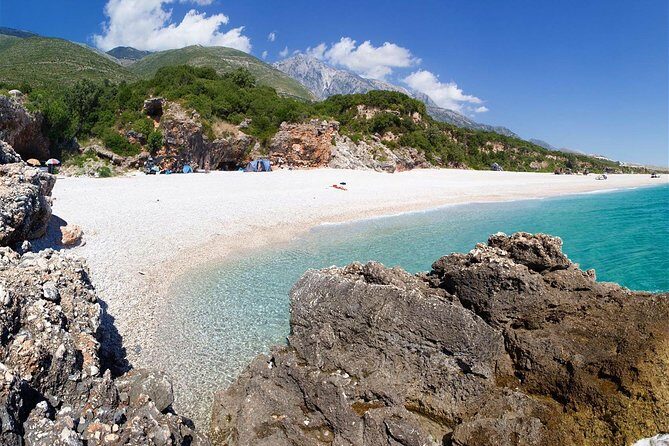
- Porto Palermo Castle + Qeparo village in one day: two very different settings, guided as one connected story along the Albanian Riviera.
- Soviet submarine base remains: semi-abandoned tunnels and barracks you can actually see, not just hear about.
- Ali Pasha Tepelena’s fort influence: stronghold walls and gates linked to his power, right by the coast.
- French and Ottoman cross-currents: you’ll hear how multiple empires shaped architecture and control here.
- English or Italian guide options: built-in language flexibility for your group.
- Small-group feel: restricted to your group, maximum of 20 travelers, with pickup offered.
Where Porto Palermo and Qeparo Fit on the Albanian Riviera
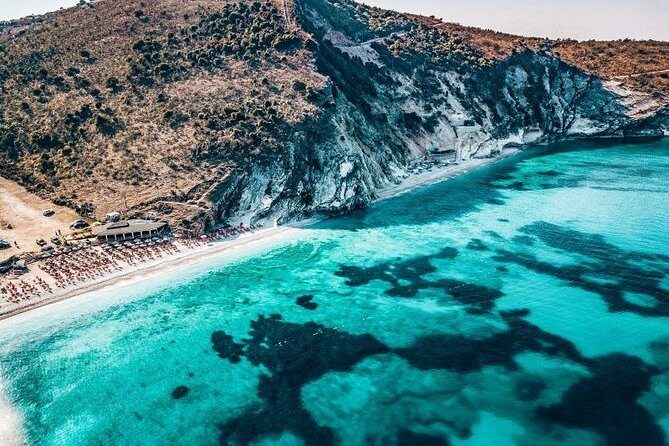
If you think the Albanian Riviera is only beaches and sunsets, this tour corrects that fast. You’ll spend your day in the stretch of coast around Saranda where fortifications and villages grew up close to the sea, because that’s where power and risk both showed up.
The core value here is the way the sites are linked. Porto Palermo lets you read the coast like a map of occupations, while Qeparo gives you the human scale of daily life—cobbled lanes, older churches, and a standout Ali Pasha stronghold.
This is also one of those tours that works well for people who like history, but don’t want a textbook. You’ll learn, then you’ll walk and look, with a guide keeping the details clear and focused.
You can also read our reviews of more tours and experiences in Saranda.
Price and logistics: what you actually get for $98
At $98 as listed, you’re paying for a guided, two-stop experience with practical extras. Pickup is offered, you get a mobile ticket, and the tour runs long enough to feel like a real outing rather than a rushed stop-and-go.
Both main visits are shown as free for admission, which matters because the value is in the guide and the access to atmosphere, not entrance fees. It’s also a capped group size (max 20) with the feel that it’s restricted to your group, so you’re less likely to get lost in a crowd.
Duration can run from 2 to 8 hours depending on how the day shapes up. That wide range usually means the pace, walking time, and practical timing can flex with the weather and the group.
Getting to the start point around Saranda
Your tour starts at Leka Tours & Rent a Car Sarande, on Rruga Mitat Hoxha, Saranda 9701. The tour ends back at the same meeting point, so you don’t have to worry about figuring out transport after the last stop.
Pickup is offered, which is a big deal on a coast like this. Even a short transfer can turn into time you actually want to spend walking and looking at the fortifications instead of waiting around.
One smart move: on the morning you go, build in a little buffer. When a tour depends on good weather, delays or re-routes are possible, and you’ll enjoy your day more if you’re not racing the clock.
Porto Palermo Castle: the “closed bay” fortress with Soviet tunnels
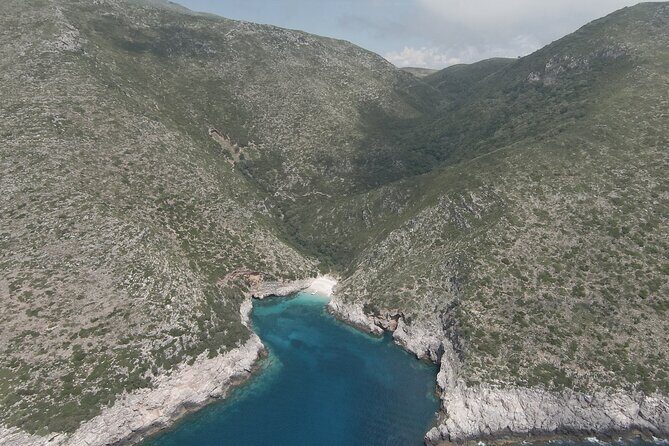
Porto Palermo is built around a sheltered bay, the kind that naturally protects ships and watchpoints. That’s a big part of why this site feels so different from a typical viewpoint or roadside ruin—you’re inside the logic of defense.
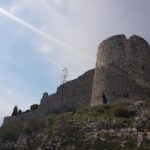
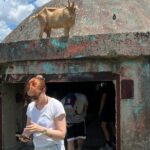
At Porto Palermo Castle, you’re looking at a mix of fortification and occupation layers. One of the most distinctive parts is that the fortress served as a former Soviet submarine base during Albania’s communist regime. That’s why you’ll hear about semi-abandoned tunnels and barracks: the place is tied to real military infrastructure, not just a pretty skyline.
The other layer comes from earlier power. The fort includes stronghold walls and gates associated with Ali Pasha of Ioannina, so you’re seeing how different eras reused—then reinterpreted—the same strategic coastline.
What to watch for at the fortress
Go in with the right mindset. Instead of trying to memorize every detail, look for how the space is shaped for movement and control. Corridors and openings tell you how people would have used the site.
Also, give your eyes time on the bay itself. This is the kind of location where the views help you understand the defensive thinking. When the light hits the water, you’ll get a better sense of why this was such a valuable closed harbor.

A practical caution
Expect a bit of roughness and unevenness. Forts and tunnel-like remains aren’t designed for museum comfort, and the tour depends on weather—so if conditions are slippery or harsh, take it slow and stick with your guide’s timing.
Ali Pasha’s French and Ottoman fingerprints you can actually see
This tour’s storyline hinges on the idea that this region sits at a cultural intersection. You’ll hear about strong French and Ottoman influences, and the sites reinforce that theme in different ways.
Ali Pasha Tepelena (connected here through fort structures and the Qeparo stronghold) is a key thread. Even when you’re mostly outside looking at walls, gates, and building layouts, the connection to his power helps the architecture make sense. It’s not random stone—it’s a system of control.
French influence matters too, and you’ll see it through the Qeparo castle site, which is described as designed by a French Army architect. That detail gives you a useful lens: you’re not just learning who ruled, you’re learning how outside engineering ideas changed local building styles.
If you like history that feels grounded, this is the payoff. The tour doesn’t treat empires like names in a book. It shows you the physical results—how authority and military needs became architecture.
Qeparo village: cobbled lanes, old churches, and the Ali Pasha stronghold
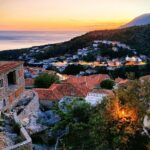
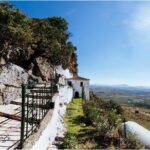
After Porto Palermo, you shift from defensive coastal structures to a living village scene. Qeparo sits right after Palermo Bay, and the draw is its traditional feel—cobbled alleys, older churches, and architecture that looks built for staying.
This stop is the calmer half of the day. You’ll still have history in front of you, but the vibe is more about walking through layers of everyday life than touring a military installation.
A standout is that Qeparo includes the castle of Ali Pasha Tepelena. The description is specific: it’s designed by the French Army architect, and it has special architectural and tourist values today. That combination is what makes this stop click. You’re connecting a named historical figure with a tangible building shape.
How to enjoy Qeparo without rushing
Take your time in the cobbled alleys. Uneven stones and narrow lanes can make you slow down naturally, which is a good thing here. You’ll get better views of the old churches and the way the village hugs the terrain.
Also, look at the buildings like they’re part of one continuous story. Even if you don’t know the language or names of every street, the feel of the architecture gives you context for why this village became such a draw.
Potential drawback at this stop
Because this is a walking village area, wear shoes you trust. If you’re traveling with kids or anyone with mobility limits, you’ll want to plan for uneven surfaces and take breaks as needed.
Soviet-era occupation echoes: why Porto Palermo hits harder than you expect
It’s one thing to hear about the Soviet submarine base. It’s another to stand near semi-abandoned tunnels and barracks and grasp how much infrastructure went into secrecy and readiness.
This is where the tour earns its place for people who want more than scenery. Soviet-era communist occupation isn’t just a historical note here—it’s part of the physical layout. You can connect the idea of naval strategy to the reality of tunnels and quarters.
If you’re sensitive to heavy history, you’ll probably feel that weight in the structure and the emptiness. That’s not a bad thing. It’s exactly what makes the site memorable, and it’s also why the guide’s explanation matters. Without context, you might see stones and corridors. With context, you understand the purpose behind them.
The tour pace: guided, but still flexible with the coast
This is a guided experience, and the route is straightforward: Porto Palermo first, then Qeparo. The order matters because it lets you go from the dramatic military-bay setting into the village scale, which helps your brain reset.
Stop durations are shown as around 2 hours at Porto Palermo and around 4 hours at Qeparo. In plain terms, you’ll likely have enough time to see the main parts without feeling like you’re sprinting.
Your pace will also depend on weather, which is a recurring theme. With a coast tour, conditions can change quickly. If the day is windy or rainy, your guide may adjust the plan to keep things safe and comfortable.
Group size and the private-feel factor
The tour is capped at 20 travelers, and it’s described as private and restricted to your group. That’s a real quality-of-life upgrade on a day when the sites can feel spread out.
A smaller group helps you ask questions without shouting. It also helps you move at the pace your guide sets, instead of getting stuck waiting for a large crowd at key viewpoints or doorways.
If you’re traveling with friends, this setup can feel like having your own mini expedition along the Albanian Riviera, not a factory-style bus tour.
Value: why this feels fair for the price
Let’s talk value beyond the number. You’re paying for:
- a guide-led route linking two high-interest sites
- pickup offered (if you opt for it)
- a mobile ticket
- admission listed as free for the stops
- a capped group size, with private feel for your group
For $98, the best part is that the day focuses on interpretation. Porto Palermo gives you the military-era layers and the Soviet submarine-base story. Qeparo gives you the lived-in architecture and the Ali Pasha connection, including the French architect detail.
You’re not just buying transport and parking. You’re buying a way to make sense of a coastline that looks peaceful but was repeatedly contested and repurposed.
Who should book this tour, and who might skip it
This fits best if you want:
- history with visible remains (tunnels, barracks, walls, gates)
- the Albanian Riviera beyond beaches
- a small-group day with English or Italian guide support
- a route that connects French, Ottoman, and Soviet-era influence into one coherent story
You might skip it if you:
- hate walking on uneven village streets
- want purely relaxing beach time and nothing else
- don’t do well with weather-dependent outdoor plans
If you’re the type who likes looking closely at architecture and asking why places were built the way they were, you’ll probably enjoy this more than you expect.
Should you book Porto Palermo and Qeparo from Saranda?
I’d book it if you’re coming to Saranda for more than sea views. The combination of Porto Palermo’s Soviet submarine-base remnants and Qeparo’s cobbled village feel gives you variety, and your guide can knit the French, Ottoman, and communist-era layers together in a way that makes the coast feel meaningful.
It’s also a good call if you want a guided day that’s structured but not overly cramped. The capped group size and private-feel setup make the experience more personal, and the listed free admission keeps the day from getting costy.
Just make sure you’re flexible on weather and bring shoes you trust for village walking. If those boxes are checked, this is a solid way to experience the Albanian Riviera with your eyes open.
FAQ
What does the Porto Palermo and Qeparo tour include?
The tour includes a visit to Porto Palermo Castle and a guided visit to Qeparo village, including the castle of Ali Pasha Tepelena. It also includes a guide-led history focus on the region’s influences.
Is pickup available from Saranda?
Yes, pickup is offered, and the tour ends back at the meeting point.
How long is the tour?
The experience duration is listed as 2 to 8 hours approximately, with suggested time at Porto Palermo and Qeparo shown as part of the itinerary.
What languages is the tour offered in?
The tour is offered in English and Italian.
How many people are in the group?
The experience has a maximum of 20 travelers and is described as private and restricted to your group.
Is admission included?
Admission is listed as free for the Porto Palermo stop and for the Qeparo stop.
What happens if the weather is bad?
The experience requires good weather. If it’s canceled due to poor weather, you’ll be offered a different date or a full refund.
Are service animals allowed?
Yes, service animals are allowed.
What if I cancel my booking?
Cancellation is free up to 24 hours in advance for a full refund. If you cancel less than 24 hours before the experience starts, the amount paid is not refunded.