One of Albania’s best archaeology stops is here. Butrint mixes Roman engineering and Byzantine spirit in a single walk, with sea views to sweeten the day. You’ll get a private feel, plus a route that moves beyond just pointing at ruins.
Two things I’d prioritize: the chance to see the Roman theatre and the very specific Byzantine stops, including a well-preserved baptistery. The other big plus is guide impact—some guides like Mara and Kacie earn top marks for on-time energy and real context.
One drawback to keep in mind: guide quality can vary, so if you want heavy explanation (not just a walk-through), ask questions early and watch for a properly licensed guide in line with local rules.
In This Review
- Key things to know before you go
- Why Butrint feels like an open-air timeline (Roman to Byzantine to Venetian)
- Price and time: what $73.34 gets you in practice
- Getting picked up in Sarandë (and why that matters for a port day)
- Step-by-step: what you’ll see at Butrint (and what to pay attention to)
- Stop 1: the Roman route that sets the scene
- Stop-by-stop nuance (where the tour earns its guided advantage)
- Byzantine church and baptistery: the contrast that makes the day click
- The Venetian hilltop castle viewpoint (ending with a skyline moment)
- Butrinti Lake and Ksamil Islands: the scenic palate cleanser
- What kind of tour it is: private pacing, moderate walking, real guide impact
- Who should book this Butrint tour (and who might prefer something else)
- Should you book this tour or do it on your own?
- FAQ
- Is entrance to Butrint National Park included in the price?
- How long is the tour?
- Do I get pickup in Sarandë?
- Is this tour private?
- What language is the tour offered in?
- What’s included during the tour?
- Is lunch included?
- What should I do about physical fitness needs?
- What if the weather is bad?
- How does cancellation work?
Key things to know before you go
- Private group, not mixed crowds: it’s only your booking, which helps questions and pacing.
- 2.5 hours inside Butrint National Park: enough time to see the main highlights without feeling like you’re sprinting.
- Roman theatre plus baths and aqueduct clues: look for how the site’s systems worked together.
- Byzantine church and baptistery: this is the religious-and-architectural contrast you don’t want to miss.
- Venetian-era hilltop castle viewpoint: you end with a skyline moment, not just ruins.
- Panorama stop for Butrinti Lake and Ksamil Islands: a scenic buffer on the way back to Sarandë.
Why Butrint feels like an open-air timeline (Roman to Byzantine to Venetian)
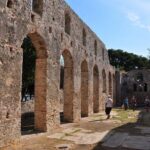
Butrint National Park works because it’s not one style of leftovers. It’s layers. You walk through a place where Roman civic life shows up in stone, then Byzantine religious architecture follows, and later you get that Venetian-era hilltop castle view like a final frame.
This tour is built around that change in mood. You start with the big public Roman piece—the theatre—then you move along a route that keeps shifting what you’re looking at: a temple, an ancient fitness center with public baths, and an aqueduct. It’s an efficient way to understand that ancient cities weren’t just temples and heroes. They were also sweat rooms, water systems, and performance spaces.
And then you land in the Byzantine segment: a well-preserved church and a baptistery that’s singled out in the route plan for a reason. If you like archaeology that actually tells you how people lived (and believed), this stop hits.
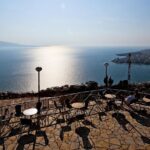
The day also gives you a break from pure ruins. On the drive, you’ll see Butrinti Lake and the Ksamili Islands with a panorama that connects the site to the modern coastline. It helps your brain stop treating the park like a museum and start treating it like a real place with water, light, and geography.
You can also read our reviews of more tours and experiences in Saranda.
Price and time: what $73.34 gets you in practice
At about $73.34 per person for roughly 3 hours 30 minutes, you’re paying for three things: transportation, guiding, and an organized route that hits the main points.
What’s included:
- Air-conditioned vehicle
- Private transportation
- WiFi on board
- All fees and taxes
What’s not included:
- Entrance fee into Butrint National Park
So the value depends on how you feel about the entrance ticket on top. If you’d rather not deal with logistics, this tour earns its keep. You get picked up in Sarandë and taken to the park at a pace that includes both the interior highlights and the lake/island panorama stop.
The timing is also sensible. About 2 hours 30 minutes is spent at the national park itself, which is long enough to notice details like the theatre’s shape and the route’s building-to-building progression. The overall 3.5-hour format means you still have the rest of your day in Sarandë (or on a short cruise stop) without losing it to a long transfer.
Getting picked up in Sarandë (and why that matters for a port day)
This is one of those tours where pickup changes the whole experience. The meeting point is listed at Rruga Mitat Hoxha, Saranda, and the tour can work with where you’ll realistically be that day.
Pickup options include:
- Saranda city center
- Hotel pickup and drop-off
- Saranda port pickup if you’re on a cruise (the office is next to the port)
If you’re visiting as a cruise day-tripper, that port connection is a big deal. Fewer cross-town hassles usually mean fewer chances to lose time to traffic and confusion.
The tour is also near public transportation, which gives you a backup if you don’t want hotel pickup. Either way, it ends back at the meeting point, so you’re not stuck figuring out how to get home after a sweaty walk through stone.
One more practical point: it’s designed as a private tour, and the minimum booking requirement is 2 travelers. If you’re traveling solo, there’s an extra charge, so check that before you commit.
Step-by-step: what you’ll see at Butrint (and what to pay attention to)
Stop 1: the Roman route that sets the scene
Inside Butrint National Park, you follow a historical route that’s not random. It’s a sequence that helps you connect functions.
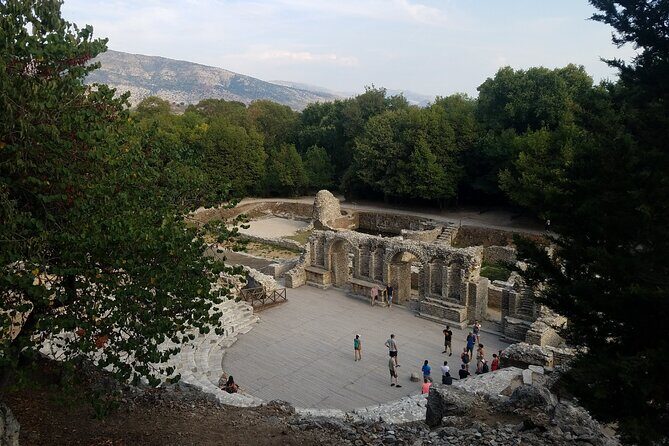
First big anchor: the impressive remains of a Roman theatre. When you look at it, don’t just think seats. Think staging, acoustics, and a city that invested in public entertainment. A theatre like this tells you what mattered to civic life—people gathered to watch, not just to pray.
Then the route continues through Roman-era and related structures:
- a temple
- an ancient fitness center with public baths
- an aqueduct
- a Byzantine church
- and the baptistery that’s highlighted as exceptionally well preserved
Here’s the trick: when you reach each stop, you’ll get more than a label if your guide is strong. A good guide ties the pieces together. For example, the aqueduct isn’t just a wall of stone. It’s the reason baths could exist. The fitness/bath area isn’t random either—it shows Roman culture valued body maintenance alongside leisure and public life.
Stop-by-stop nuance (where the tour earns its guided advantage)
If you’re used to self-guided ruin walks, the benefit here is that the tour route is designed for flow, and a strong guide fills in the “why.”
The good news is that the best guides in this set have real substance. One guide, Mara, stood out for explaining history, culture, engineering, and architecture in a way that felt like more than a highlight list. Another, Kacie, got praised for enthusiasm and knowledge about Butrint plus added context about Albania and Sarandë.
But keep your eyes open for style differences. One negative experience described a guide who focused on walking and pointing rather than giving real archaeological context. That’s why I suggest you treat the first few minutes like an audition: if you ask a question and the answers are thin, pivot to what you can observe on-site—shape, placement, and how structures relate.
Byzantine church and baptistery: the contrast that makes the day click
The Byzantine church and baptistery are the emotional shift in the route. Roman sites can feel like civic machinery—entertainment, water, public movement. The Byzantine segment adds meaning: it’s about belief and ceremony, not just public gatherings.
The baptistery is specifically described as one of a kind and well preserved, which usually translates to better chances of seeing how the space was meant to function. Even if you don’t read stone inscriptions, you’ll likely notice that religious architecture often emphasizes form, order, and ritual space more than spectacle.
This is also where a good guide really matters. With a solid explanation, you’ll understand what you’re looking at in practical terms: how the design supported the religious purpose. Without that, you can still enjoy it visually, but you might miss the “why this spot mattered” element.
Either way, this is a stop that rewards slow looking. Don’t rush past it while you’re still thinking about the Roman theatre.
The Venetian hilltop castle viewpoint (ending with a skyline moment)
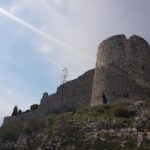
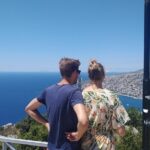
The tour doesn’t end at the ruins. You finish the park route with panoramic views of a hilltop castle from the Venetian period.
This matters because it changes how you remember the site. A theatre and baptistery are great, but the skyline viewpoint helps you place the park in its larger geography. You see height, distance, and how control of a hill translates to power—then you connect that to the reality that Butrint sits near water and routes.
It’s also a morale booster. By the time you hit the view, you’ve already worked through a couple thousand years of stone. A viewpoint gives your brain a clean landing.
Butrinti Lake and Ksamil Islands: the scenic palate cleanser
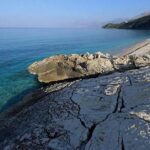
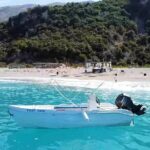
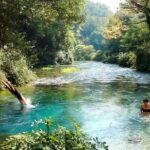
On the way back to Sarandë, you stop to see Butrinti Lake and the Ksamili Islands and enjoy a panorama with sea, sun, and islands.
This isn’t a throwaway stop. It’s the kind of “breather” that keeps a short tour from feeling like a constant march. It also helps you appreciate why the park’s location was attractive in multiple eras: the water and nearby islands are part of the setting, not just the background.
If the weather cooperates, this is where you get your best photos of the broader region. If the day’s hazy, you’ll still enjoy the change of scenery after hours of stone and shadows.
One note: the experience requires good weather. If it gets canceled due to poor conditions, you should expect a different date or a full refund.
What kind of tour it is: private pacing, moderate walking, real guide impact
This is marked as a private tour/activity, and only your group participates. In real life, that usually means less pressure to keep up with strangers and more freedom to ask questions.
Physical note: you should have moderate physical fitness. Butrint includes walking across a large archaeological area, so comfortable shoes help. I’d also pack a plan for heat, since the site visit is long enough that you don’t want to run out of water.
The guide quality swings more than the ruins do. The strongest reviews focus on guides who were enthusiastic, on-time, and genuinely helpful—especially Mara and Kacie. One low-star account criticized a guide’s limited knowledge and described a rushed feeling when another group seemed to be prioritized.
What do you do with that? Don’t assume the worst. Just be proactive:
- Ask your first meaningful question early.
- If explanations aren’t landing, request more focus on details you care about (architecture, engineering, or how structures relate).
Also, there’s an issue worth noting from the negative experience: the guide licensing display. A response from the provider says they will investigate and correct it, and they mention guide certification and legal requirements for licenses to be visible. That doesn’t guarantee anything for every day, but it’s a fair check. If you’re picky about professional standards, look for the guide’s license display.
Who should book this Butrint tour (and who might prefer something else)
I think this works best if:
- you want Butrint in a few focused hours rather than a full-day free-for-all
- you care about the Roman + Byzantine contrast
- you like structure in a guided route, especially the theatre through baths/aqueduct to the baptistery
- you’re in Sarandë with limited time (including cruise arrivals)
It might be less perfect if:
- you want a super long, slow archaeological deep read with tons of stops and unhurried photo time
- you’re the type who prefers fully self-guided visits where you can control every minute (since this tour has a set route and a set timeframe)
- you’re traveling solo and don’t want to deal with the extra solo charge
For couples and small groups, the private format and included transport make it feel efficient. For families, the “moderate fitness” note is the only real caution flag.
Should you book this tour or do it on your own?
I’d book it if you want an organized, time-smart path through Butrint with a guide who can connect the dots. The price is reasonable for private transport plus a guided route, and the included WiFi/AC matters if you’re coming from a hot, sun-heavy day in Sarandë.
I’d slow down before booking if:
- you’re specifically hunting for a very high-knowledge, archaeology-nerd-style tour every minute
- you’re extremely sensitive to rushed pacing
In that case, read the situation with the guide during the first stop. Ask one question that requires more than a simple pointing answer. If you get solid context, you’ll likely enjoy the day a lot. If not, you’ll still have the site itself, plus the lake and islands panorama, but you might not get your money’s worth from the guiding.
FAQ
Is entrance to Butrint National Park included in the price?
No. The Butrint entrance ticket is not included.
How long is the tour?
It’s about 3 hours 30 minutes in total.
Do I get pickup in Sarandë?
Yes. You can meet at Rruga Mitat Hoxha, Saranda, and pickup is available in Saranda city center, from hotels, and from the Saranda port.
Is this tour private?
Yes. It’s private, and only your group participates.
What language is the tour offered in?
The tour is offered in English.
What’s included during the tour?
Included are an air-conditioned vehicle, private transportation, WiFi on board, and all fees and taxes (but not the park entrance fee).
Is lunch included?
No. Lunch is not included.
What should I do about physical fitness needs?
The tour notes moderate physical fitness. Plan on walking through the park’s archaeological areas.
What if the weather is bad?
The experience requires good weather. If it’s canceled due to poor weather, you’ll be offered a different date or a full refund.
How does cancellation work?
Free cancellation is allowed up to 24 hours in advance for a full refund.