Saranda’s best views start with one fortress. This half-day group tour strings together Lekuresi Castle and the Saranda embankment sights so you get orientation and context fast, without burning your whole day.
I especially like the hotel pickup and comfortable, air-conditioned ride—smart when you’re hopping between hilltop views and museum rooms. I also like that the tour is guided, so you’re not just looking at displays and hoping it makes sense.
One drawback to plan for: it’s a packed 4 hours, and it’s a group format, so if you like long, slow wandering, you may feel slightly rushed.
In This Review
- Key takeaways before you go
- Price and time: a half-day that fits real itineraries
- Getting there smoothly: pickup, meeting point, and mobile ticket
- Lekuresi Castle: Ottoman-era fortress views and a surprise religious timeline
- The synagogue complex turned into a basilica
- Saranda Embankment and Onhezmi Gate: a free march through monuments, coins, and churches
- Albanian numismatics and archaeology
- Heritage museum, art gallery, and an Orthodox Church
- What makes the tour click: guide explanations that translate the details
- Group size, pacing, and what you should watch for
- Planning your day around Lekuresi and the embankment
- Should you book this Saranda tour or skip it?
- FAQ
- How long is the Saranda Tour?
- What is the price per person?
- Is hotel pickup included?
- Where does the tour start?
- Where does the tour end?
- What are the main stops on the tour?
- Is admission free for the stops?
- What ticket type do I get?
- How many people are in a group?
- What happens if the tour is canceled due to the minimum number of travelers?
Key takeaways before you go
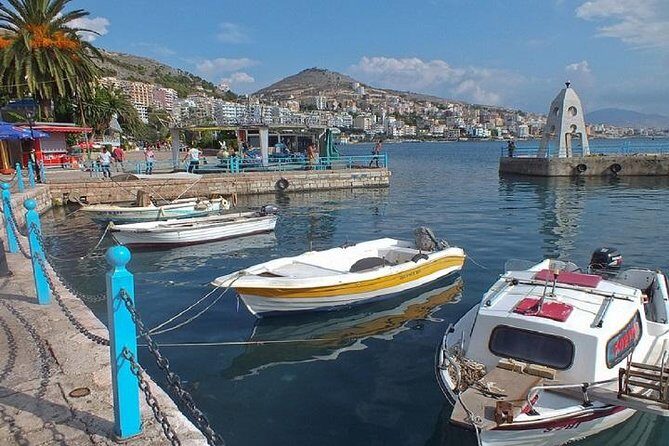
- Fortress + panorama: Lekuresi Castle sits high above the bay, with views toward Corfu, Ksamil, and the road to Butrint.
- Layered religious history: the castle area includes a synagogue complex later transformed into a Christian basilica.
- Free museum time: major stops at the embankment are listed with admission free.
- Guide-led explanations: museum and curators’ talks get translated, which makes the artifacts stick in your head.
- Half-day pacing: about 4 hours total means you’ll cover a lot, but you won’t linger at each place.
Price and time: a half-day that fits real itineraries
At $66.79 per person for about 4 hours, this isn’t a budget free-for-all. Still, the value comes from the mix of things you’re getting in one window: hilltop castle time plus multiple museum and church stops along the waterfront area. When you’re short on time in Saranda, saving hours of logistics usually matters more than chasing the absolute cheapest ticket.
You’re also not stuck piecing together transfers on your own. The tour is built around a ride in an air-conditioned vehicle and a guide who keeps the day moving. That matters if you’re doing Saranda as part of a wider route in southern Albania.
Booking tends to happen about 47 days in advance on average, which tells me this is a popular way to handle a first visit. If you want a specific day, it’s worth locking it in rather than waiting for last-minute vibes.
You can also read our reviews of more tours and experiences in Saranda.
Getting there smoothly: pickup, meeting point, and mobile ticket
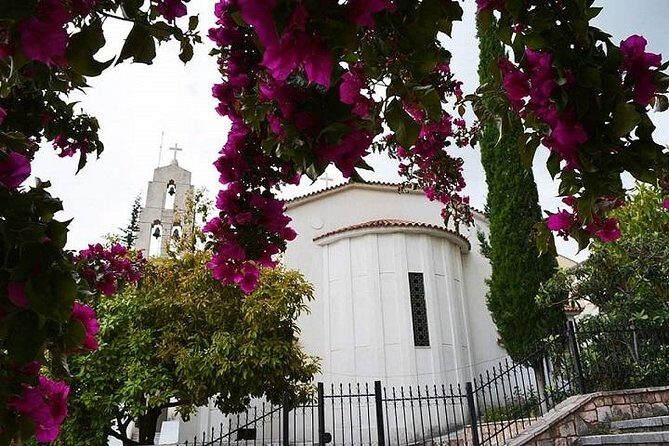
This is a proper “tour, not a hunt.” Hotel pickup is offered, and you’ll travel by air-conditioned vehicle, then return back to the meeting point at the end. The start point is the Port of Saranda, so if you’re arriving by boat or you’re already near the port area, you’ll have less scrambling.
You’ll also use a mobile ticket, which is one less thing to manage while you’re walking around. The tour runs daily, with opening hours listed from 9:30 AM to 4:00 PM.
Two practical notes:
- This is a group experience with a maximum of 100 people, so expect a bit of waiting and regrouping.
- The tour is near public transportation, which can be helpful if you’re not staying right where pickup is convenient.
Lekuresi Castle: Ottoman-era fortress views and a surprise religious timeline
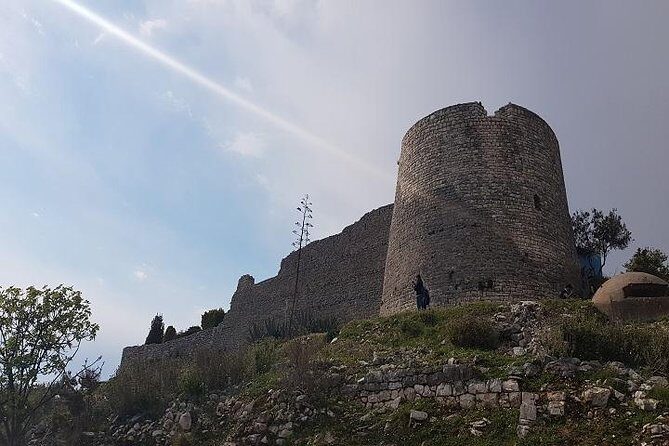
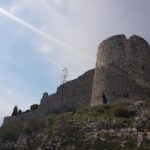
Lekuresi Castle is the kind of stop that quickly explains why people fall for the Albanian Riviera. You drive up to the fortress of Lekuresi, then explore from the hilltop ruins. The fortress is believed to have been built in 1537 during Sultan Sulejmani’s attack on Corfu. Even if you don’t memorize dates, the story gives you a reason for the strategic placement.
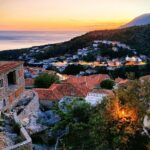
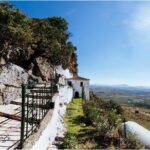
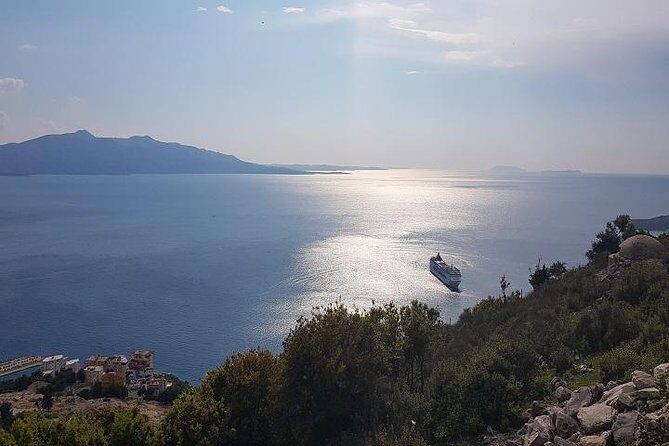
What you’ll actually enjoy most is the vantage point. From here you can see the entire bay of Saranda, the road that leads to Butrint, and the islands of Ksamil. On clear days, the view can stretch far enough to catch Corfu in the distance. If you’re planning day trips, this is a helpful “big picture” moment.
Timing is tight here—about 30 minutes for the castle segment. So go in with a simple goal: get the views, then choose one or two details to zoom in on, rather than trying to absorb every stone.
The synagogue complex turned into a basilica
Inside the castle complex on the eastern side, you’ll also visit the V–VI Synagogue Complex. The key detail is that in later phases, the Jewish cult complex was transformed into a Christian cult building, the Paleochristian Basilica.
That kind of layered conversion is more than trivia. It’s a snapshot of how communities and empires shifted over centuries, and how places of worship can evolve rather than vanish. If you like history that’s visible in the same location at different times, this is a highlight.
Saranda Embankment and Onhezmi Gate: a free march through monuments, coins, and churches
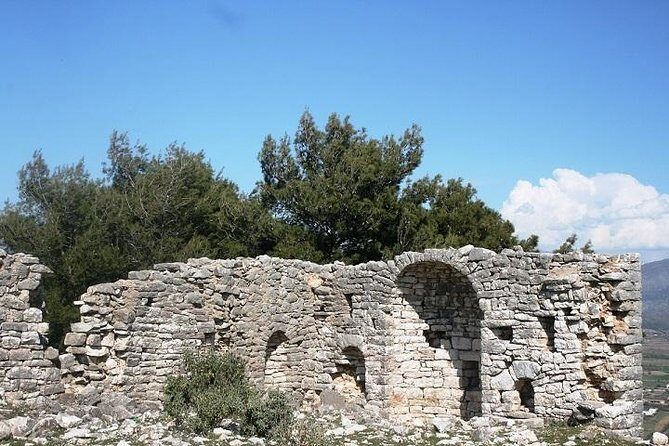
After the castle, the day shifts to the city’s lower, waterfront side. You’ll spend about 3 hours here, moving through a set of coordinated stops that cover civic monuments, museum collections, art, and religion. The embankment area is where Saranda feels like a real town instead of a scenic viewpoint.
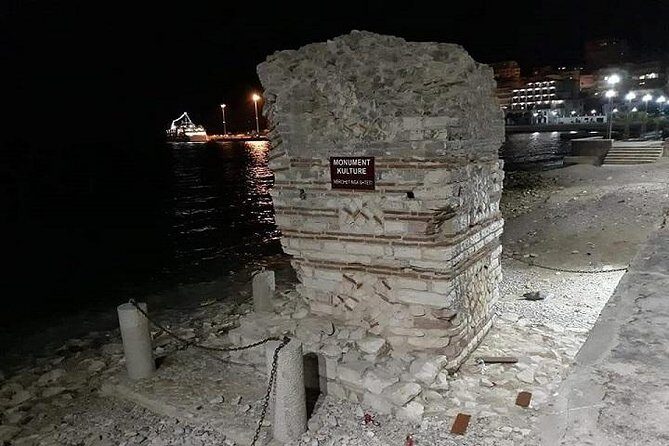
One anchor is the Monument: the Incoming Gate of Onhezmi (also referenced as an entrance gate in the tour description). This is the kind of site where a guide’s context helps you understand what you’re seeing. Without that, it can look like another old structure; with it, it becomes a map of the city’s historical layout and identity.

Albanian numismatics and archaeology
From there, you’ll visit the Albanian Numismatic Exhibition and the Archaeological Museum. Numismatics is a great choice for a short tour because coins compress a lot of political and economic information into a small space. You tend to notice dates, rulers, and changing designs quickly, and that makes the broader story feel more concrete.
Then archaeology adds the physical timeline—things people made and used, which is often easier to connect to everyday life than abstract history. If you’re the type who likes to see how the past shows up in real objects, this pair works well.
Heritage museum, art gallery, and an Orthodox Church
The route continues to the Museum of Heritage, the Art Gallery, and an Orthodox Church. This is a nice mix because it keeps you from being stuck only in history rooms. Art and heritage displays can also act like pacing breaks between more dense museum exhibits.
The Orthodox Church stop adds a different type of context: living religious culture alongside historical layers. Even if you’re not a religious visitor, it helps you understand what still matters in the city today.
Admission for these embankment stops is listed as free, so you’re not paying extra at the door. That’s one of the practical reasons this tour feels good value.
What makes the tour click: guide explanations that translate the details
This is where a guided format really pays off. In particular, the guide is mentioned as translating museum curators’ talks so everyone understands the history and culture of Saranda and Albania.
Even when museums have signs in English, translation helps with the meaning underneath the labels: why one object matters, what a building change implies, and how a city fits into the bigger national story. That’s the kind of detail that turns a walk-through into learning.
If you’re planning to book, I’d treat this as a tour where your success depends on your guide. When you arrive, pay attention early. If you hear the guide slow down and explain background, you’re in the right group.
Group size, pacing, and what you should watch for
This tour caps at 100 people. That means you should expect some regrouping and a little crowd movement in museums. It won’t feel like a private experience, and you probably won’t have the freedom to linger until your curiosity runs out.
The pacing is the other key factor. About 30 minutes for Lekuresi Castle and roughly 3 hours for the embankment block is a lot of ground in a half-day. You’ll likely leave feeling like you got a solid introduction rather than a deep, slow study of each place.
This tour is best for:
- First-time visitors who want an orientation package
- People who like history, but don’t want to do a self-guided puzzle all on their own
- Travelers with a tight schedule who still want the castle views and multiple museum stops
It may be less ideal for:
- Anyone who hates group timing
- People who want to spend a long time inside each museum at their own pace
Planning your day around Lekuresi and the embankment
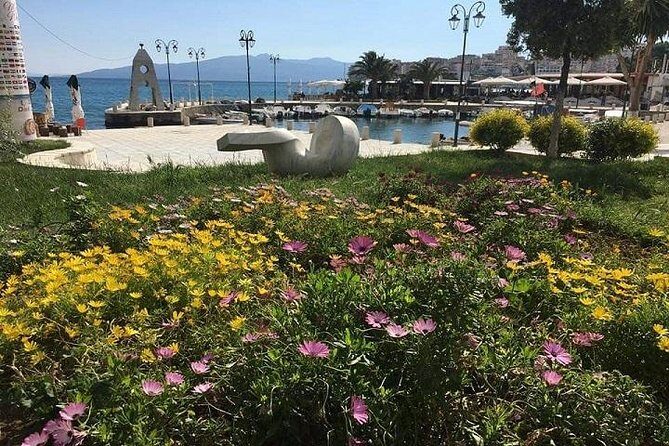
I like this tour as a foundation for the rest of your Saranda plan. The castle views help you understand where things sit in relation to each other: Saranda Bay, Ksamil, and the direction of Butrint. After that, the museums give you context, so later sights feel less random.
A practical approach:
- If you’re also thinking about Ksamil or Butrint, use the castle viewpoint to choose which route makes sense next.
- Bring sun protection and comfortable shoes. Even if the tour is organized by vehicle, you’ll still be walking and moving through museum spaces.
Also, don’t underestimate how much you’ll see indoors on the embankment block. Plan to look at fewer things carefully rather than skimming everything. The guide’s explanations are your shortcut.
Should you book this Saranda tour or skip it?
Book it if you want a low-stress half-day that hits the big visual payoff (Lekuresi Castle views) and the cultural payoff (museum and church stops), all with guidance and plenty of listed free admission. At $66.79 for around 4 hours, the value is strongest when you factor in pickup, vehicle comfort, and a structured route that’s hard to recreate efficiently on your own.
Skip it if your top priority is slow, independent exploration. This is built to move, and you’ll feel the schedule.
If you do book, show up with one mindset: enjoy the “story” the guide builds across stops. When you connect the bay views, the castle’s strategic past, and the museum collections, Saranda starts making sense in a hurry.
FAQ
How long is the Saranda Tour?
It’s about 4 hours (approx.).
What is the price per person?
The price is $66.79 per person.
Is hotel pickup included?
Yes, pickup is offered.
Where does the tour start?
It starts at the Port of Saranda.
Where does the tour end?
The activity ends back at the meeting point.
What are the main stops on the tour?
Lekuresi Castle, then the Saranda Embankment area including the Incoming Gate of Onhezmi, the Albanian Numismatic Exhibition, the Archaeological Museum, the Museum of Heritage, the Art Gallery, and an Orthodox Church.
Is admission free for the stops?
Admission is listed as free for both the Lekuresi Castle segment and the embankment museum/heritage segment.
What ticket type do I get?
You’ll receive a mobile ticket.
How many people are in a group?
The tour has a maximum of 100 travelers.
What happens if the tour is canceled due to the minimum number of travelers?
If it’s canceled because the minimum isn’t met, you’ll be offered a different date/experience or a full refund.