REVIEW · GJIROKASTER
Gjirokaster walking Tour The Old Baazar, Cfake, Dunavat, Ali Pasha Bridge
Book on Viator →Operated by My Tour in Albania · Bookable on Viator
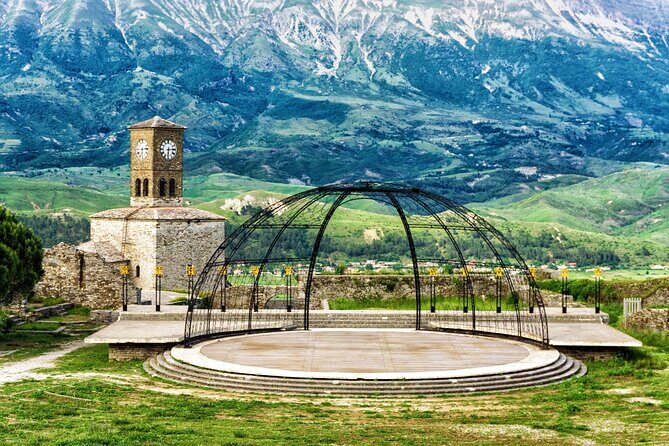
Old town Gjirokastër goes beyond the postcard streets. This walk focuses on the neighborhoods under the castle walls that many people skip, plus a big finish at Ali Pasha Bridge. It is also one of those tours where having a guide changes the whole feel: you stop seeing random stones and start reading the town like a map.
I especially love the shift from the main old town center toward the Old Bazaar area that is no longer a market. You get cobblestones, very old houses, and a sense of everyday life in places that still look lived-in. Second, I like how the route threads through Cfaka and its tekke tied to the Bektashi Order, so the walk mixes architecture, faith landmarks, and countryside views in one smooth arc.
One consideration: the tour is only about 3 hours, so you will move at walking pace and you will not linger for long at any single stop. If you like slow museum-style hangs, you may want to pair this with extra time on your own after.
In This Review
- Key highlights at a glance
- Why this walk is worth 18 dollars (and not just a stroll)
- Starting at Çerçiz Topulli Square: your orientation point
- The Old Bazaar that is no longer a bazaar
- Crossing through the Zerzebili Bridge
- Cfaka: old houses, protected heritage, and a Bektashi tekke
- Ali Pasha Bridge: the payoff view and final landmark
- The guide makes the difference: asking for local perspective
- Time, pacing, and who this suits best
- Price and what you really get for it
- Booking reality: how to plan without stress
- Should you book this walking tour?
- FAQ
- How long is the Gjirokastër walking tour?
- Where do I meet for the tour?
- What stops are included on the route?
- Is there an admission fee for the sites?
- What is the group size limit?
- Do I need a printed ticket?
- Is the tour suitable for most people?
- What is included in the price?
Key highlights at a glance
- Small-group feel (max 15) keeps the pace comfortable and questions easy to ask
- Cobbled lanes and some of the oldest houses give you the texture you miss when you rush
- Cfaka stop includes a Bektashi tekke plus protected-category old houses
- Zerzebili Bridge crossing helps you understand how neighborhoods connect
- Ali Pasha Bridge is the logical, photo-worthy end point
- Mobile ticket makes the check-in simple and quick
Why this walk is worth 18 dollars (and not just a stroll)
At about $18.08 per person for roughly 3 hours, you are paying for two things: a local guide and a route that actually aims you at the parts of Gjirokastër people often miss. There are plenty of ways to walk these streets on your own, but without context you tend to stick to the most obvious viewpoints. This one pushes you past the usual track and gives you landmarks you can recognize later.
The group size is capped at 15, which matters more than it sounds. Smaller groups mean you spend less time waiting at intersections, and you get room for conversation. The tour also ends back at the meeting point, so it is easy to fold into your day without a headache.
The best value here is the focus. You are not buying a long checklist of sites. You are buying a guided sequence that connects neighborhoods, bridges, and heritage landmarks so the town starts to make sense as you walk.
You can also read our reviews of more walking tours in Gjirokaster

Starting at Çerçiz Topulli Square: your orientation point
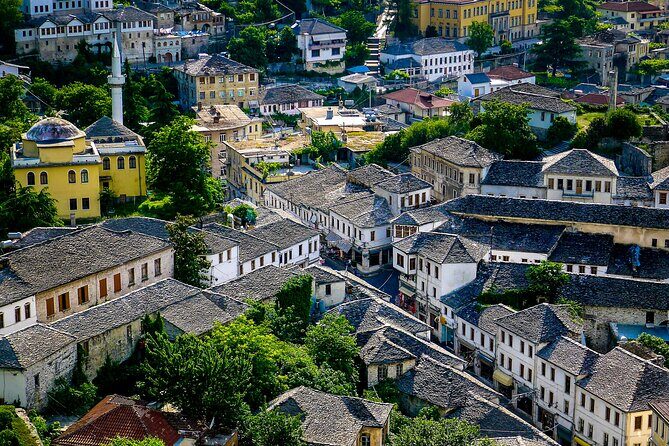
You meet at Çerçiz Topulli Square (Sheshi Çerçiz Topulli), right in the center of Gjirokastër’s old area. Starting here is practical because it is the kind of spot where you can find your bearings fast before heading downhill and sideways into less-frequented streets.
From the square, the walk begins to do something important: it guides you away from the “I’ve seen the old town” feeling and toward the real structure of the place—how the castle’s edge shapes neighborhoods outside the walls. Even if you are only half-paying attention, you’ll notice the change in street character as you move from the core into smaller lanes and older housing pockets.
And because the tour ends back at the meeting point, you also get a clean reset. After 3 hours, you are not stuck trying to catch a transfer from a random edge of town.
The Old Bazaar that is no longer a bazaar
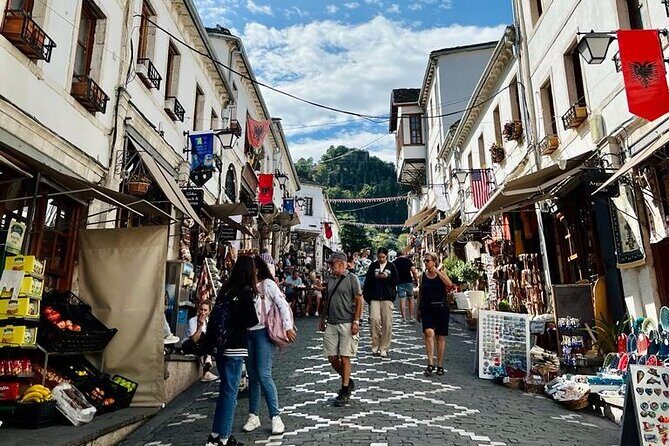
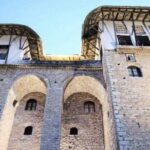
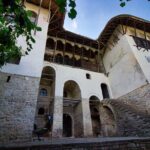
The first named area is Gjirokastër Bazaar, specifically the Old Bazaar zone. The key detail is that it is not a bazaar anymore. That sounds like a minor note, but it is exactly what makes the stop interesting. You are walking through a former commercial neighborhood that now reads more like a residential and heritage area.
What you’ll notice quickly is the cobblestone texture and the old houses that anchor the street. Instead of a street full of shops, you get older facades and quieter corners. It is one of those places where you start imagining what daily movement looked like before tourism turned into the main storyline.
There is also a short time allotment here—about 15 minutes—so treat it like an opening segment. You are not meant to memorize every doorway. You are meant to learn how this part of town feels, then carry that sense forward as the route continues.
If you like architectural details, this stop is a good place to slow down for a few seconds at a time and look up. The differences between older housing edges and newer-looking patches become clearer when the guide points them out.
Crossing through the Zerzebili Bridge
After the Old Bazaar section, you reach Zerzebili Bridge. This is not just a scenic intermission. A bridge in a place like Gjirokastër is a clue to how neighborhoods were stitched together by terrain.
Walking over the bridge gives you a change in perspective: you see the town’s layout more clearly than from a flat street. It also acts like a mental waypoint. After you cross, the tour shifts into another ancient neighborhood, and the scenery starts telling a different story.
This is a good moment to pay attention to how the older areas sit relative to the castle slopes. Even without a formal “lecture,” the geography becomes part of the understanding, which is the whole point of doing it with a guide.
Cfaka: old houses, protected heritage, and a Bektashi tekke
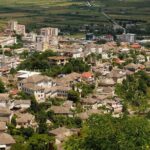
Next comes Cfaka, described as another ancient neighborhood reached after passing Zerzebili Bridge. This is where the walk starts stacking meaning: you get old housing character, protected heritage, and a religious landmark all in one area.
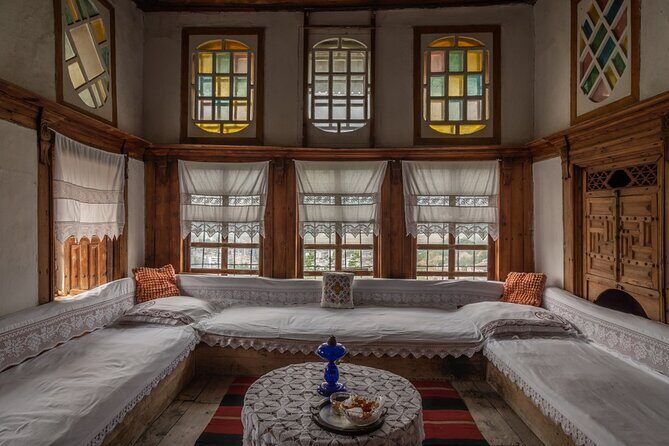
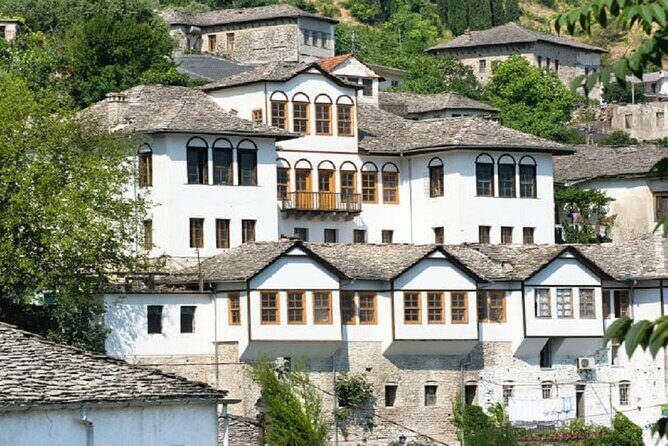
In Cfaka, you will pass old houses that are first monument category, which signals these buildings have recognized protection. That matters because it explains why the streets and structures look the way they do. You’re not just seeing old walls—you are seeing older fabric that has been valued enough to preserve.
You will also pass a tekke belonging to the Bektashi Order. Even if you do not know Bektashi traditions, the guide’s framing helps you connect the tekke to the town’s cultural layers. It is a reminder that Gjirokastër is not only a scenic destination. It is a living place with spiritual landmarks and community history embedded in daily routes.
What I like about Cfaka as a stop is the contrast. The route mixes heritage architecture with nature and countryside energy, including the note about many sheep on top of hills. So while you are walking past old structures, you also keep glimpsing the wider setting. That combo prevents the walk from becoming only stone-and-stairs.
If you enjoy when a town tour includes lived-in surroundings instead of just monuments, Cfaka is a highlight.


Ali Pasha Bridge: the payoff view and final landmark
Your last destination is Ali Pasha Bridge. Ending with a bridge is smart because bridges are natural “finish lines.” You reach them, you orient yourself, and you get that satisfying sense of closure.
For many people, the bridge is the moment where photos actually feel like they match what the guide taught you. If you paid attention earlier—how neighborhoods connect, how the landscape shapes movement—then the bridge becomes more than an image. It becomes a visual summary.
This is also a good place to slow down and ask one last question. I’d focus on what the guide thinks you should notice after the walk. A good guide will point out small cues you would otherwise miss, like where you should look for architectural features or how to recognize neighborhood edges on your own.
The walk ends back at the meeting point, so once you’ve finished at Ali Pasha Bridge, you can keep exploring nearby streets with a better sense of direction.
The guide makes the difference: asking for local perspective
The tour includes a guide, and the impact shows in the ratings. One standout theme from the experience is how much you gain when the guide knows the town personally and can explain it in a way that feels natural.
A named example from the tour feedback is Besi. The comments describe him as warm, curious, passionate, and incredibly cultured, turning the walk into a real experience of the town’s history and soul. Even if you do not get Besi specifically, the point is clear: the best version of this tour is the one where you talk with the guide, not just follow their steps.
Here are a few questions you can ask that fit what this tour covers:
- Which parts of the Old Bazaar area are most worth looking up at?
- What makes the Bektashi tekke meaningful in this neighborhood?
- What should I notice about neighborhood layout after I cross Zerzebili Bridge?
- If I return tomorrow, where would you send me for one more walk?
If your guide is good, you’ll get answers that help you see Gjirokastër on your own afterward.
Time, pacing, and who this suits best
This is a 3-hour walk, with a route that moves you through several connected areas: Old Bazaar, Zerzebili Bridge, Cfaka, and Ali Pasha Bridge. That timing is ideal for travelers who want an “in-town” experience without losing half a day.
Because it is a walking tour with a small group limit (max 15), it also tends to fit well for couples and small parties—especially those who like learning at a human scale rather than in a big bus crowd. The tour also notes that most travelers can participate, so it is not presented as an extreme activity.
The one practical drawback is the format: you get a guided route, not long stops. If you want to sit and soak in one particular viewpoint for 45 minutes, you will have to do that on your own after the tour ends.
Price and what you really get for it
Let’s talk value. At $18.08, this is not just paying for steps on cobblestones. You are paying for:
- a planned route that hits overlooked neighborhoods
- a guide who can connect architecture and landmarks to meaning
- access to a sequence that finishes at Ali Pasha Bridge, which makes the walk feel complete
Also, the tour uses a mobile ticket, which is a small thing but makes the logistics smoother in practice. Confirmation is provided at booking time, and the tour requires a minimum of 2 persons, which usually means you’re not signing up for a random empty slot.
In a town like Gjirokastër, the difference between self-guided walking and guided walking can be huge. If you are the type who likes understanding what you see—why this house matters, what the tekke represents, why the bridge is where it is—this price feels fair.
If you only want quick photos and you are happy guessing what everything means, you might feel the cost is unnecessary. But for most people, the guide-driven context is the product.
Booking reality: how to plan without stress
A few practical notes help you plan. The tour is scheduled for about 3 hours, and it starts at Çerçiz Topulli Square. It ends back at the meeting point, so you can plan dinner or the next activity without worrying about crossing town.
The tour also says it runs as a small group with up to 15 travelers, and it is “free cancellation” up to 24 hours in advance. If you’re booking close to your travel dates, that flexibility is useful.
Should you book this walking tour?
Book it if you want a guided route that takes you into the older neighborhoods under and beyond the castle walls—especially the Old Bazaar area and Cfaka. You’ll likely enjoy it most if you like understanding local landmarks, not just collecting pictures.
Skip it or pair it with extra solo time if you need long stops or you hate walking between sites. This is designed to cover multiple areas in a few hours, so it rewards curiosity and attention, not slow wandering.
If you book, do yourself a favor: bring one question about what you want to understand—architecture, the tekke, or how neighborhoods connect. With a guide like Besi-style energy, the walk turns from scenery into a place you can actually read.
FAQ
How long is the Gjirokastër walking tour?
The tour lasts about 3 hours.
Where do I meet for the tour?
You meet at Çerçiz Topulli Square (Sheshi Çerçiz Topulli), Gjirokastër, Albania.
What stops are included on the route?
The main stops are the Old Bazaar area, the Zerzebili Bridge area, Cfaka, and the Ali Pasha Bridge.
Is there an admission fee for the sites?
Admission is listed as free, including for the bazaar-area stop.
What is the group size limit?
The tour has a maximum of 15 travelers.
Do I need a printed ticket?
No. The tour uses a mobile ticket.
Is the tour suitable for most people?
The tour notes that most travelers can participate.
What is included in the price?
The price includes a guide. Everything not listed as included is not included.