REVIEW · TIRANA
Tirana Walking Tour
Book on Viator →Operated by Albania My Way · Bookable on Viator
Tirana clicks faster when you walk. This 3-hour English Tirana walking tour gives you a guided, on-foot orientation of the city’s big symbols, from Skanderbeg Square to Blloku. I especially like the small-group size (up to 15) and the way your guide turns famous buildings into an easy story you can remember.
One consideration: this route leans into Albania’s 20th-century political era, so it’s not purely scenic. If you prefer a lighter, mostly architectural walk, you may want to balance it with a calmer neighborhood later the same day.
In This Review
- Key Things I’d Book This For
- Why This Tirana Walking Tour Works as a First-Day Plan
- Price and Logistics: What $11.91 Buys You
- Skanderbeg Square: Et’hem Bey Mosque, the Clock Tower, and the Civic Core
- Et’hem Bey Mosque: the “oldest” anchor
- Clock Tower and the civic lineup
- Rruga Murat Toptani: Bunk Art 2, Toptani Castle, and the New Mosque Under Construction
- Passing Bunk Art 2 and the Communist imprint
- Toptani Castle and the Zogu Residence
- House of Parliament and the biggest mosque in the Balkans (still under construction)
- Bulevardi Dëshmorët e Kombit: The Pyramid, Hoxha’s Museum, and the Power Route
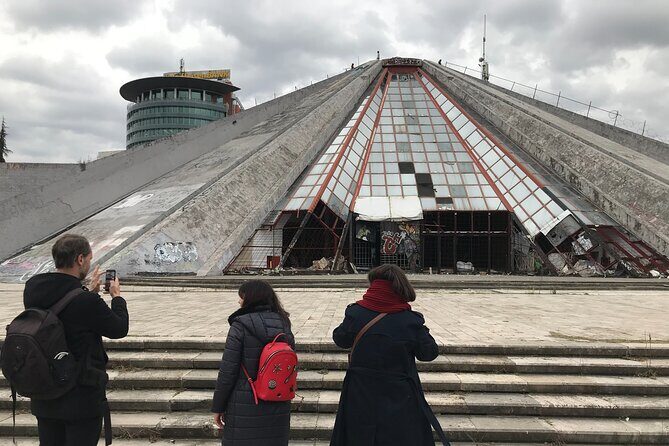
- The Pyramid and the shadow it carries
- Dictator Hoxha’s Museum
- Prime Ministry, Presidency, Parliament offices, university spaces, National Stadium
- Blloku: Ex-Blloku and Hoxha’s House, from Closed Off to Catching Night Lights
- Why ex-Blloku feels different
- Passing Hoxha’s house during the rule
- What You’ll Learn From a Strong Guide (Aldo Was a Standout)
- Tips to Get More Out of Every Stop
- Who Should Book This Tour (and Who Might Skip It)
- Should You Book This Tirana Walking Tour?
- FAQ
- Where does the walking tour start?
- How long is the Tirana Walking Tour?
- How much does it cost?
- Is the tour offered in English?
- Are admission tickets included or free?
- What if the weather is poor?
Key Things I’d Book This For
- Up to 15 people keeps the pace human and questions easy
- Licensed English guide with a strong focus on meaning, not just names
- Free admission tickets are listed for the key stops on the walk
- A great first-day loop starting and ending at Sheshi Skënderbej
- Communist-era context alongside older landmarks, so the city makes sense
Why This Tirana Walking Tour Works as a First-Day Plan
If this is your first time in Tirana, I’d seriously consider starting here. The city’s center can feel like it has too many layers at once. This walk helps you sort them into a timeline: older state power and landmark Ottoman-era symbols first, then the dramatic communist imprint, then the way those spaces function today.
The biggest value is not that you see a lot of buildings. It’s that you learn what each one represents and why locals associate it with certain ideas. Your guide also adjusts the pace and answers questions, which matters when you’re trying to build your bearings fast and you’re not fluent in the city’s historical references yet.
Another reason I like this format: the tour is built for walking, not rushing. With an overall time of about 3 hours, it fits naturally into a travel day. You can do this in the morning or early afternoon, then use the rest of the day to explore what caught your attention.
You can also read our reviews of more walking tours in Tirana
Price and Logistics: What $11.91 Buys You
At $11.91 per person for roughly 3 hours, you’re paying for guided context more than for sightseeing add-ons. And that’s a good deal in a city where many of the landmarks have real political and cultural meaning behind them.
A few practical points that affect your day:
- Group size max 15 means less crowding at stops and more chances to ask questions.
- Mobile ticket makes check-in simpler.
- English-speaking guide lets you focus on understanding, not translating.
- Near public transportation, so getting back to your hotel after is usually straightforward.
- Service animals allowed, so if that matters for you, this is designed with that in mind.
Also: the experience runs best in good weather, and that’s worth planning around. If conditions are poor, you should expect the tour to be rescheduled or refunded. And if you can’t make it, the tour includes free cancellation up to 24 hours before—helpful when you’re juggling flights and jet lag.
Skanderbeg Square: Et’hem Bey Mosque, the Clock Tower, and the Civic Core
Most walks start with a simple landmark. This one starts with the heart of the old Tirana story: Sheshi Skënderbej 1. From the first stop, you’re not looking at random pretty buildings. You’re seeing symbols that shaped how people understood power, faith, and public life.
Et’hem Bey Mosque: the “oldest” anchor
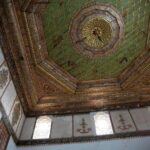
You’ll visit Et’hem Bey Mosque, described as the oldest building in Tirana and one of its symbols. The guide explains its history and points out the decorations, so you’re not just standing in front of a postcard. You’ll understand why this mosque matters in the city’s identity.
A quick takeaway: even if religious architecture isn’t your main interest, this stop gives you a baseline for Tirana before the later 20th-century changes took over the urban narrative.
Clock Tower and the civic lineup
Nearby, you’ll also see the Clock Tower, noted as another symbol of old Tirana and once the tallest building. From there, the walk expands into the civic surroundings—your guide points out major buildings including the National Bank of Albania, National Museum, Hotel Tirana, Palace of Culture, and Tirana Municipality.
What I like about this part is how it trains your eye. You start noticing how the city’s institutions sit side by side, and how the architecture signals different eras. You’ll finish the square with a mental map of the area, which makes everything you see later feel connected instead of random.
Possible drawback: because this stop includes major landmarks, it can be tempting to take too many photos and miss the explanations. Slow down. Listen first, shoot second.

Rruga Murat Toptani: Bunk Art 2, Toptani Castle, and the New Mosque Under Construction
Next you head into a corridor of big contrasts: Ottoman-era ties and royal residence references on one side, and modern politics and memory on the other.
Passing Bunk Art 2 and the Communist imprint
As you move along Rruga Murat Toptani, you’ll pass Bunk Art 2, described as a museum tied to communist atrocities. The guide uses it to set the tone for how the communist period shaped daily life, fear, and governance.
Even if you don’t go deep inside a museum during the walk, this stop matters. It’s one of the easiest ways to understand why certain neighborhoods and buildings in Tirana carry emotional weight.
Toptani Castle and the Zogu Residence
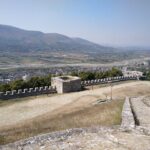
You’ll also pass the Castle of Toptani and the prince Zogu Residence. This is a smart shift. It helps you see that Tirana’s story isn’t only communist-era. Albania’s modern political identity also includes earlier state-making and leadership symbols.
If you care about how countries reinvent themselves, this is the moment to pay attention. You’ll notice how different power eras leave different types of marks: sometimes defensive, sometimes symbolic, sometimes residential.
House of Parliament and the biggest mosque in the Balkans (still under construction)
Another highlight in this section is seeing the House of Parliament and the new Mosque, described as the biggest in the Balkans and still under construction.
What I like here: your guide ties old and new together. You don’t just see a building project. You get the idea of how Tirana’s religious and political identity keeps evolving.
Possible drawback: because you’re mostly passing landmarks, you might wish you had more time at one or two of them. If that happens, note which building you want to return to later—this tour helps you pick your priorities.
Bulevardi Dëshmorët e Kombit: The Pyramid, Hoxha’s Museum, and the Power Route
Now you’re on Bulevardi Dëshmorët e Kombit, Tirana’s long main boulevard and a literal “power axis.” This section is where Tirana’s communist-era planning becomes obvious. The buildings aren’t just pretty or historic. They’re positioned to project authority.
The Pyramid and the shadow it carries
You’ll pass the Pyramid. The guide connects it to the city’s political story and what that kind of monument means for public memory.
Even if you’ve seen pyramids elsewhere, this one has local context that changes how it feels.
Dictator Hoxha’s Museum
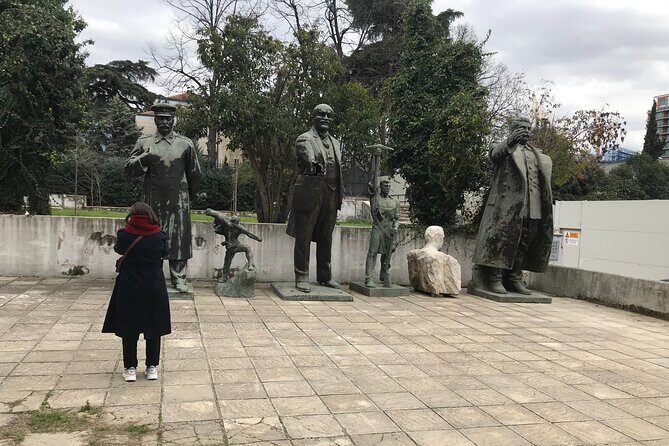
You’ll also pass Dictator Hoxha’s Museum. The timing clue in the description is important: it exists after his death, which frames it as an institution of remembrance and control over narrative.
This is a heavy topic. The value is that your guide keeps it understandable and grounded. You walk away with a clearer sense of how politics shaped Tirana’s physical spaces and what people had to live under.
Prime Ministry, Presidency, Parliament offices, university spaces, National Stadium
As you continue, you’ll pass key government buildings and cultural institutions such as the Prime Ministry, Presidency, Parliament Offices, the University, the Academy of Arts, and the National Stadium.
This is where you learn to read the city layout. You start seeing the logic of the boulevard: administration, education, and public gathering points all tied to the state’s message. For many first-time visitors, this is the “wait, now I get it” stretch.
Possible drawback: if you’re tired from a long travel day, this section can feel long because the boulevard walk is real. Bring water, keep your pace comfortable, and use the guide’s explanations to make the walk feel shorter mentally.
Blloku: Ex-Blloku and Hoxha’s House, from Closed Off to Catching Night Lights
The final stop is Blloku, the ex–Blloku district that was once off-limits to normal citizens. This is described as the residence area of communist leaders, and that detail is not a small fact. It changes how you interpret everything you see.
Why ex-Blloku feels different
You’ll pass the area while the guide explains what it meant when it was closed. You’ll be asked—quietly, through the story you hear—to imagine access being controlled. When you understand that, the neighborhood’s current role lands differently.
The walk also includes the idea of what it became after communism, described as today’s most impressive place to be in Tirana. That’s not just a sales pitch. It reflects how a restricted zone can become a focal point when the city’s rules change.
Passing Hoxha’s house during the rule
You’ll specifically pass Hoxha’s house during the time he ruled. That’s the emotional anchor of this section. It’s where the political story turns from abstract to personal: the ruler’s presence becomes tied to a physical address in your walk.
This is often the moment visitors remember most, because it connects personal life, fear, and power. You can also use it to ask your guide follow-up questions about what daily life was like outside those walls.
Possible drawback: if you want to keep your day light and avoid difficult political themes, this is the heaviest stop emotionally. You can still enjoy it—just know what you’re stepping into.
What You’ll Learn From a Strong Guide (Aldo Was a Standout)
This kind of tour rises or falls on the guide, and you’re paying for a licensed guide for a reason. In the best versions of this experience, the guide doesn’t just recite facts. They connect the dots.
One guide named Aldo was described as well informed and prepared, and I love the practical twist: he adjusted the pace to match the group, fully answered questions, and even offered suggestions for other places to visit and restaurant recommendations. That turns the tour from sightseeing into actual trip planning.
The other smart approach you’ll benefit from is when the guide checks what you already know and then bridges gaps. That saves you from confusion and makes the explanations land faster.
If your group is chatty, this tour format works well. If you’re quieter, it still works because the route keeps moving and the stops are structured with time to listen.
Tips to Get More Out of Every Stop
You don’t need special preparation, but a few choices make a difference on a walking tour like this.
- Wear comfortable shoes. You’ll be outside and moving for most of the 3 hours.
- Bring a jacket or light layer if weather is changeable. The tour is described as requiring good weather, so you want to be ready for it.
- Have your phone charged for the mobile ticket.
- Come with 2–3 questions. A good guide can turn your curiosity into a clearer understanding of Tirana.
- If you’re deciding what to do later in your trip, use the walk to spot which sites feel most important to you—then return on your own.
A small bonus with some guides: there may be a short break for coffee time during the walk. If it happens, take it. It gives you a breather without losing the thread of the story.
Who Should Book This Tour (and Who Might Skip It)
This tour is a great match if:
- you want a first-day introduction that makes Tirana feel logical
- you enjoy history that explains how a city got shaped
- you want context for big symbols like Et’hem Bey Mosque, the boulevard power sites, and Blloku
You might skip or pair it carefully if:
- you want mostly art-and-architecture with minimal political narrative
- you plan to do multiple museum-heavy activities the same day and don’t want the emotional weight of the communist-era stops
It’s also a strong option for groups that like walking but don’t want a huge crowd—max 15 is comfortable.
Should You Book This Tirana Walking Tour?
I’d book it if you want Tirana to make sense fast. The price is low for what you get: a licensed English guide, a structured route tied to real landmarks, and explanations that connect older Tirana, communist-era planning, and the city’s present-day identity.
If you’re sensitive to heavy political themes, just go in prepared for that tone—because the walk’s emotional center is Blloku and Hoxha’s associated sites. For most first-timers, that’s exactly why the tour is worth doing: it helps you understand not only what Tirana looks like, but what it means.
FAQ
Where does the walking tour start?
It starts at Sheshi Skënderbej 1, Tiranë 1000, Albania, and ends back at the meeting point.
How long is the Tirana Walking Tour?
The tour lasts about 3 hours.
How much does it cost?
The price is $11.91 per person.
Is the tour offered in English?
Yes, it is offered in English.
Are admission tickets included or free?
For the listed stops, admission tickets are marked as free.
What if the weather is poor?
The experience requires good weather. If it’s canceled due to poor weather, you’ll be offered a different date or a full refund.
If you want, tell me your travel dates and what kind of history you like most (Ottoman, communist, or modern Tirana). I’ll suggest a smart day plan around this walk.