REVIEW · TIRANA
Walking tour of Tirana; History & Culture
Book on Viator →Operated by Choose Balkans · Bookable on Viator
Postblloku feels like a history lesson you can touch. This walking tour strings together Tirana’s communist past, its Ottoman-era religious mix, and the city’s modern center, all with an English-speaking local companion. I especially like how the route keeps moving through real neighborhoods like Blloku, not just photos, and how guides such as Markel, Angelo, and Gjergj are praised for patient, friendly explanations that connect the big timeline to everyday Albanian life.
The main thing to consider is that a few sights are marked with tickets not included, like the Orthodox Cathedral, the Secret Surveillance Museum (House of Leaves), and the Clock Tower—so your “free” stops can turn into paid optional ones if you want to go inside. If you’re the type who hates surprises, skim your plans before you meet up.
In This Review
- Key highlights at a glance
- Why This 2–3 Hour Walking Tour Is a Smart First Look at Tirana
- A note on the guide experience
- Where You Meet: Choose Balkans in the Twin Towers
- Postbllok and the Checkpoint Monument: Communist Isolation in Plain Sight
- Blloku: From Restricted Politburo Zone to Everyday Street Life
- Passing Enver Hoxha’s Residence: The Politics Behind the Streets
- Orthodox, Surveillance, and the Clock Tower: Optional Tickets, Real Atmosphere
- Skanderbeg Square: Tirana’s Main Stage for National Identity
- Et’hem Bej Mosque and the Ottoman-to-Modern Religious Mix
- Tirana Castle: Modern Life Inside an Older Core
- The Pyramid of Tirana and Rinia Park: Ending on a Modern Note
- Price and Logistics: Getting Value Without Overpaying
- What This Tour Feels Like Day-to-Day (Pace, Questions, and Comfort)
- Who Should Book This Tirana Walking Tour
- Should You Book It?
- FAQ
- How long is the Tirana walking tour?
- What does the tour cost?
- Is the tour in English?
- How big is the group?
- What’s included in the price?
- Are entrance tickets included for all stops?
- Is lunch or drinks included?
- Where do I meet the guide?
- What’s the cancellation window?
Key highlights at a glance
- Postbllok to Blloku: Start with the communist-era isolation narrative, then see how the same area became everyday life and street color.
- Small group pace: A maximum of 8 travelers means more time for questions and a calmer walk.
- Religious Tirana on one route: You pass mosques and churches and get the practical context of Albania’s mix of communities.
- Skanderbeg Square as the pivot point: National hero history meets major civic buildings and public monuments.
- Old center to modern markers: You end at the Pyramid of Tirana and keep walking into Rinia Park.
Why This 2–3 Hour Walking Tour Is a Smart First Look at Tirana
If you want to get your bearings fast, a focused walk beats trying to self-navigate. This one is built around the core of Tirana: government-area history first, then the central squares and landmarks, then a modern finish at the Pyramid and Rinia Park. The total time runs about 2–3 hours, so it’s long enough to connect themes, but short enough to handle Tirana’s summer heat with less misery.
At $17.97 per person, you’re paying for a guide and a curated path through the city’s meaning. The big value isn’t just “seeing things”—it’s learning what each place was for, and why it matters now. With a small maximum group size of 8, the experience tends to feel more like a guided stroll with explanations than a cattle-line tour.
You can also read our reviews of more walking tours in Tirana
A note on the guide experience
The tour is offered in English, and the guides named in feedback—Markel, Angelo, and Gjergj—are repeatedly described as friendly and patient. That matters because Tirana’s history can feel heavy, especially when you hit communist-era sites. A calm pace makes the story easier to hold.
Where You Meet: Choose Balkans in the Twin Towers
Your tour starts at Choose Balkans – Albania Tour Operator, on the 3rd floor of Tower 2 in the Twin Towers area (Bulevardi Dëshmorët e Kombit). From there, your walk begins right away, so you’re not waiting around for a bus or a long transfer.
If you like efficiency, this is one of those setups where the “meeting point” is also basically the start of the historical loop. You’ll also use a mobile ticket, which cuts down on paperwork and lets you focus on the walk.
Postbllok and the Checkpoint Monument: Communist Isolation in Plain Sight
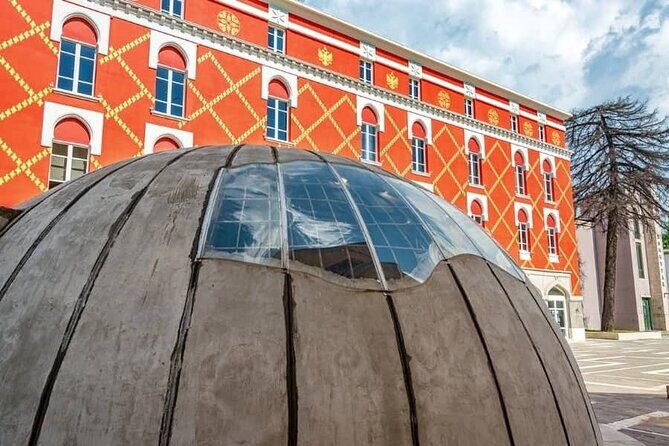
The first major stop is Postblloku (Checkpoint Monument)—a memorial tied to Albania’s communist-era isolation. It’s located on the main boulevard, opposite the government building area, which is important: you’re not wandering into some remote museum. You’re looking at a site that sits right in the flow of modern Tirana.
What I like about starting here is the context. When you later walk through Blloku, Skanderbeg Square, and the religious sites around the center, you’re better able to understand how Tirana’s layers overlap: control and restriction in one era, civic life and public identity in another.
This stop is free for the admission ticket, so you can take it in without worrying about costs to begin.
Blloku: From Restricted Politburo Zone to Everyday Street Life
Next comes Blloku, the neighborhood most visitors associate with colorful streets and popular hangouts today. Your guide frames it with the earlier history: it used to be restricted for members of the Albanian politburo, which turned a neighborhood into an invisible “inside/outside” boundary.
Then the tour shifts from the idea of restriction to what Blloku looks like now—cafes, boutiques, and street art in a lively residential-and-social area. This is where the walking tour earns its “history & culture” label. It doesn’t only tell you what happened; it helps you see how the city changed roles over time.
Like the first stop, this is handled as a walking pass with free admission for the tour portion.
You can also read our reviews of more historical tours in Tirana



Passing Enver Hoxha’s Residence: The Politics Behind the Streets
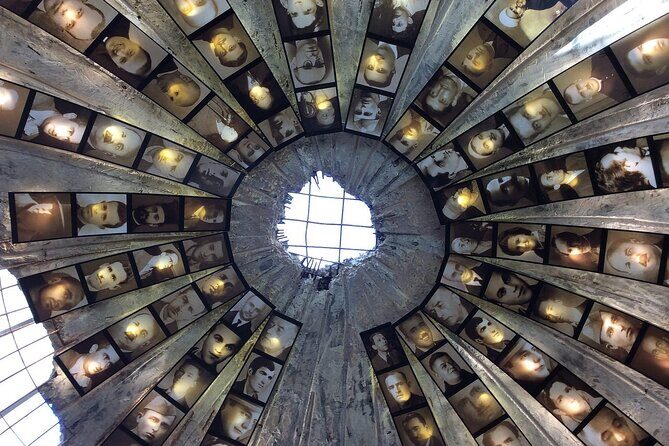
While you’re in the Blloku area, you’ll pass Shtepia Partise Enver Hoxha, the residence connected to Albania’s communist leader. Even if you don’t go inside anything specific (the tour lists it as a pass-by with no included admission), this stop works as a reality check.
It’s one thing to hear about leadership from a book. It’s another to understand that big political power had a physical home and a location you can walk past. That’s the special value of Tirana’s center: it’s compact, so the political story is still tied to street corners.
This part is also marked with free admission for the tour stops.
Orthodox, Surveillance, and the Clock Tower: Optional Tickets, Real Atmosphere
From Blloku, the route continues toward major central landmarks. You’ll pass the Resurrection of Christ Orthodox Cathedral (listed with admission ticket not included). You’ll also see the Museum of Secret Surveillance area—often referred to as House of Leaves (also not included).
Here’s the practical way to think about it: the tour can give you the meaning of these sites from the outside and through context as you walk, but if you want the full interior experience—especially for something as specific as a secret surveillance museum—you may need to pay on your own.
The Clock Tower is another stop marked with tickets not included. If you’re trying to control your spending, you can treat these as “look from the street” moments and decide on the spot whether you want to pay.
Skanderbeg Square: Tirana’s Main Stage for National Identity
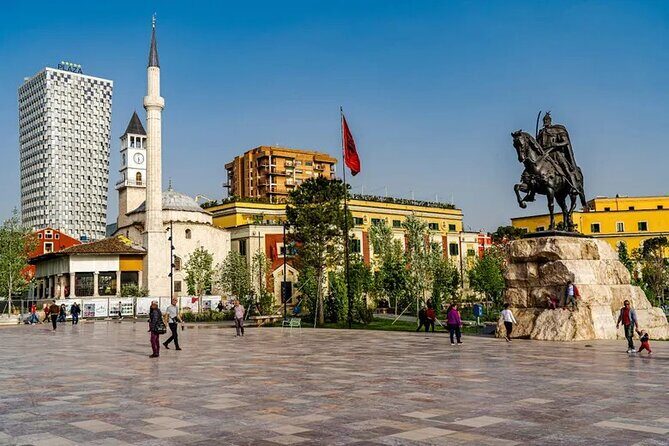
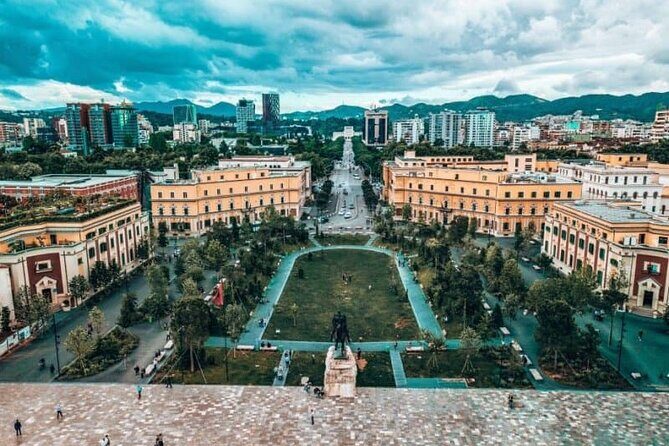
Now you hit one of Tirana’s key public spaces: Skanderbeg Square, named after Gjergj Kastrioti Skënderbeu. This square is surrounded by major civic anchors, which is exactly why it’s a great mid-tour stop.
You’ll be guided around the area where you can connect the dots between:
- national symbolism (statues and the hero association),
- civic institutions (including the National Museum and the Bank of Albania area),
- and public culture (the opera theater area).
It’s also the point where your walk turns from “specific historic moments” into “how the city represents itself.” The square is a crossroads—part monument, part public meeting space, part modern nightlife zone nearby.
This stop is free for the tour’s admission portion.
Et’hem Bej Mosque and the Ottoman-to-Modern Religious Mix
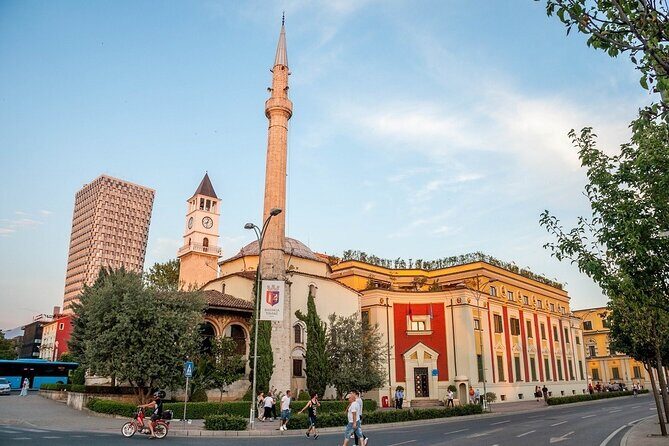
One of the most useful parts of this itinerary is that it doesn’t treat religion as a side topic. At Xhamia Et’hem Bej, you’ll get a firsthand look at Tirana’s mosque heritage in the center of town.
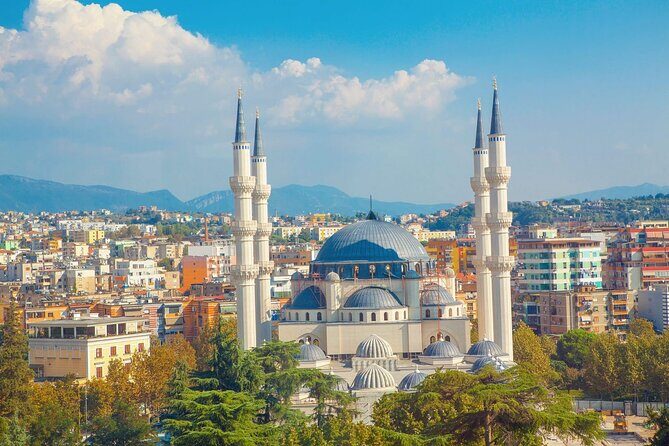
Then the tour continues with a broader wrap-up of religious diversity as you pass Namazgah Mosque (described as the largest in the Balkans), along with an Orthodox Cathedral and St. Paul’s Catholic Cathedral. The message is clear: Albania has multiple religious communities—Muslims (both Sunni and Bektashi), Orthodox Christians, and Catholics—and the city shows that mix in architecture and public space.
I like that your guide frames it across time periods—from the Ottoman era to communism and into today. Even if you’re not religious yourself, it helps you read the city like a human map: which buildings are where, and why those communities have always been part of Tirana’s identity.
This portion is listed as free for the admission ticket for the tour stops.
Tirana Castle: Modern Life Inside an Older Core
Next you walk toward Tirana Castle, which today is described as a pedestrian area where modern and traditional Tirana meet. That’s a big deal for a walking tour: “castle” often sounds like a stiff stop on a checklist. Here, it’s more of a transition zone.
You’ll feel the change in tempo as you move from formal monuments and institutional buildings into a more relaxed, walkable center. It’s the kind of place where you can actually pause and notice the city’s scale and street-life rhythm.
This stop is free for the tour’s admission portion.
The Pyramid of Tirana and Rinia Park: Ending on a Modern Note
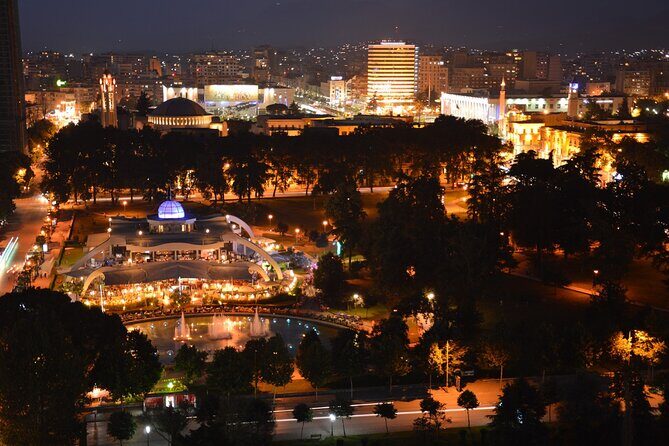
The tour finishes at Pyramid of Tirana, then continues briefly into Rinia Park. The Pyramid is one of Tirana’s most recognizable modern landmarks, and ending here gives you a sense of how the city reuses and repurposes bold structures.
Rinia Park as a final stroll works well because it’s a decompression moment. You’ve spent the walk moving through heavy history, major squares, and religious sites. A park ending helps you reset and take in the city as a place people actually live in now.
Both of these end stops are free for the tour’s admission portion.
Price and Logistics: Getting Value Without Overpaying
For $17.97, you’re paying for:
- a local companion guide,
- an English experience,
- a 2–3 hour walking route,
- and a small group (max 8).
The reason it feels like good value is that you’re not just passing landmarks—you’re getting explanations that connect them. That’s what makes a history walk work, especially in a capital like Tirana where multiple eras overlap closely.
Your budget consideration mainly comes down to the three “not included” ticket areas: Resurrection of Christ Orthodox Cathedral, Museum of Secret Surveillance (House of Leaves), and the Clock Tower. If you plan to go inside all three, you should expect extra costs. If you’re fine with outside viewing and guided context, your spending stays predictable.
Also, tips aren’t a must in the Balkans, but it’s recommended to tip the tour leader/driver as international practice for good service. If you liked the pace and explanations, a small tip makes sense.
What This Tour Feels Like Day-to-Day (Pace, Questions, and Comfort)
This is set up for a steady walking pace with frequent context stops. With only up to 8 travelers, the guide can adjust if someone needs a slower moment or wants to ask a specific question.
One detail I appreciate from how guides are described: they’re patient. That matters when you hit a site like Postbllok, where the topic can be emotionally heavy. A patient guide keeps the story readable and the walk comfortable.
Duration-wise, it’s also timed well for practical sightseeing. It’s short enough that you’re not dragging your feet across half a city, and long enough to connect the dots between communism, religion, national identity, and modern Tirana.
Who Should Book This Tirana Walking Tour
This is a great fit if you:
- want a first-time orientation to Tirana’s main center,
- enjoy history but prefer it explained through places you can walk past,
- like small groups and conversational pacing,
- and want one route that touches both communist-era context and Tirana’s religious mix.
It’s also a good choice for travelers who don’t want to spend the day hopping between far-apart sites. Most stops are free, and the paid options (cathedral interior, secret surveillance museum, clock tower interior) are clearly flagged so you can decide based on interest.
If you only want museum-heavy time inside buildings, you might want additional plans. This tour is built for walking and understanding, not for long indoor stays.
Should You Book It?
Yes—if you want a clear, manageable way to understand Tirana’s layers without turning your day into a logbook. The route hits major landmarks, explains the why behind them, and keeps the group small, which usually makes the tour feel more human.
Book it especially if Tirana is your first Albanian stop. The communist-era and religious context gives you a framework for everything else you’ll see later. And if the optional ticket stops (House of Leaves, the cathedral, the clock tower) are on your interest list, you can treat those as add-on choices rather than unexpected costs.
Also, since it’s popular enough to be booked about 19 days in advance on average, getting your slot early can save you last-minute stress.
FAQ
How long is the Tirana walking tour?
It lasts about 2 to 3 hours.
What does the tour cost?
The price is $17.97 per person.
Is the tour in English?
Yes, it’s offered in English.
How big is the group?
The tour has a maximum of 8 travelers.
What’s included in the price?
A local companion (guide) is included. You also get a mobile ticket.
Are entrance tickets included for all stops?
Most stops are marked as admission ticket free, but a few are not included—specifically the Resurrection of Christ Orthodox Cathedral, the Museum of Secret Surveillance (House of Leaves), and the Clock Tower.
Is lunch or drinks included?
No. Lunch, drinks, and snacks are not included.
Where do I meet the guide?
Meet at Choose Balkans – Albania Tour Operator, 3rd Floor, Bulevardi Dëshmorët e Kombit Twin Towers, Tower 2, Tiranë 1001, Albania.
What’s the cancellation window?
You can cancel for a full refund up to 24 hours in advance of the experience start time.