REVIEW · TIRANA
Private Walking Tour Visit to Durrës with Licensed Guide
Book on Viator →Operated by Artan · Bookable on Viator
One walk and Durres history stacks fast. I like how this private tour turns monuments into a clear timeline you can follow on foot. The guide work is a big part of the value—Artan runs the experience, and past groups have also had Joana, praised for being clear and competent—so you’re not just looking at ruins. Two highlights I loved: the way the Venetian Tower connects centuries of fortifications to what you see today, and the Durres Amphitheatre story, with excavation details that make the site feel real. One drawback to keep in mind: at the Venetian Tower, the main multimedia projection and the elevated balcony cost extra, though you can still see the interior without that add-on.
You’ll cover a lot of ground in a calm 2 to 3 hours. It’s private, so it’s only your group, and you get to ask questions as you go—useful when the city’s layers feel confusing at first. The price, $24.10 per person, is reasonable for a licensed guide that keeps pulling threads across Ottoman walls, Italian-era planning, and communist-era restrictions. Most people can participate, and service animals are allowed. Just plan on a walking pace that fits city streets, not a museum shuttle.
In This Review
- Key highlights worth showing up for
- Walking from the Venetian Tower: how Durres reads like a timeline
- Venetian Tower of Durrës and the multimedia add-on you can choose
- Churches and faith sites in the middle of daily street life
- Medieval Bath (Hammam): steam tech and traces you might miss alone
- Bulevardi Epidamn stroll: urban planning you can actually feel
- Aleksandër Moisiu museum and theatre: architecture plus personal story
- Fatih Mosque and the mosque-to-city-center story
- Freedom Square (Sheshi Liria) and Durres City Hall: Italian-era civic design
- Xhamia E Madhe and the politics of restoration
- Amphitheatre excavation by Vangjel Toci: ruins inside a living city
- Rotonda and Forumi Bizantin: Byzantine forum remnants you can interpret
- Price, time, and pacing: getting your money’s worth
- Who should book this Durrës private walking tour
- Should you book it?
- FAQ
- How long is the Durrës private walking tour?
- What does the tour cost?
- Is the tour available in English?
- Is this tour private or shared?
- Where does the tour start and end?
- Are admission tickets included?
- Will I need a printed ticket?
- Is it easy to reach public transit near the route?
- Are service animals allowed?
Key highlights worth showing up for
- Venetian Tower stories in order, including Ottoman rule and how the tower was used through the communist period
- Real context for the amphitheatre, tied to what archaeologist Vangjel Toci uncovered
- Ottoman Hammam + steam techniques, with building traces that hint at older routes to the castle
- Freedom Square planning details, starting from a 1928 floral-garden idea that shaped the city
- Monuments you can link together, from mosque walls to city hall and back to Byzantine forum remains
Walking from the Venetian Tower: how Durres reads like a timeline
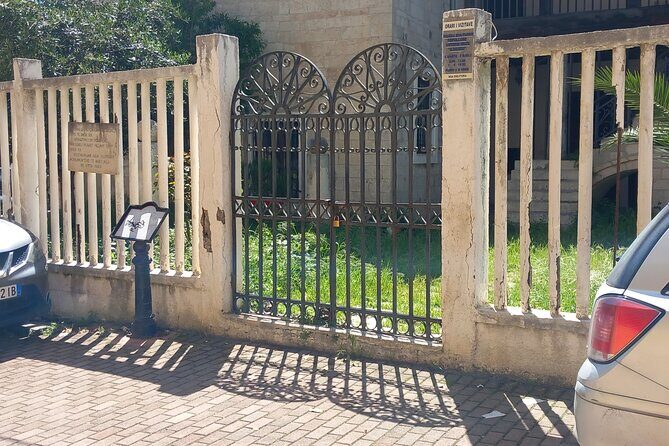
This tour starts at the Venetian Tower of Durrës, and that choice matters. Durres can feel like a city where everything is close together but nothing explains itself. The guide gives you the map in your head: fortifications, religious buildings, and civic spaces that weren’t built in a single “era” mindset. Instead, they were added, repaired, repurposed, or constrained by politics.
You’ll walk through the urban neighborhood around the tower and learn to “read” the place. That’s what makes a walking tour better than a list of stops. The Venetian Tower becomes your anchor point for the 2nd-century amphitheatre nearby, plus the wider web of Byzantine, Norman, Venetian, and Ottoman fortifications. You’ll also hear about the industrial city era’s urban planning and architecture—and then how the city has been shifting into the present.
If you like history but hate vague talking, this is the style that tends to work. The experience is structured so each stop answers a question you might not know you’re asking yet: Why is this here? Why does it look like this? What happened when power changed?
You can also read our reviews of more walking tours in Tirana
Venetian Tower of Durrës and the multimedia add-on you can choose
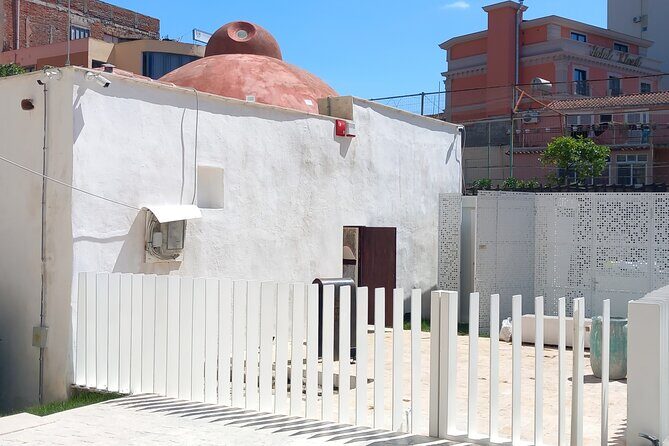
You’ll spend time at the Venetian Tower more than once during the tour flow. The first time is about getting bearings—how it fits into the city’s neighborhood and how the surrounding layers connect to what you’ll see later. The second time turns more specific: how the tower was built, the construction techniques, and how it resembles other towers along the Adriatic coast and beyond.
Then comes the political timeline. You’ll hear how the tower mattered during Ottoman rule, how it was demilitarized during the early stages of World War II, and how its role changed through the communist regime. The guide also connects that long span of use to the last 30 years, including the recent renovation work financed by the European Commission.
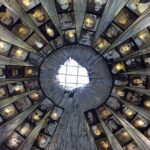
Here’s the practical part: after the renovation, the tower is presented as a multimedia center projecting the city’s history. To access the projection and the elevated balcony, you must pay an additional fee that’s not included in the tour. The good news is that entrance to view the interior is included. So you can pick your level—if you like audio-visual storytelling, pay for the projection; if you prefer quiet time with the stone and views, you can still get a full sense of the tower.
Churches and faith sites in the middle of daily street life
Durres doesn’t treat religion as something sealed off behind gates. You’ll see that in the way the tour threads through places of worship that sit right in the flow of normal streets.
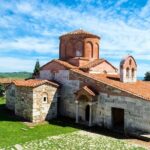
First, you’ll visit the Church of Apostle Paul and Saint Asti. The key idea here is that the guide connects the church’s setting to the saints’ story in Durres and also points out hidden traces of an earlier Church of Saint Spiridon, which was demolished during the communist regime. That’s a common theme in Durres: what you see today is often shaped by what was removed.
Later you’ll go to Kisha Katolike Shën Dominiku, known as the Church of Saint Lucy. This stop is a careful lesson in “then vs. now.” You’ll hear about the church’s construction history and encounter the key figures tied to city governance and spiritual life. The guide also points out the present condition compared with the past, including the communist era’s legal ban on religious activities.
If you’re sensitive to places of worship, treat these stops like you would in any city—keep your voice down and move slowly. The tour’s value is that it doesn’t sensationalize; it helps you notice how policy leaves marks on buildings.
Medieval Bath (Hammam): steam tech and traces you might miss alone
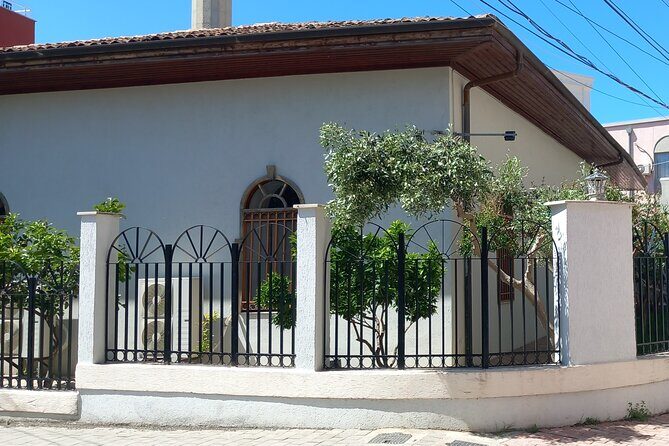
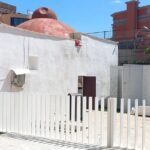
The Ottoman Hammam, built in the 17th century, is one of those stops where a guide makes you feel like you suddenly upgraded your eyesight. On your own, you’d likely see an old bath building and move on. With the tour, you learn how it may have been privately owned or tied to government buildings along the seaside promenade.
You’ll also connect it to geography: it’s believed to relate to the White Mosque, located about 5 meters west, near today’s Bulevardi Epidamn area. The guide points out building traces that help you infer older infrastructure, including remnants of the old road leading toward Durres Castle.
The most practical takeaway is the explanation of steam and heating techniques used inside. This is one of those details that makes the site more than architecture. You understand how the space was meant to work.
Bulevardi Epidamn stroll: urban planning you can actually feel
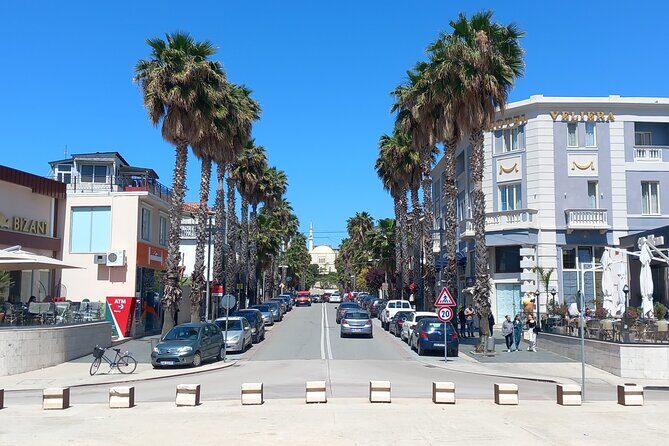
After the Hammam, you’ll walk along Bulevardi Epidamn, and the tour shifts tone from “stone and power” to “city design and daily life.” The guide discusses how early residential buildings along this stretch were shaped by investments tied to the city’s first urban regulatory plan in 1928.
This is a good section for photos and for pacing. It’s only about 10 minutes, but it functions like a breather between heavier history stops.
You’ll also pause at local spots for refreshments—think coffee, water, burek, ice cream, or orange juice. The exact choice depends on what’s convenient during your walk, but the point is that you’re not stuck with tourist-only options. If you want to keep energy up for the final half of the tour, this is where you do it.
You can also read our reviews of more guided tours in Tirana

Aleksandër Moisiu museum and theatre: architecture plus personal story
At the Aleksandër Moisiu Museum, you’ll spend time with a house that blends traditional Albanian architecture with Durres-style character. The guide explains why the building matters: it once served as the consulate of England in Durres, during a period when Durres was the capital after national independence.
Today, the place is waiting for the investments it needs. It suffered from earthquake damage in 2019, and that damage also affected the Byzantine tower adjacent to the house. Even if you’re not a “damage tourism” person, this is important context. It shows how heritage sites don’t just face history—they face modern risk too.
Then you connect it to a cultural figure: the residence is tied to one of Durres’s most distinguished international theatre artists, Aleksander Moisiu. That personal thread helps the architecture feel less like a stop on a checklist and more like a lived space.
The tour also later references the Aleksandër Moisiu Theatre, described as the Palace of Culture area. It was erected in 1960 and is presented as the Republic of Albania’s first structure of its kind. If you’re interested in how state culture shaped buildings, this stop is a quick but useful lesson in 1960s Albanian architectural style and its influence around the country.
Fatih Mosque and the mosque-to-city-center story
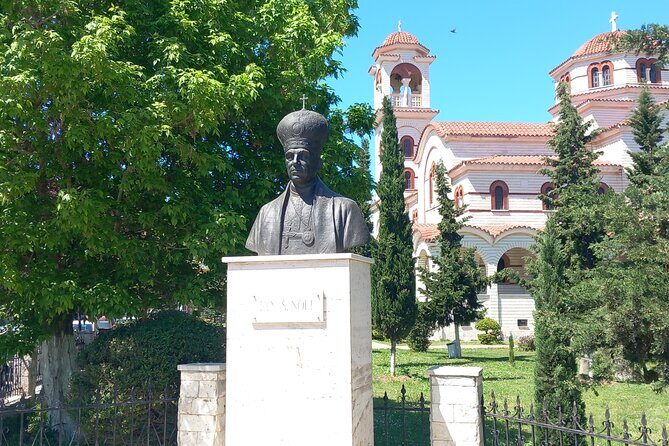
The Fatih Mosque visit is short, but the guide uses it to teach structure. Built in 1501, it’s described as one of the three oldest mosques in the Republic of Albania. It sits at the base of the Byzantine wall between two outer towers.
That placement isn’t random. The minaret is positioned in a way that helps protect it from seaside views and potential sea attacks. The guide also explains that the mosque construction used the same building materials as the Byzantine walls, including supportive sections of the wall to open a broad ground-floor base.
This is one of the easiest moments to connect two different timelines in your head: Byzantine fortification logic and Ottoman-era religious architecture, sharing materials and space.
If you like history that’s practical—how and why buildings were arranged—this stop gives you that.
Freedom Square (Sheshi Liria) and Durres City Hall: Italian-era civic design
Next you’ll reach Freedom Square, Sheshi Liria (Plac). The guide explains that it began as a floral garden idea under the 1928 First Urban Regulatory Plan. From there, it became a civic center, hosting the Municipality and the Grand Mosque.
You’ll get a timeline here too: Ottoman era to pre-World War II and then to present-day life. The guide links the square to the broader urban “shape” of the city, including how development spread into the Varosh neighborhoods.
A few steps onward brings you to the Municipality of Durrës, built in 1931 with Italian aesthetic preferences. The central balcony is a standout detail, originally used for public speeches in the square. After the 1926 earthquake destroyed the clock tower, a new public clock was installed atop the City Hall building. Today, it continues as the hub for local governance.
If you’re used to cities where civic buildings are all 19th-century “look at me” monuments, this one adds nuance. It shows how civic identity gets rebuilt after disaster—and then kept in use.
Xhamia E Madhe and the politics of restoration
The tour includes Xhamia E Madhe E Durresit, where the focus is on how history affects religious buildings over time. The guide describes it as built through investments by local merchants during Italy’s pre-World War II economic dominance.
In 1939, the mosque was closed and altered under the communist regime. Then, after the 1990s, it was restored. The guide frames it as a sign of resistance and integration in Islam, and you’ll learn that it remains heavily used by residents.
This stop is worth your attention even if you’re not religious. It’s a clean example of how cultural life doesn’t stop when politics changes. It just finds a way to come back.
Amphitheatre excavation by Vangjel Toci: ruins inside a living city
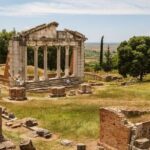
Durres Amphitheatre is where the city starts feeling “bigger” than just its street corners. The guide talks about its history and, importantly, the way the amphitheatre coexists with the city above it. That relationship is what makes the site special: people live with the monument, not around it.
You’ll hear that archaeologist Vangjel Toci excavated it in 1966, and that the dig revealed intriguing secrets. The tour also covers a government project aimed at restoring the entire amphitheatre, with the goal of preserving and highlighting its layers of history.
If you like sites where the past isn’t locked away, this is a good one. You get the sense that archaeology isn’t just about the past—it’s about managing what the city inherits.
Rotonda and Forumi Bizantin: Byzantine forum remnants you can interpret
Near the end, you’ll visit Rotonda, Forumi Bizantin, another stop connected to Vangjel Toci. This Byzantine forum is presented as a “link” that helps you trace Durres’s development from Late Antiquity into the Middle Ages.
What makes it practical as a walking stop is that it’s an open forum where you can interpret the space. The guide walks you through what the forum means for understanding everyday life in the Byzantine period. You’ll also see the artifacts showcased within the open forum, giving you a more complete picture than if you only heard dates and names.
If you’re trying to understand how a city changes without losing its identity, this is the point where the tour connects everything you’ve learned into one place.
Price, time, and pacing: getting your money’s worth
At $24.10 per person for a private walking tour lasting about 2 to 3 hours, you’re paying for two things: a licensed guide and a guided route across multiple major sites. The value isn’t that every location is a huge museum. The value is the guide’s connective tissue—how you link fortifications, planning, religious policy, and archaeology so you don’t leave with separate facts that don’t add up.
Most stops include free admission tickets. That matters because it keeps you from feeling nickeled-and-dimed by entry fees. The one notable exception is the Venetian Tower multimedia projection and elevated balcony, which costs extra if you want that add-on.
On timing, I’d plan for a tour that stays active but not exhausting. It’s frequent short stops rather than one long hike. And because it ends at Sheshi Liria in the city center, you can keep exploring after.
If you want a smooth experience, wear comfortable shoes. Durres streets can be uneven, and you’ll be walking through a tight loop of historic areas.
Who should book this Durrës private walking tour
This tour fits you best if:
- You enjoy history that connects eras—Byzantine, Venetian, Ottoman, Italian-era planning, and communist-era changes.
- You want a guide to explain what you’re seeing rather than just hand you a map.
- You prefer a private format where you can ask questions in the moment.
It’s especially good for couples and small families who want something more meaningful than a drive-by of the amphitheatre. Reviews were strongly positive, including comments that the guide was friendly and that explanations were clear.
If you’re the kind of traveler who hates walking, or you only want major sites with long indoor exhibits, you might prefer a slower, museum-forward day. But if you’re happy moving through a compact historic route, this works.
Should you book it?
Yes, I’d book it if your goal is to understand Durres instead of just photographing it. The structure is smart: you start with a fortification anchor (Venetian Tower), then move through religious buildings, civic planning, and archaeological stops that explain how the city developed. The guide’s role—especially with someone like Artan, and past tours including Joana—seems to be the main reason people rate it so highly.
Book with the expectation that you’ll get a lot of stories in a short time, plus a few practical stops for refreshments. Also, decide ahead of time whether the Venetian Tower multimedia projection is worth paying extra for your interests.
If you want Durres to make sense on day one, this is a solid way to do it.
FAQ
How long is the Durrës private walking tour?
It runs about 2 to 3 hours.
What does the tour cost?
The price is $24.10 per person.
Is the tour available in English?
Yes, it’s offered in English.
Is this tour private or shared?
It’s private. Only your group participates.
Where does the tour start and end?
It starts at the Venetian Tower of Durrës and ends at Sheshi Liria in Durrës.
Are admission tickets included?
Admission tickets are included for the stops listed as free. One exception to note: the Venetian Tower multimedia projection and the elevated balcony require an additional fee not included in the tour.
Will I need a printed ticket?
No. You get a mobile ticket.
Is it easy to reach public transit near the route?
It’s near public transportation.
Are service animals allowed?
Yes, service animals are allowed.