REVIEW · TIRANA
Inside Tirana Walking Tour
Book on Viator →Operated by Zemra Travel · Bookable on Viator
Five stops, one clear picture of Tirana. I love how this Inside Tirana Walking Tour strings together politics, culture, and everyday city life without feeling rushed. Two highlights for me are the National Theatre of Opera and Ballet of Albania and the haunting Postbllok checkpoint memorial. One thing to consider: you’re outside for most of the walk, so you’ll want good weather (the tour requires it).
My guide was Era, and her vibe was simple: friendly, organized, and full of useful context that makes the buildings make sense. You’ll also use a mobile ticket, which keeps things easy once you’re at the meeting point in the Skënderbej area. With a maximum group size of 30, it won’t be tiny by default—plan to do your best listening in busy spots like the main square.
In This Review
- Key reasons this walk is worth your time
- Getting started at Et’hem Bej Mosque (Sheshi Skënderbej)
- The National Theatre of Opera and Ballet: Tirana’s arts in a single stop
- Skanderbeg Square: the city’s center and its big-name buildings
- Inside the National History Museum: pavilions that map the story
- Postbllok checkpoint monument: a memorial you don’t rush
- Blloku: from restricted communist neighborhood to nightlife area
- Tour pacing, group size, and why the guide matters
- Price and value: why $6.02 can make sense in Tirana
- Practical tips so your 2 hours feel easy
- Who should book this (and who might skip it)
- Should you book the Inside Tirana Walking Tour?
- FAQ
- How long is the Inside Tirana Walking Tour?
- Where does the tour start and end?
- Is the tour offered in English?
- Is admission included for the stops?
- What’s included in the price?
- What’s the maximum group size?
- What’s the cancellation policy if weather is bad?
Key reasons this walk is worth your time
- Opera house setting, explained fast: you get the story behind the National Theatre’s roots and purpose, not just photos.
- Skanderbeg Square in one sweep: the square’s layout and the big-name buildings around it come into focus quickly.
- A museum stop with clear themes: the National History Museum’s pavilions give you a clean path through Albanian history.
- Postbllok is emotionally heavy, in a good way: original elements and memorial meaning are part of the experience.
- Blloku shows the city’s shift after communism: you see how a once-restricted area became entertainment territory.
- Good guide impact: Era’s approach made the walk feel like a city briefing you actually enjoy.
Getting started at Et’hem Bej Mosque (Sheshi Skënderbej)
The tour meets at Et’hem Bej Mosque, right in the heart of the Sheshi Skënderbej area (Sheshi Skënderbej 1, Tiranë 1001). That’s a smart choice: you’re already in Tirana’s center, near major sights, so you’re not burning time crossing the city.
Since the tour is about 2 hours (approx.), think of it as a tight, high-impact city primer. You’ll move at a steady walking pace, and you’ll get short stops that are long enough to read what matters and snap a few photos without turning it into a museum marathon. The route ends back at the meeting point, so you won’t be left hunting for a way home.
One practical note: the tour operator says it requires good weather, and it’s near public transportation. So if you’re planning the day, I’d put this earlier rather than later—Tirana can look great in good light, and you don’t want to lose your only outdoor window.
You can also read our reviews of more walking tours in Tirana
The National Theatre of Opera and Ballet: Tirana’s arts in a single stop
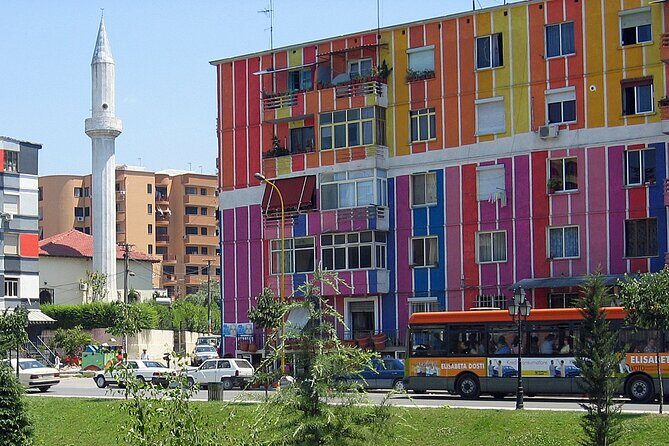
Your walk begins at the National Theatre of Opera and Ballet of Albania, a major cultural anchor in the city. What I liked most here is the way the theatre’s story connects to broader arts institutions in Albania. You’re not just staring at a façade; you’re being pointed toward why the building matters.
You learn that the Albanian Philharmonic traces back to 1950, and the theatre is closely linked with the development of formal music training—there’s mention of a State Conservatory, described as the first vocational school providing the largest musical institution in the country. The theatre’s location is also part of the narrative: it’s placed on the building of the Palace of Culture, with activity continuing there since 1966.
This stop works well if you care about culture but don’t want to spend half a day. You get a sense of how the country built lasting performance spaces, and why this venue is treated as a serious national institution with both Albanian and international artistic standards.
Skanderbeg Square: the city’s center and its big-name buildings
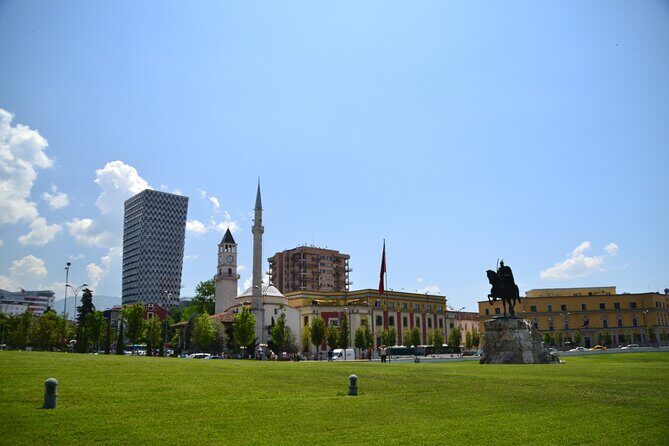
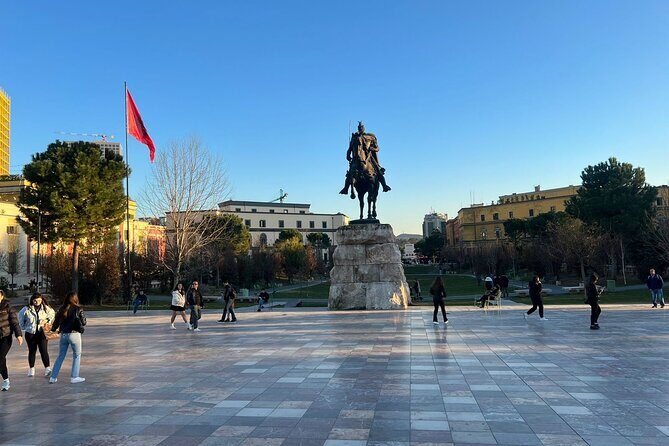
From the theatre, the route moves into Skanderbeg Square, Tirana’s main plaza. The square is named for national hero Gjergj Kastrioti Skënderbeu, and it’s laid out as a large open space—about 40,000 square meters—with the monument dominating the area.
What makes this stop more than a photo break is the city-planning context you’re given. You hear that Tirana’s plan was initially designed by Armando Brasini in 1925, then continued by Florestano Di Fausto in a Neo-Renaissance style with strong, angular solutions and giant-order fascia. After the Italian invasion, the plan was updated in 1939 by Gherardo Bosio.
You also get a sense of how much the square functions like a civic “hub.” Important buildings around it are named, including the Tirana International Hotel, the Palace of Culture, the National Opera, the National Library, and major government buildings (the list is extensive). That matters, because when you know what you’re seeing around you, the whole area feels more readable.
Quick consideration: Skanderbeg Square is central for a reason. You’ll likely be mixing with foot traffic. If you want quiet time for photos, pause when you can and let your guide set the timing.
Inside the National History Museum: pavilions that map the story
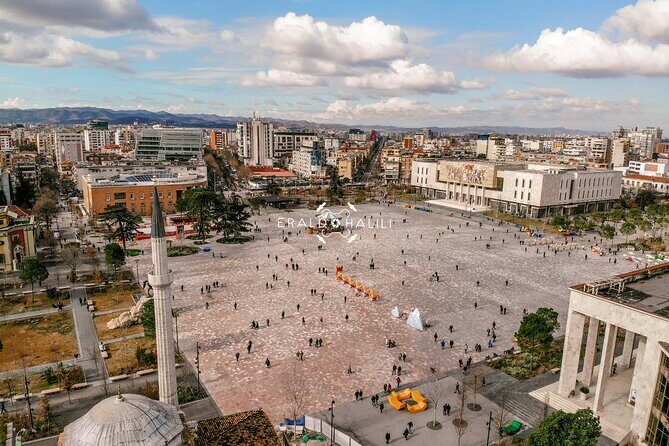
Next up is Muzeu Historik Kombetar, the National History Museum, which opened on 28 October 1981. The museum is large—about 27,000 square meters overall—with around 18,000 square meters for exhibitions. Even if you don’t plan a full deep scan of every gallery, this stop gives you a clean sense of how the museum organizes time.
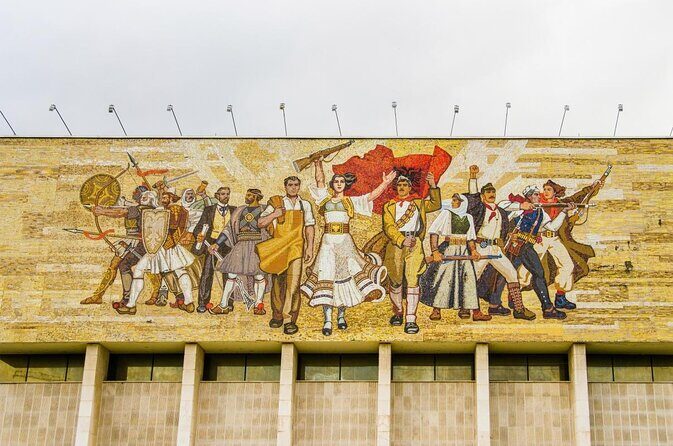
One standout detail is the mosaic above the entrance titled The Albanians—a mosaic that depicts figures from ancient through modern Albanian history. That single visual sets the tone before you even start looking around.
What I really like is that the museum’s pavilions are described with specific themes. You can mentally break the visit into chunks like:
- Antiquity
- Middle Ages
- Renaissance
- Independence
- Iconography
- National Liberation Antifascist War
- Communist Terror
- Mother Teresa
Even on a short visit, that structure helps your brain. Instead of feeling like you’re seeing random rooms, you’re following a timeline. And it’s a good way to understand how modern Albania frames key periods—especially the inclusion of wartime liberation and later themes like communist-era repression.
A practical tip: if you’re sensitive to heavy topics, be aware that one pavilion theme explicitly deals with Communist Terror.
Postbllok checkpoint monument: a memorial you don’t rush
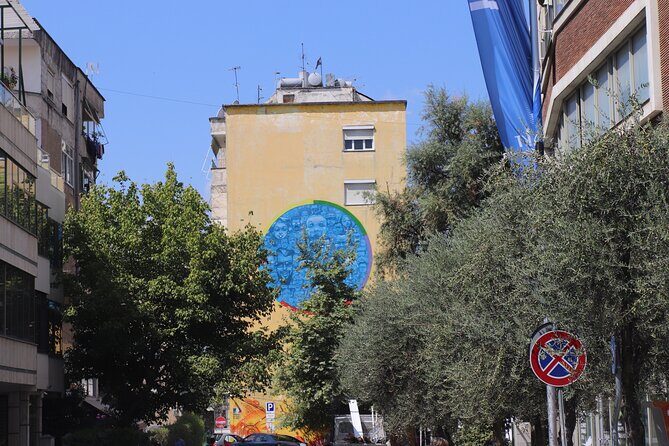
Then comes Postbllok – Checkpoint Monument, described as a somber reminder of Albania’s communist past, especially surveillance and persecution under Enver Hoxha’s regime. This is the stop where the walk shifts from “city sights” into “place-based memory.”
The monument’s design is tied to physical remnants: you’re shown original concrete pillars from a labor camp, an old bunker, and part of the Berlin Wall. That combination matters because it’s not abstract. You’re looking at objects meant to represent a system—and the people hurt by it.
The stop is framed as a dedicated memory site for those who suffered during the dictatorship, and as a testament to resilience and the move toward freedom and democracy. For me, the value here isn’t just learning facts. It’s how the materials make the story feel grounded.
Consideration: this is the emotional weight of the walk. If you’re traveling with kids or anyone who prefers lighter stops, you might mentally prepare for a more serious tone here and take your own pace in how long you stand and look.

Blloku: from restricted communist neighborhood to nightlife area
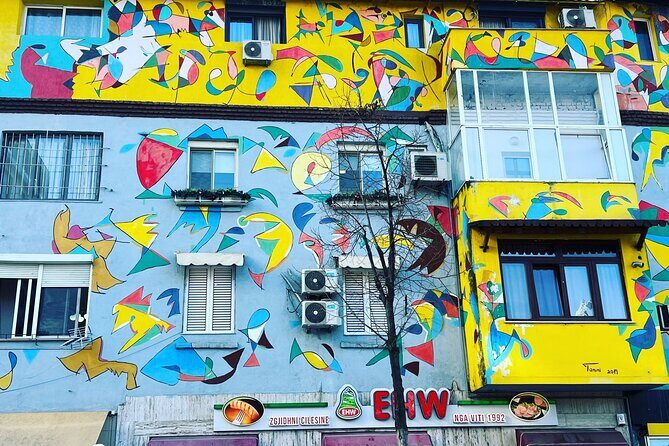
Finally, you end in Blloku (Ish-Blloku), one of Tirana’s upmarket and entertainment-focused areas. If you’ve heard that Tirana’s nights changed after communism, this is where the city makes that shift visible.
You learn that during the communist period, Blloku was a restricted residential area for members of the Albanian politburo—ordinary people were not allowed. Even its map presence was restricted, described as often unmarked. After communism fell, it became much more attractive, with dramatic growth in new developments and exclusive apartments. It’s even described as the playground of the young Albanian elite.
And there’s still a direct link to that era: you can find the residence of communist leader Enver Hoxha here, mentioned as still existing. Today, Blloku is known for boutiques, shops, restaurants, trendy bars, pubs, and cafes—so it’s a real-life example of how Tirana reinvented spaces rather than simply erasing the past.
This stop is ideal if you like ending on a practical note: you get a feel for where to wander after the tour for coffee or a meal. Just remember it can be busier during peak summer months.
Tour pacing, group size, and why the guide matters
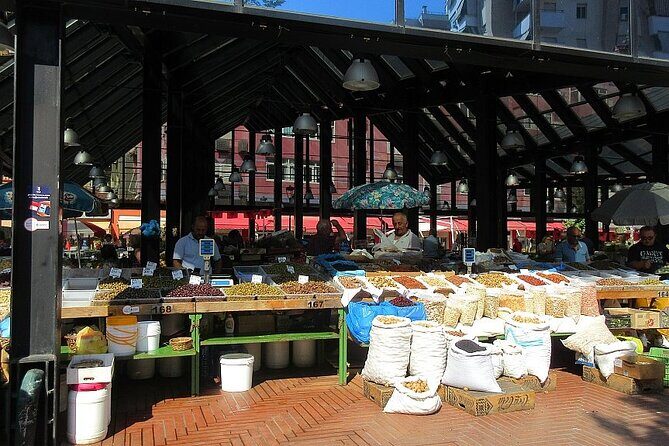
This is a guided walk with English offered, and the tour group has a maximum size of 30 travelers. That means you’ll get enough personal attention to make the history stick, but you should also expect a bit of coordination at major stops like Skanderbeg Square.
In my experience, what made the tour feel worth it was how the guide—Era—kept the story clear. She was friendly and organized, with enough Albania-and-Tirana context that the buildings didn’t feel random. I also appreciated the focus on street-level culture and murals, since Tirana isn’t only monuments. It’s how the city looks and speaks at sidewalk level.
If your group ends up smaller, you’ll likely feel like you’re on a more personal version of the same walk. If it’s larger, rely on your guide to keep the route moving and the key points understandable.
Price and value: why $6.02 can make sense in Tirana
At $6.02 per person, this tour is priced for real value. Here’s why: you’re paying for the guide, plus you get a route that covers major points of interest without requiring you to spend extra money at each stop.
Each of the listed stops notes Admission Ticket Free, which is a huge factor. If you were to visit those places on your own, you’d still need time, context, and a way to connect the dots across culture, history, and the communist past. The guide helps you do that.
Also, the tour includes a mobile ticket, which usually means less friction when you’re meeting up. The tour length—about 2 hours—is also efficient. You’re not committing a whole day to a “maybe I’ll get it” kind of city walk. This is a focused orientation.
One watch-out: it’s not an all-day crawl, so don’t book it as your only Tirana plan if you want museums. Think of it as a high-quality starting point.
Practical tips so your 2 hours feel easy
Here’s how to make the walk smoother, based on what’s provided and what you’ll actually be doing:
- Wear comfortable shoes. You’re walking between central landmarks, and this is a short schedule.
- Plan around the weather. The operator notes good weather is required; have a backup activity in mind if conditions change.
- Use transit if needed. The start area is near public transportation, so you can plug this into your day without complex logistics.
- Bring curiosity, not a checklist. The value is in how the guide connects architecture and history.
If you’re the type who likes a fast sense of place—where things are and what they mean—this format is a great fit. If you want a deep, slow museum experience, you may prefer pairing it with longer independent time at one or two stops later.
Who should book this (and who might skip it)
I think this tour is a strong match for:
- First-time visitors who want a quick city read
- People who like history but also want it explained in plain terms
- Anyone planning to spend more time in Tirana and wants a solid framework first
It may be less ideal if you:
- Want only light, entertainment-focused sights (because Postbllok is serious)
- Prefer very long museum time
- Don’t like walking in outdoor conditions (the tour requires good weather)
If you’re on a budget, this is especially appealing—low cost, guided context, and no paid admissions at the listed stops.
Should you book the Inside Tirana Walking Tour?
If you want an efficient, guided orientation to central Tirana—culture at the theatre, civic life in Skanderbeg Square, history in the National History Museum, and the communist-era story in Postbllok—then yes, I’d book it. The low price makes it easy to justify, and the free admissions at the stops mean you’re mostly paying for a guide who helps you connect what you see.
Skip it only if you strongly prefer lighter topics or you’re traveling on a day with iffy weather.
FAQ
How long is the Inside Tirana Walking Tour?
It runs for about 2 hours.
Where does the tour start and end?
It starts at Et’hem Bej Mosque (Sheshi Skënderbej 1, Tiranë 1001) and ends back at the same meeting point.
Is the tour offered in English?
Yes. The tour is offered in English.
Is admission included for the stops?
The tour notes free admission at each listed stop, so you shouldn’t need to pay entry fees for these specific places.
What’s included in the price?
The guide is included. A mobile ticket is used for the experience.
What’s the maximum group size?
The tour has a maximum of 30 travelers.
What’s the cancellation policy if weather is bad?
You can cancel for a full refund up to 24 hours in advance. If the tour is canceled due to poor weather, you’ll be offered a different date or a full refund.